Expanding your e-commerce business across the European Union can feel overwhelming when international sales, VAT rules, and listing optimization all compete for your attention. Amazon has emerged as a dominant force in connecting sellers throughout European markets with millions of global buyers, thanks to its robust infrastructure and cross-border logistics. This article cuts through complexity, offering actionable insights on enhancing your Amazon listings, complying with tax regulations, and building visibility that drives real sales.
Table of Contents
- Amazon International Sales Explained
- Marketplace Types and Expansion Strategies
- Amazon Listing Optimization for Global Reach
- Compliance and VAT in Cross-Border Selling
- Managing Logistics, Costs, and Common Pitfalls
Key Takeaways
| Point | Details |
|---|---|
| Comprehensive Ecosystem | Amazon’s marketplace model supports third-party sellers with seamless logistics, localized payment systems, and advanced analytics to drive international sales growth. |
| Marketplace Models | Different Amazon marketplace types, such as Vendor Central and Seller Central, require tailored strategies for successful international expansion. |
| Listing Optimization | Effective product listing requires localizing content, conducting keyword research, and understanding regional consumer preferences for higher visibility and sales. |
| VAT Compliance | Understanding and adhering to EU VAT regulations is crucial for cross-border sellers to avoid legal risks and ensure smooth operations. |
Amazon International Sales Explained
Amazon has transformed international e-commerce through a sophisticated marketplace model that connects sellers across Europe with millions of potential customers. By developing robust infrastructure and leveraging data-driven strategies, the company has become a pivotal platform for cross-border sales, particularly within the European Single Market.
The company’s international sales strategy revolves around creating a comprehensive ecosystem that supports third-party sellers. This approach enables businesses of all sizes to reach consumers beyond their local markets, offering unprecedented access to a broader customer base. Key features of Amazon’s international sales model include:
- Seamless cross-border logistics
- Multi-language product listings
- Localized payment systems
- Advanced currency conversion tools
- Comprehensive seller support networks
Amazon’s marketplace is not just a sales platform but a complex economic infrastructure that facilitates global trade. By providing sellers with advanced analytics, marketing tools, and extensive fulfillment services, the company has effectively lowered barriers to international commerce. Seller performance and global visibility become interconnected strategies that drive growth across European markets.
The platform’s dominance is particularly evident in major European countries, where Amazon has strategically invested in local market understanding and technological capabilities. Complex marketplace dynamics have positioned Amazon as a critical intermediary between sellers and consumers, offering sophisticated advertising and pricing mechanisms that help businesses optimize their international sales strategies.
Pro tip: Research local market regulations and cultural preferences before expanding your Amazon international sales strategy to maximize your potential for success.
Marketplace Types and Expansion Strategies
Expanding across international Amazon marketplaces requires a sophisticated, strategic approach that goes beyond simple product listing. Marketplace expansion strategies demand careful analysis of market potential, regulatory landscapes, and localized consumer behaviors across different European regions.
Amazon’s marketplace model encompasses multiple seller types and engagement strategies, which can be categorized into distinct approaches:
- Vendor Central: Direct wholesale relationship with Amazon
- Seller Central: Third-party sellers managing their own inventory
- FBA (Fulfillment by Amazon): Sellers leveraging Amazon’s logistics network
- Amazon Global: Cross-border selling through international marketplaces
Successful international expansion requires understanding the nuanced differences between these marketplace models. Each type presents unique opportunities and challenges, demanding sellers develop targeted strategies that align with specific market characteristics. Operational flexibility and market-specific adaptation become critical success factors for businesses seeking to scale across European markets.
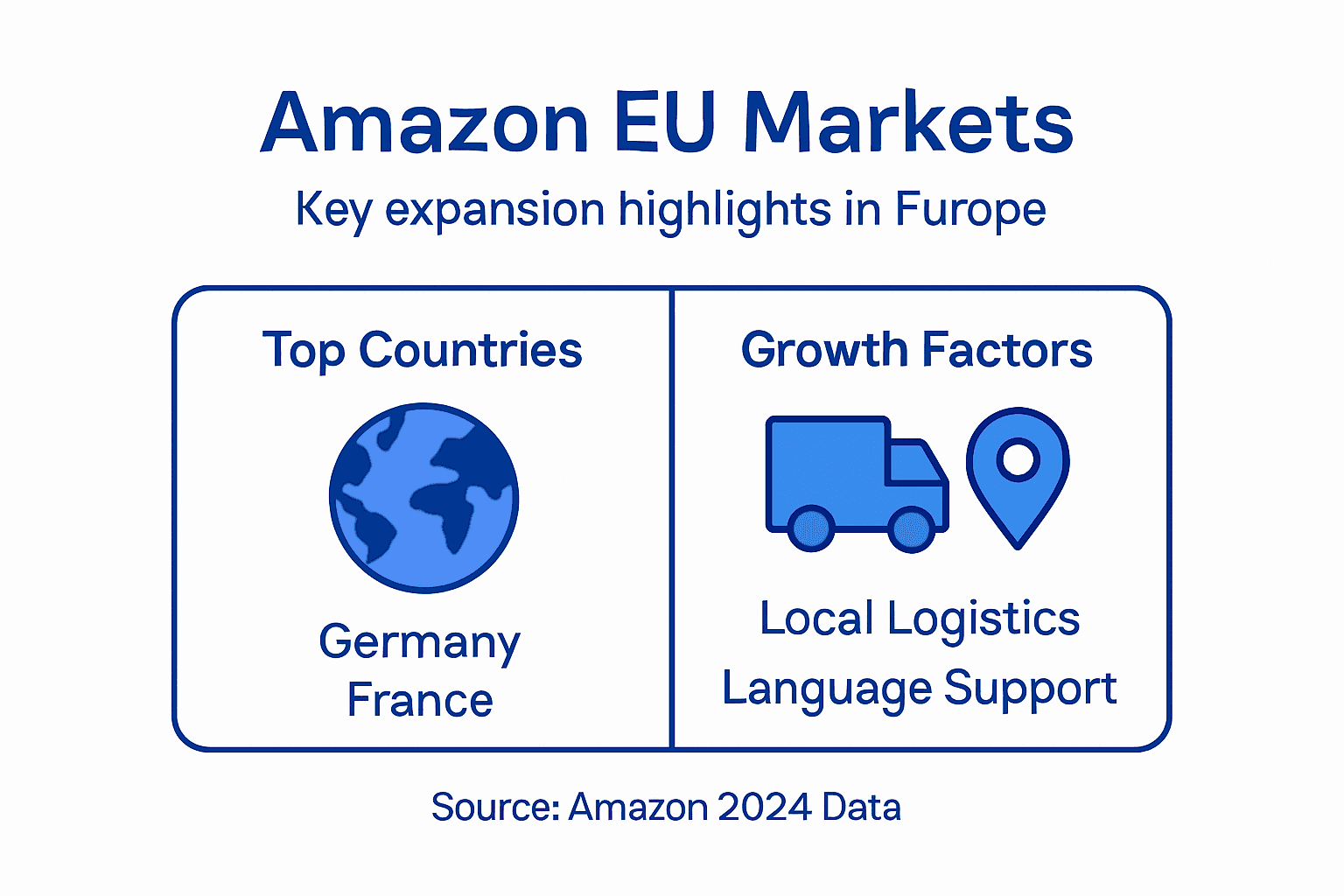
The company’s expansion typically prioritizes strategic market tiers, focusing initially on established economies like Germany, the United Kingdom, and France before exploring emerging markets. This methodical approach allows sellers to build robust operational frameworks, understand local consumer preferences, and incrementally reduce market entry risks.
Pro tip: Conduct comprehensive market research and localize your product listings, pricing, and marketing strategies before entering a new Amazon marketplace to maximize your potential for success.
Here’s a comparison of Amazon marketplace models and their suitability for international sellers:
| Model Type | Seller Control | Logistics Support | Ideal For |
|---|---|---|---|
| Vendor Central | Limited (Amazon sets) | Amazon-managed | Large brands, wholesalers |
| Seller Central | Full (seller sets) | Optional (seller handles) | Small businesses, artisans |
| FBA (Fulfillment) | Moderate | Full Amazon support | Growing brands, volume sellers |
| Amazon Global | Varies by country | Partial Amazon support | Cross-border expansion |
Amazon Listing Optimization for Global Reach
Successful international selling on Amazon requires a strategic approach to listing optimization across multiple markets. Sellers must develop comprehensive strategies that transcend simple translation, focusing instead on creating compelling, localized content that resonates with regional consumer preferences and search behaviors.
Effective global listing optimization encompasses several critical components:
- Keyword research tailored to regional search patterns
- Multilingual product titles and descriptions
- High-quality, culturally appropriate product images
- Localized pricing and shipping information
- Market-specific product positioning
Understanding the nuanced differences between European marketplaces is crucial for effective optimization. Linguistic precision and cultural adaptation become paramount when crafting product listings that attract international buyers. Each marketplace demands a unique approach, considering local language nuances, consumer expectations, and regional purchasing behaviors.
The technical aspects of listing optimization extend beyond mere translation. Sellers must navigate Amazon’s complex algorithm requirements, ensuring their listings meet specific regional standards while maintaining compelling, conversion-driven content. This involves strategically incorporating region-specific keywords, understanding local search intent, and presenting product benefits in a way that speaks directly to each market’s unique consumer psychology.

Pro tip: Invest in professional translation and localization services that understand both linguistic subtleties and Amazon’s marketplace dynamics to create truly effective international product listings.
To help sellers optimize product listings for international markets, here’s a summary of key aspects:
| Optimization Area | Why It Matters | Effect on Sales |
|---|---|---|
| Local Keywords | Matches regional search habits | Increases listing visibility |
| Cultural Imagery | Resonates with buyers | Boosts engagement |
| Local Pricing | Builds trust | Reduces abandoned carts |
| Market Placement | Meets buyer expectations | Improves conversion rates |
Compliance and VAT in Cross-Border Selling
Nevigating the complex landscape of European Union tax regulations requires sellers to understand the intricacies of VAT compliance for cross-border sales. The EU’s tax framework presents both challenges and opportunities for e-commerce entrepreneurs seeking to expand their international marketplace presence.
Key considerations for VAT compliance include:
- Tracking annual sales thresholds across EU markets
- Understanding different VAT rates by country
- Distinguishing between B2B and B2C sales requirements
- Implementing proper invoicing and documentation
- Utilizing simplified reporting mechanisms
Tax collection responsibilities have fundamentally shifted in recent years, with regulations now primarily based on the customer’s location rather than the seller’s origin. This means sellers must carefully monitor their sales volumes and apply the appropriate VAT rates for each specific European market they serve. The complexity increases with the need to understand nuanced regional tax regulations and reporting requirements.
The European Union has introduced streamlined solutions to ease the administrative burden for cross-border sellers. The One Stop Shop (OSS) system allows businesses to register once and declare VAT for multiple countries, significantly reducing paperwork and compliance complexities. Non-compliance risks are substantial, potentially including significant fines, marketplace restrictions, and damage to a seller’s reputation.
Pro tip: Consult with a tax professional specializing in EU e-commerce regulations to develop a comprehensive VAT compliance strategy that protects your business from potential financial and legal risks.
Managing Logistics, Costs, and Common Pitfalls
Successful cross-border selling on Amazon demands strategic approaches to supply chain optimization and logistics management. E-commerce entrepreneurs must navigate complex challenges that extend far beyond simple product transportation.
Critical logistics considerations include:
- Developing regional distribution hubs
- Implementing advanced tracking technologies
- Managing customs documentation
- Minimizing clearance delays
- Optimizing shipping routes
- Adapting to local regulatory requirements
Technological innovation plays a crucial role in addressing cross-border logistics challenges. Digital tools like AI and blockchain can significantly enhance supply chain visibility, allowing sellers to track shipments in real-time and proactively manage potential disruptions. The ability to quickly adapt to changing regulatory environments and technological advances separates successful international sellers from those struggling with operational complexities.
Common pitfalls in cross-border selling often stem from documentation errors, poor route planning, and limited shipment visibility. Sellers must invest in robust systems that provide comprehensive tracking, automate compliance processes, and offer flexibility in routing and delivery strategies. Understanding the nuanced requirements of each European market becomes essential for maintaining cost efficiency and meeting customer expectations.
Pro tip: Invest in comprehensive logistics software that provides real-time tracking, automated compliance checks, and multi-market routing capabilities to streamline your international e-commerce operations.
Maximize Your Amazon International Sales with Expert Support
Expanding your Amazon business across the European Union can feel overwhelming with challenges like VAT compliance, listing optimization, and logistics management. The key to unlocking EU growth potential lies in cutting through complexity with proven strategies that boost visibility and streamline operations. If you are struggling with tailored keyword research, navigating tax regulations, or mastering Amazon’s marketplace models, you are not alone. Businesses that thrive recognize the importance of professional guidance to overcome these hurdles and connect with millions of European customers.
Enhance your global selling journey by leveraging our specialized services. At SearchOneers, we offer Amazon Listing Optimization that transforms your product titles, bullet points, and descriptions for superior international visibility. Our Amazon SEO & Analytics solutions use smart data insights to adapt your campaigns across diverse European marketplaces. Learn more about effective E-commerce Tips & Strategies to Grow Your Online Business that empower sellers to scale confidently in new markets.
Ready to transform your Amazon international sales strategy? Visit SearchOneers today to access tailored solutions that turn complexity into opportunity. Start growing your presence in the European Union now and stay ahead of your competition.
Frequently Asked Questions
How can I effectively optimize my Amazon listings for international sales?
To effectively optimize your listings for international sales, focus on keyword research tailored to regional search patterns, create multilingual product titles and descriptions, use high-quality and culturally appropriate images, localize pricing and shipping information, and position your products to meet specific market expectations.
What are the different types of Amazon marketplace models for international sellers?
The different types of Amazon marketplace models include Vendor Central, where you have a direct wholesale relationship with Amazon; Seller Central, where third-party sellers manage their own inventory; Fulfillment by Amazon (FBA), which allows sellers to use Amazon’s logistics network; and Amazon Global, enabling cross-border selling through various international marketplaces.
What should I consider regarding VAT compliance when selling internationally on Amazon?
When selling internationally, consider tracking annual sales thresholds, understanding different VAT rates by country, differentiating between B2B and B2C sales requirements, implementing proper invoicing, and utilizing streamlined reporting mechanisms like the One Stop Shop (OSS) system to simplify compliance across multiple countries.
How can I improve my supply chain logistics for cross-border sales on Amazon?
To improve your supply chain logistics, develop regional distribution hubs, implement advanced tracking technologies, manage customs documentation efficiently, minimize clearance delays, and optimize shipping routes while adapting to local regulatory requirements to ensure a smooth and cost-effective operation.