

Finding the right keywords can make or break your product’s visibility on Amazon. For new American or Canadian sellers, figuring out where your products stand in search results often feels confusing and unpredictable. When you use a systematic approach to keyword selection and integrate a keyword rank tracking tool, you lay the foundation for growth, smarter decision-making, and steady improvement in your search rankings.
Table of Contents
- Step 1: Define Target Keywords For Tracking
- Step 2: Choose And Set Up A Keyword Rank Tracker Tool
- Step 3: Input Your Keywords And Product Listings
- Step 4: Monitor Ranking Changes Regularly
- Step 5: Analyze Results To Refine Keyword Strategy
Quick Summary
| Key Point | Explanation |
|---|---|
| 1. Define Target Keywords | Select keywords that reflect product features and customer intent to improve visibility in search results. |
| 2. Choose a Rank Tracker Tool | Use cloud-based tools with daily updates and Amazon-specific support for accurate monitoring of keyword performance. |
| 3. Monitor Regularly | Establish a consistent schedule for reviewing keyword rankings and trends to identify areas for optimization. |
| 4. Analyze Results | Break down performance data to discover opportunities for improvement and adapt keyword strategies. |
| 5. Mix Broad and Specific Keywords | Incorporate both broad and niche keywords to capture a range of customer search intents effectively. |
Step 1: Define target keywords for tracking
Defining your target keywords is the critical first step in tracking your Amazon product’s search ranking performance. By strategically selecting the right keywords, you can monitor how your product appears in search results and optimize its visibility.
To select effective tracking keywords, start by analyzing your product’s core characteristics and potential customer search behaviors. Focus on identifying keywords that represent your product’s most important features, benefits, and use cases. These might include:
- Product type (e.g., “wireless bluetooth earbuds”)
- Specific product attributes (“noise cancelling”)
- Customer intent keywords (“budget workout headphones”)
- Brand-related terms
Utilize Amazon’s keyword research strategies to understand how customers search for products like yours. Leverage tools that provide search volume data and competition insights to refine your keyword selection.
The most effective tracking keywords capture both your product’s unique value and common customer search patterns.
Consider creating a spreadsheet to organize your potential keywords, tracking metrics like search volume, relevance, and current ranking. This systematic approach will help you monitor your product’s search performance more effectively.

Here’s a summary of keyword types and their business impact:
| Keyword Type | Search Intent Captured | Business Impact |
|---|---|---|
| Product Attribute | Feature-focused shoppers | Attracts buyers seeking specifics |
| Customer Intent | Usage-driven searchers | Reaches motivated purchasers |
| Brand-related | Loyal or repeat customers | Builds brand authority |
| Competitor Comparison | Value-focused browsers | Highlights unique selling points |
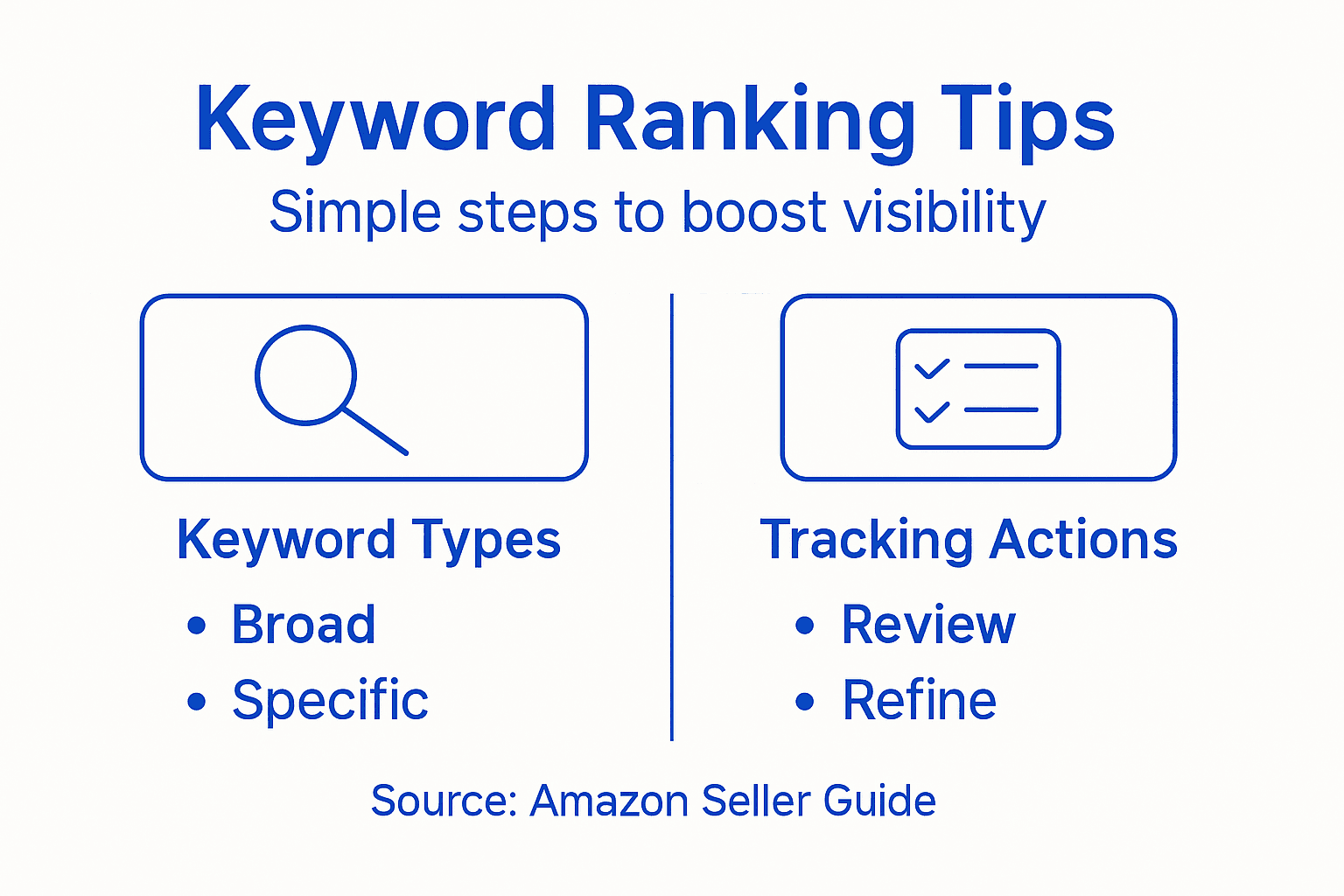
Pro tip: Always include a mix of broad and specific keywords to capture diverse search intents and maximize your tracking accuracy.
Step 2: Choose and set up a keyword rank tracker tool
Selecting the right keyword rank tracking tool is crucial for monitoring your Amazon product’s search performance and gaining actionable insights. Your chosen tool will help you understand how your product ranks for specific keywords and track its visibility over time.
When evaluating rank tracking tools, consider several key factors. Selecting a robust rank tracker involves examining features like:
- Accuracy of ranking data
- Frequency of updates
- Competitor analysis capabilities
- Reporting and visualization options
- Integration with other SEO tools
Prioritize cloud-based rank trackers that offer daily updates and seamless accessibility. These platforms typically provide more real-time insights and can be accessed from multiple devices. Look for tools that specifically support Amazon seller keyword tracking, as general SEO tools might not capture the nuanced marketplace dynamics.
The best keyword rank trackers provide comprehensive insights that go beyond simple ranking numbers.
During your selection process, take advantage of free trials to test the tool’s interface, data accuracy, and reporting features. Many platforms offer 14-day trials that allow you to assess their effectiveness for your specific Amazon product tracking needs.
Here’s a quick comparison of rank tracker tool features to consider:
| Feature | Business Benefit | Importance Level |
|---|---|---|
| Daily Ranking Updates | Enables real-time decisions | High |
| Competitor Analysis | Reveals market trends | Medium |
| Reporting Visualization | Simplifies performance review | High |
| Marketplace Integration | Tracks Amazon-specific data | Critical |
Pro tip: Compare at least three different rank tracking tools and test their Amazon-specific features before making a final commitment.
Step 3: Input your keywords and product listings
Now that you’ve selected a keyword tracking tool, it’s time to populate it with your target keywords and Amazon product listings. This crucial step will enable you to monitor your product’s search performance and visibility across different search terms.
Tracking keywords effectively involves a systematic approach to adding and organizing your keywords. Most rank tracking tools offer multiple methods for inputting keywords:
- Manual entry of individual keywords
- Bulk upload through CSV or Excel files
- Importing keywords from existing research tools
- Extracting keywords directly from your Amazon product listing
Prepare your keyword list by ensuring each keyword represents a potential customer search term. Include a mix of:
- Exact product names
- Descriptive feature keywords
- Long-tail search phrases
- Competitor product comparisons
The most effective keyword tracking starts with a comprehensive and strategic keyword selection.
When adding your Amazon product listings, ensure you include all relevant product variations, such as different sizes, colors, or configurations. Double-check the accuracy of each keyword to maintain precise tracking results.
Pro tip: Create a separate spreadsheet to track your keyword performance alongside your rank tracking tool for additional insights and backup.
Step 4: Monitor ranking changes regularly
Tracking your Amazon product’s keyword rankings is an ongoing process that requires consistent attention and strategic analysis. Regular monitoring helps you understand how your product’s visibility changes over time and identify opportunities for optimization.
Set a consistent monitoring schedule to review your keyword performance. This might involve:
- Weekly ranking snapshots
- Monthly comprehensive performance reviews
- Immediate alerts for significant ranking shifts
- Quarterly competitive analysis
Pay close attention to ranking trend patterns, not just individual position changes. Look for:
- Keywords gaining or losing momentum
- Seasonal search term fluctuations
- Competitor ranking movements
- Correlation between ranking changes and sales performance
Consistent monitoring transforms raw ranking data into actionable strategic insights.
Analyze ranking changes in context, understanding that a single data point doesn’t tell the full story. Consider external factors like product updates, seasonal trends, or marketplace algorithm changes that might impact your rankings.
Pro tip: Schedule your ranking reviews during consistent times each week or month to create a reliable tracking rhythm and reduce performance monitoring stress.
Step 5: Analyze results to refine keyword strategy
Transforming your keyword ranking data into actionable insights requires a strategic and systematic approach. Your goal is to understand the performance patterns and make informed decisions that can improve your Amazon product’s visibility.
Break down your keyword performance by examining several critical dimensions:
- Ranking trajectory for each keyword
- Conversion rates associated with top-performing keywords
- Keyword difficulty and competition levels
- Search volume and potential traffic
Identify strategic opportunities by looking for keywords that show potential but aren’t currently performing at their peak. This might include:
- Keywords with high search volume but low current ranking
- Emerging search trends in your product category
- Long-tail keywords with less competition
- Seasonal keyword variations
Effective keyword strategy is about continuous learning and adaptive optimization.
Implement incremental improvements based on your analysis. This could involve updating product listings, adjusting backend keywords, or refining your product title to better align with high-potential search terms. Small, data-driven changes can lead to significant visibility improvements over time.
Pro tip: Create a quarterly keyword strategy review that compares your current performance against previous periods, allowing you to track progress and identify long-term trends.
Unlock Greater Amazon Visibility with Expert Strategies
Struggling to keep track of your Amazon keyword rankings and convert these insights into real sales growth can feel overwhelming. The guide on Amazon Keyword Rank Tracker shows how important it is to regularly monitor ranking changes and analyze keyword performance to refine your strategy. If you want to move beyond just tracking and start optimizing your product listings with precision, understanding how enhanced titles, bullet points, and backend keywords influence your search visibility is key.
Take control of your Amazon success today by exploring our E-commerce Tips & Strategies to Grow Your Online Business. At SearchOneers, we specialize in Amazon Listing Optimization and Amazon SEO & Analytics designed to help you capitalize on the exact keywords you track. Visit us now and transform data-driven insights into increased visibility and sales before your competitors do.
Frequently Asked Questions
How do I define target keywords for tracking my Amazon products?
To define target keywords, analyze your product’s features and customer search behaviors. Identify key terms that reflect your product’s attributes and customer intentions, such as specific features and brand-related terms. Organize these keywords in a spreadsheet to track search volume and relevance.
What features should I look for in a keyword rank tracker tool?
When choosing a keyword rank tracker tool, prioritize accuracy of data, frequency of updates, and integration with other tools. Look for features like competitor analysis and reporting options that will help you monitor your Amazon product’s search performance effectively.
How do I input my keywords and product listings into the rank tracking tool?
To input keywords, use methods like manual entry or bulk upload with CSV files. Ensure each keyword relates to potential customer searches, and add all relevant product variations, such as different sizes or colors, to ensure comprehensive tracking.
How often should I monitor my keyword rankings?
You should establish a consistent monitoring schedule, such as weekly snapshots or monthly performance reviews. Set immediate alerts for significant ranking changes so you can respond quickly to shifts in your product’s visibility.
What should I analyze in my keyword ranking results?
Focus on dimensions such as ranking trends, conversion rates, and competition levels for each keyword. Identify opportunities for improvement by targeting high-potential keywords that are currently underperforming, aiming for incremental updates over time.
How can I improve my Amazon product visibility based on keyword analysis?
Use your keyword performance data to implement targeted changes to product listings, such as updating titles or backend keywords. Track these changes over 30–60 days to measure their impact on visibility and performance.

Comments
One response to “Amazon Keyword Rank Tracker Guide for Better Visibility”
[…] Understanding how customers search helps you select the right keywords to track. Review our Amazon keyword rank tracker guide to build this foundation […]