

Most American sellers miss out on thousands of potential sales simply because their product listings lack strategic keyword optimization. In a fiercely competitive marketplace like Amazon, every missed keyword is a lost opportunity to reach ready to buy customers. By learning how to spot keyword gaps, optimize content, and follow strict compliance, you transform the way shoppers discover your products and dramatically improve your listing’s visibility.
Table of Contents
- Step 1: Identify Critical Keyword Gaps In Your Listings
- Step 2: Optimize Titles, Bullet Points, And Descriptions
- Step 3: Adjust Backend Keywords For Maximum Reach
- Step 4: Correct Image And Content Compliance Errors
- Step 5: Track And Review Results For Continuous Improvement
Quick Summary
| Key Point | Explanation |
|---|---|
| 1. Identify keyword gaps | Analyze competitors’ listings to find keywords you haven’t used that could attract potential buyers. |
| 2. Optimize listing elements | Craft effective titles, bullet points, and descriptions to enhance search visibility and persuade customers. |
| 3. Manage backend keywords | Use backend keywords strategically to capture additional search queries without cluttering your visible listing. |
| 4. Ensure compliance with standards | Follow Amazon’s listing rules for images and content to avoid penalties and enhance product presentation. |
| 5. Track performance metrics | Regularly analyze listing performance to refine your strategies and adapt to Amazon’s evolving algorithm. |
Step 1: Identify critical keyword gaps in your listings
Understanding keyword gaps is crucial for maximizing your Amazon product visibility. The process involves systematically analyzing your current listing and identifying missed opportunities that could connect you with potential buyers searching for products like yours.
To effectively uncover keyword gaps, start by conducting comprehensive competitor keyword analysis. This means examining the search terms and phrases your top performing competitors use in their product listings. Look beyond the obvious keywords and dig into long tail variations that might capture niche market segments. Pay special attention to terms that describe product features, benefits, use cases, and potential customer pain points.
A strategic approach involves mapping keywords to specific sections of your product listing. Not every keyword belongs in the title – some work better in bullet points or backend search terms. The goal is creating a holistic keyword strategy that provides Amazon’s algorithm with clear signals about your product’s relevance. Pro tip: Use tools that offer competitive keyword insights and track your listing’s search performance regularly to stay ahead of market trends.
Next, you will want to refine and optimize your keyword strategy based on these initial findings.
Step 2: Optimize titles, bullet points, and descriptions
Amazon listing optimization requires strategic crafting of your product’s key textual elements to maximize search visibility and buyer engagement. Your goal is creating a compelling narrative that not only ranks well in search results but also persuades potential customers to click and purchase.

Start by focusing on your product title, which is arguably the most critical element. On page SEO elements like title tags play a fundamental role in determining search rankings. Construct titles that balance keyword relevance with readability – include primary search terms, key product features, and benefits while staying within Amazon’s 200 character limit. Prioritize front loading important keywords and avoid unnecessary capitalization or promotional language.
For bullet points, think of them as mini sales pitches that highlight your product’s unique value proposition. Each bullet should address a specific customer need or product benefit, using clear and concise language. Incorporate relevant keywords naturally without keyword stuffing. In product descriptions, tell a story that goes beyond basic specifications. Explain how your product solves problems, use persuasive language, and maintain a conversational tone that speaks directly to your target customer’s needs.
Remember that optimization is an ongoing process. Regularly analyze your listing’s performance, track conversion rates, and be prepared to make incremental improvements based on customer feedback and search trends.
Step 3: Adjust backend keywords for maximum reach
Backend keywords represent a critical yet often overlooked opportunity to boost your Amazon product visibility without cluttering your visible listing content. These hidden search terms provide a strategic avenue to capture additional relevant search queries that potential customers might use when looking for products like yours.
Effectively managing backend keywords requires a systematic approach to keyword mapping and optimization. Start by brainstorming alternative search terms customers might use including misspellings, synonyms, related product uses, and generic descriptors. Amazon allows up to 250 bytes for backend keywords, so be precise and strategic. Avoid repeating words already in your title or bullet points, and focus on unique terms that expand your search potential. Include variations like plural forms, alternative spellings, and common misspellings that shoppers might accidentally type.
Pro tip: Think like your customer. Consider the language they might use when searching for a product similar to yours. This means going beyond technical specifications and including colloquial terms, problem solving phrases, and context specific language. Regularly review your backend keyword performance through Amazon analytics and be prepared to iterate and refine your approach. Your goal is creating a comprehensive yet targeted keyword strategy that increases your product’s discoverability without appearing spammy or desperate.
The next step involves monitoring and continuously improving your keyword strategy based on actual search performance and customer behavior.
Step 4: Correct image and content compliance errors
Amazon has stringent requirements for product listings that can make or break your selling success. Understanding and implementing these compliance standards is crucial to maintaining your seller account status and ensuring your products remain visible to potential buyers.
Technical SEO fundamentals emphasize the importance of high-quality content and compliance with platform guidelines. When it comes to images, Amazon requires multiple high resolution product photos that showcase your item from different angles. Ensure all images are at least 1000 pixels on the longest side to enable zoom functionality. Your main image must have a pure white background with the product occupying at least 85% of the image frame. Avoid lifestyle images or additional text in this primary photo.
Content compliance extends beyond images to your written product details. Check that your listing contains no prohibited claims such as comparative language like best or number one. Avoid using promotional phrases that sound like advertising copy. Verify that all product specifications are accurate and match the actual item. Proofread carefully for spelling errors grammatical mistakes or formatting inconsistencies that could trigger Amazon’s automated review systems. Pro tip: Use Amazon’s preview tool to see exactly how your listing will appear to potential customers and catch any potential compliance issues before publishing.
By meticulously addressing these compliance requirements you protect your seller reputation and create a more professional trustworthy product presentation.
Step 5: Track and review results for continuous improvement
Successful Amazon SEO is not a one time effort but an ongoing process of measurement, analysis, and strategic refinement. Understanding how to effectively monitor your listing performance will help you make data driven decisions that incrementally improve your product visibility and sales potential.
Measuring SEO success requires systematic tracking of performance metrics across multiple dimensions. Start by establishing baseline metrics for your product listing including search ranking, click through rate, conversion rate, and overall sales volume. Amazon provides seller central analytics that offer deep insights into how customers interact with your listing. Pay close attention to search term reports which reveal the actual keywords customers use to find your product. Look for patterns in customer behavior such as which search terms generate the most impressions and clicks.
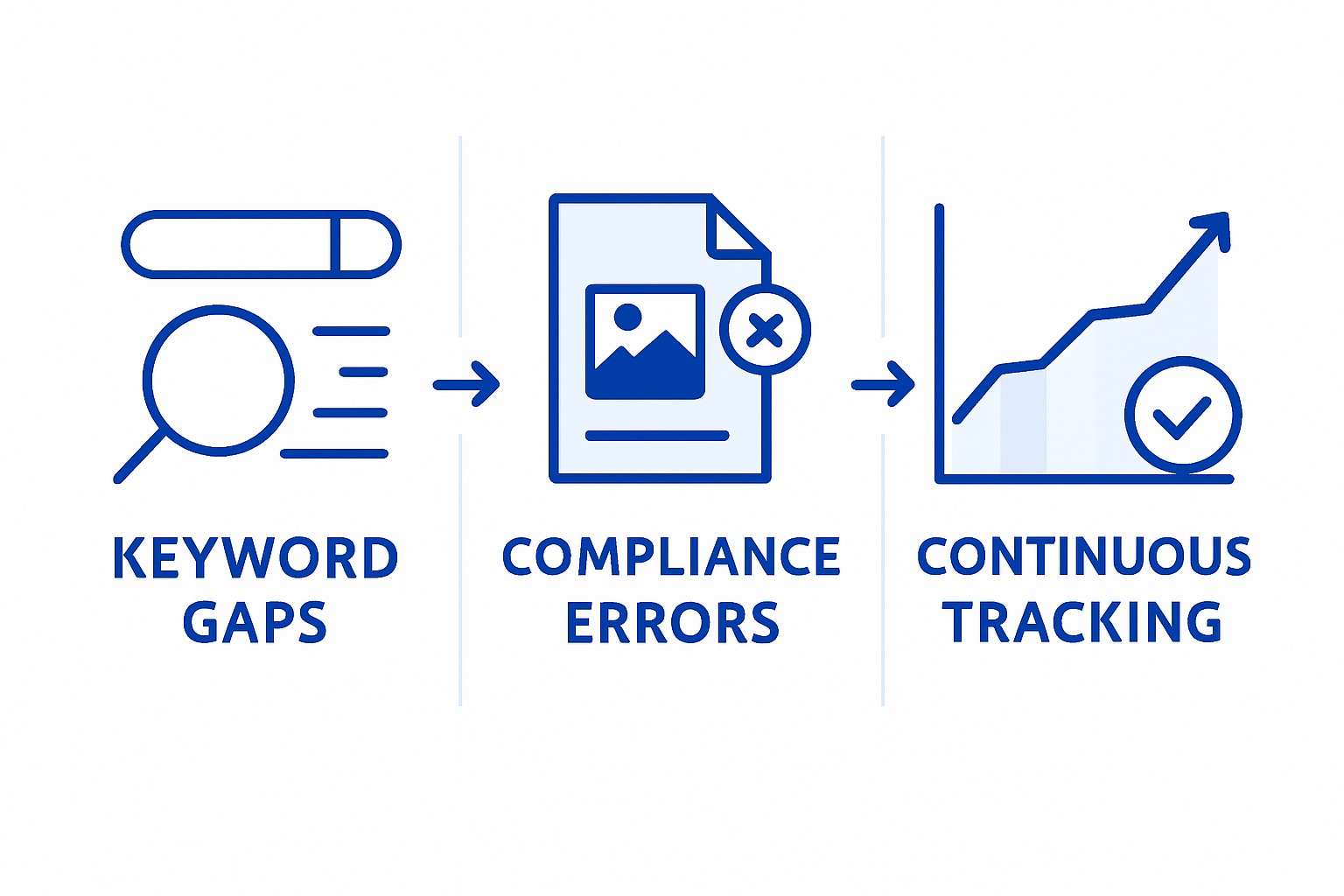
Pro tip: Create a monthly review schedule where you compare your current performance against previous periods. Identify which optimization strategies generated positive results and which need adjustment. This might mean tweaking your backend keywords, refining product images, or modifying your product description. Remember that Amazon’s algorithm constantly evolves, so what worked six months ago might not be as effective today. Be prepared to experiment and adapt quickly. Successful Amazon sellers treat their listings as living documents that require continuous care and strategic updates.
Your next step is to implement the insights gained from your analysis and prepare for another round of strategic optimization.
Avoid Common Amazon SEO Pitfalls and Boost Your Sales Today
Struggling to fix listing mistakes like poor keyword choices or backend keyword errors can drain your sales potential fast. This article highlights critical issues such as weak title optimization, missed keyword gaps, and content compliance errors that lower your product visibility and credibility on Amazon. If you want to transform your listings into powerful sales drivers you need ongoing data-backed SEO strategies that evolve with the market.

Explore proven solutions with our Amazon Listing Optimization and SEO services designed to enhance titles, bullet points, backend keywords, and analytics. Visit our E-commerce Tips & Strategies to Grow Your Online Business page to discover actionable insights. Don’t let simple mistakes limit your success. Take control now by partnering with SearchOneers for smarter Amazon SEO and watch your product listings perform at their best.
Frequently Asked Questions
What are the most common Amazon SEO mistakes I should avoid?
Many sellers overlook critical aspects such as keyword optimization, compliance with Amazon’s guidelines, and continuous performance tracking. To avoid these mistakes, regularly analyze your listing and update keywords based on current market trends.
How can I identify keyword gaps in my Amazon listings?
You can identify keyword gaps by analyzing your competitors’ listings to discover terms they use that you haven’t included. Conduct a thorough competitor keyword analysis and make a list of additional relevant keywords to integrate into your product descriptions.
What steps should I take to optimize my product titles for Amazon SEO?
To optimize your product titles, include primary keywords, key features, and benefits while keeping it within Amazon’s 200 character limit. Front load essential keywords and ensure the title is easy to read and understand.
How do I manage my backend keywords effectively?
Manage your backend keywords by brainstorming synonyms, misspellings, and related terms that potential customers might use. Review and update these keywords regularly to improve discoverability, ensuring they complement what’s already in your title and bullet points.
What actions can I take to correct image and content compliance errors?
To correct compliance errors, ensure that your images meet Amazon’s guidelines, such as using high-resolution photos and a white background. Check that all written details are accurate and free of prohibited claims to maintain listing credibility.
How can I track and review my Amazon SEO results?
You can track your results by measuring key metrics like search ranking, click-through rate, and conversion rate using Amazon’s analytics tools. Establish a monthly review schedule to assess your progress and make necessary adjustments for continuous improvement.
Recommended
- Amazon Listing SEO: Boosting Visibility and Sales Fast – Searchoneers
- Copywriting for Amazon Listings: Tips & Best Practices
- How Amazon SEO Works in 2025 | Rank Higher & Sell More
- Amazon Listing Structure Explained: Complete Guide – Searchoneers
- How to Maintain a Carbon Steel Pan: Preventing Rust & Warping – Brass & Steel

Comments
One response to “Most Common Amazon SEO Mistakes and How to Fix Them”
[…] Amazon SEO strategies demand intelligent keyword integration that prioritizes natural language over mechanical repetition. Keyword stuffing not only makes your listing sound awkward but can actually harm your product’s search rankings and customer perception. […]