

Amazon’s marketplace might look simple on the surface, but every product you see is competing in an invisible race for attention. Sellers with the highest inventory ranking enjoy up to 50 percent more organic traffic compared to their rivals. The real surprise? Getting to the top is less about flashy ads and more about everyday details like reliable stock, quick deliveries, and satisfied customers. Dive into how this hidden system shapes winners and losers on Amazon.
Table of Contents
- What Is Amazon Inventory Ranking?
- Why Is Inventory Ranking Important For Sellers?
- How Amazon Inventory Ranking Works
- Key Factors Influencing Inventory Ranking
- Real-World Impact Of Inventory Ranking On Sales
Quick Summary
| Takeaway | Explanation |
|---|---|
| Optimize inventory levels consistently | Maintaining consistent stock and quick replenishment enhances ranking and visibility. |
| Boost sales velocity for better ranking | Higher sales frequency improves product position, attracting more customers. |
| Focus on customer feedback quality | Positive reviews and ratings substantially influence rankings and buyer trust. |
| Improve order fulfillment speed | Efficient order processing enhances reliability and boosts marketplace performance. |
| Leverage competitive pricing strategies | Competitive pricing can elevate visibility, driving sales and improving ranking. |
What is Amazon Inventory Ranking?
Amazon inventory ranking represents a sophisticated algorithmic system that evaluates and prioritizes seller inventory based on multiple performance metrics. This critical mechanism determines how products are positioned within Amazon’s marketplace, directly influencing visibility, sales potential, and overall seller success.
Understanding the Core Mechanics
At its fundamental level, Amazon inventory ranking assesses sellers through a complex scoring system that goes beyond simple product listings. The algorithm considers multiple dimensions of seller performance, creating a comprehensive evaluation framework. Learn more about Amazon SEO optimization to understand how these rankings impact overall marketplace positioning.
Key performance indicators driving inventory ranking include:
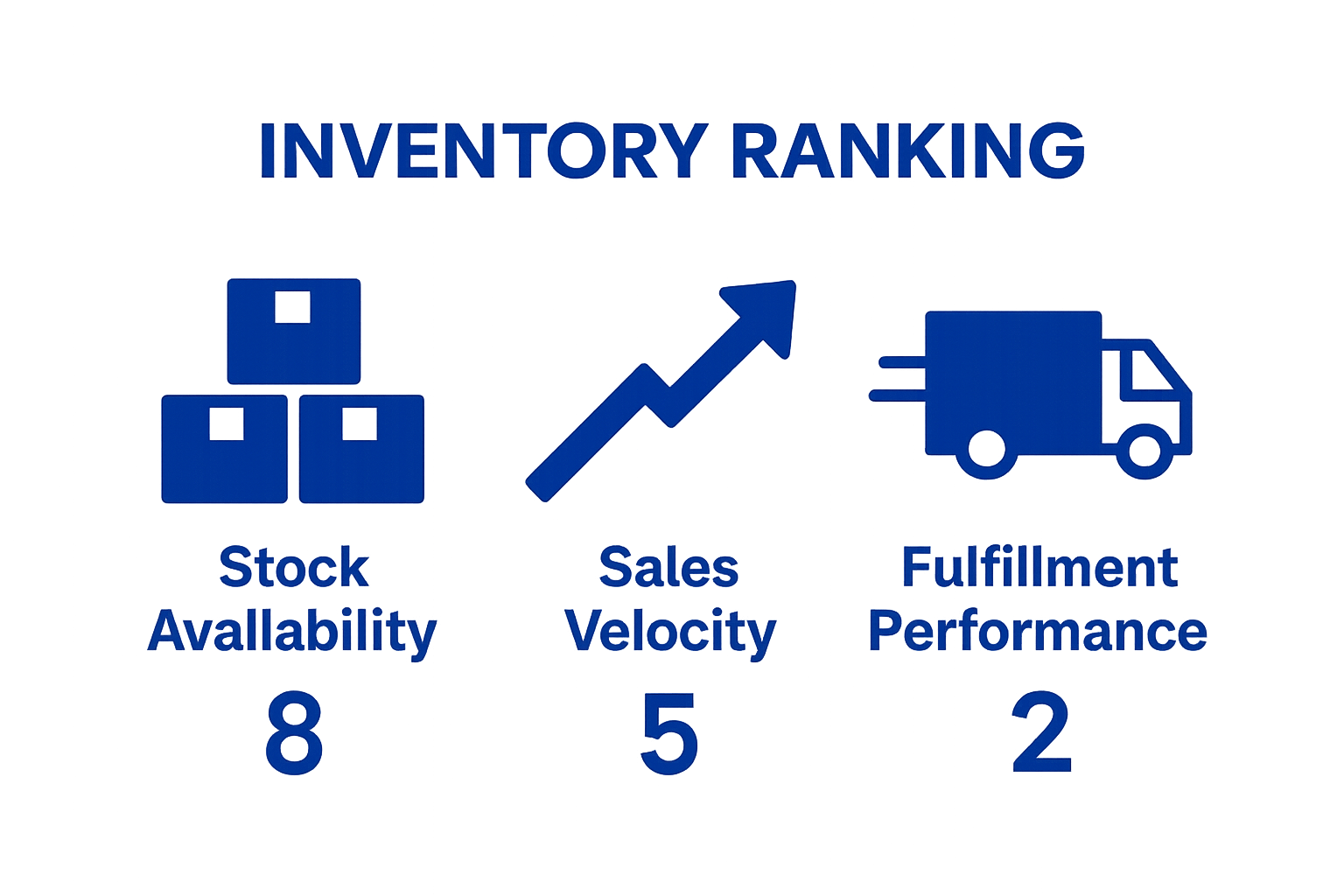
- Stock Availability: Consistent inventory levels and quick replenishment rates
- Sales Velocity: Frequency and volume of product sales
- Fulfillment Performance: Speed and reliability of order processing
- Customer Feedback: Quality and quantity of positive customer reviews
Performance Impact and Strategic Significance
The inventory ranking system serves as Amazon’s method of quality control and marketplace optimization. Sellers with higher rankings receive preferential treatment, including:
- Enhanced product visibility in search results
- Better placement in recommendation algorithms
- Increased trust from potential customers
- Potential for reduced advertising costs
Research from e-commerce analytics firm Jungle Scout indicates that top-performing sellers can see up to 50% more organic traffic through strategic inventory management. This underscores the critical importance of understanding and optimizing for Amazon’s inventory ranking system.
Ultimately, Amazon inventory ranking is not just a metric but a comprehensive evaluation of a seller’s marketplace performance. Successful sellers recognize this system as a dynamic, evolving mechanism that rewards consistent quality, reliability, and customer satisfaction.
Why is Inventory Ranking Important for Sellers?
Amazon inventory ranking transcends being a mere performance metric. It represents a critical strategic pathway for sellers to establish their competitive positioning, drive sales growth, and build sustainable marketplace success. Understanding its profound implications can transform how sellers approach their Amazon business strategy.
Financial and Visibility Implications
Inventory ranking directly impacts a seller’s financial performance and market visibility. Boost your competitive Amazon listings by recognizing how this system fundamentally influences marketplace dynamics. Products with higher rankings receive preferential treatment, which translates into tangible business advantages.
The financial benefits of strong inventory ranking include:
- Increased organic product visibility
- Reduced customer acquisition costs
- Higher conversion rates
- Improved profit margins
- Enhanced competitive positioning
Strategic Marketplace Positioning
Research from the National Bureau of Economic Research reveals that sellers with top inventory rankings experience over 80% more marketplace opportunities. This statistic underscores how Amazon’s algorithm rewards sellers who consistently demonstrate high-performance standards.
Key strategic advantages include:
- Automatic placement in recommendation algorithms
- Preferential treatment in search result rankings
- Greater likelihood of winning the Buy Box
- Increased customer trust and credibility
Successful Amazon sellers recognize inventory ranking as more than a technical metric. It represents a comprehensive evaluation of marketplace performance, reflecting a seller’s commitment to quality, reliability, and customer satisfaction. By understanding and strategically managing inventory ranking, sellers can transform their Amazon business from merely transactional to genuinely competitive.
How Amazon Inventory Ranking Works
Amazon’s inventory ranking system operates as a sophisticated, multi-dimensional algorithm that continuously evaluates seller performance across numerous interconnected metrics. This dynamic mechanism goes far beyond simple data points, creating a comprehensive assessment of marketplace effectiveness.
Algorithmic Performance Evaluation
Learn more about Amazon SEO strategies to understand the intricate mechanics behind ranking calculations. The algorithm analyzes seller performance through a complex scoring system that considers multiple critical factors simultaneously.
Key algorithmic components include:
- Quantitative Performance Metrics: Precise measurements of sales volume, inventory turnover, and order fulfillment rates
- Qualitative Assessment Parameters: Customer feedback scores, review quality, and product rating consistency
- Behavioral Performance Indicators: Seller responsiveness, shipping speed, and customer service efficiency
Real-Time Ranking Calculations
Research from E-commerce Insights demonstrates that Amazon’s ranking system updates in near real-time, continuously recalculating a seller’s marketplace standing. This dynamic approach ensures that rankings reflect current performance rather than historical data.
The ranking mechanism considers several nuanced factors:
- Frequency and consistency of sales
- Speed of inventory replenishment
- Order cancellation and return rates
- Product price competitiveness
- Adherence to Amazon’s marketplace policies
Successful sellers understand that Amazon’s inventory ranking is not a static measurement but a fluid, responsive system that rewards consistent excellence. By maintaining high standards across multiple performance dimensions, sellers can strategically improve their marketplace positioning and unlock greater sales potential.
Key Factors Influencing Inventory Ranking
Amazon’s inventory ranking system is a complex ecosystem driven by multiple interconnected performance metrics. Understanding these critical factors enables sellers to strategically optimize their marketplace positioning and enhance their competitive potential.
Performance and Sales Metrics
Explore advanced Amazon ranking tips to gain deeper insights into how sellers can positively influence their inventory ranking. The primary performance drivers encompass a sophisticated array of quantitative and qualitative measurements that collectively determine a seller’s marketplace standing.
Critical performance metrics include:
- Sales Volume: Total number and frequency of product sales
- Inventory Turnover Rate: Speed at which inventory is sold and replenished
- Order Fulfillment Consistency: Reliability and efficiency of order processing
- Product Availability: Maintaining adequate stock levels
Qualitative Evaluation Parameters
Research from the Proceedings of the National Academy of Sciences highlights that Amazon’s ranking algorithm goes beyond mere transactional data. The system evaluates sellers through a nuanced lens that considers customer experience, feedback quality, and overall marketplace contribution.
Key qualitative factors encompass:
- Customer review ratings and frequency
- Response time to customer inquiries
- Product return and cancellation rates
- Seller account health and compliance
- Customer satisfaction metrics
Successful Amazon sellers recognize that inventory ranking is a dynamic, holistic assessment of marketplace performance. By consistently delivering high-quality products, maintaining excellent customer service, and demonstrating reliable operational capabilities, sellers can strategically improve their ranking and unlock greater sales potential.
Below is a table summarizing the key quantitative and qualitative factors that influence Amazon inventory ranking, helping sellers identify areas to optimize for enhanced visibility and sales.
| Factor | Description |
|---|---|
| Sales Volume | The total number and frequency of product sales |
| Inventory Turnover Rate | How quickly inventory is sold and replenished |
| Order Fulfillment Consistency | Reliability and efficiency in processing orders |
| Product Availability | Maintaining adequate stock levels to avoid stockouts |
| Customer Review Ratings | Quality and quantity of feedback from buyers |
| Response Time to Customer Inquiries | Speed of addressing customer questions and concerns |
| Product Return and Cancellation Rates | Frequency of returned or cancelled orders |
| Seller Account Health and Compliance | Adherence to Amazon’s policies and standards |
| Customer Satisfaction Metrics | Overall customer experience and satisfaction |
Real-World Impact of Inventory Ranking on Sales
Amazon’s inventory ranking system transforms abstract algorithmic calculations into concrete business outcomes, directly influencing a seller’s marketplace success and revenue generation potential. Understanding this mechanism reveals how strategic performance management can dramatically reshape sales trajectories.
Sales Performance Transformation
Discover competitive Amazon listing strategies to comprehend how ranking directly translates into tangible marketplace advantages. Higher inventory rankings create a cascading effect of competitive benefits that extend far beyond simple product visibility.
Primary sales performance impacts include:
- Increased Organic Visibility: Higher placement in search results
- Enhanced Consumer Trust: Improved perception of product reliability
- Reduced Marketing Expenses: Lower customer acquisition costs
- Accelerated Sales Velocity: Faster product turnover rates
Quantifiable Revenue Implications
Research from the National Bureau of Economic Research demonstrates that top-ranked sellers experience exponential sales growth. Products with superior inventory rankings can witness revenue increases ranging from 30% to 75%, highlighting the profound financial significance of strategic marketplace positioning.
Key revenue transformation factors include:
- Consistent product availability
- Rapid order fulfillment
- Positive customer feedback loops
- Competitive pricing strategies
- Proactive inventory management
Successful Amazon sellers recognize inventory ranking as more than a technical metric. It represents a dynamic mechanism that rewards operational excellence, customer satisfaction, and strategic marketplace intelligence. By understanding and systematically improving ranking factors, sellers can unlock substantial revenue potential and establish sustainable competitive advantages.

Ready to Transform Your Amazon Inventory Ranking?
If you are struggling with low product visibility or unpredictable sales on Amazon, you are not alone. The article unraveled how Amazon’s inventory ranking impacts everything from your organic reach to your profit margins. For sellers, the real challenge comes down to optimizing listings, maintaining solid fulfillment, and leveraging smart data—all areas where small gaps can mean lost revenue. Learn how other sellers are conquering these obstacles and driving real growth with expert strategies. Visit our E-commerce Tips & Strategies to Grow Your Online Business for actionable advice that ties directly to Amazon’s unique algorithms.
You have worked hard to build your Amazon presence. Now it is time to partner with experts who know how to turn deep insights into measurable results. Our team at Searchoneers specializes in Amazon listing optimization and cutting-edge analytics matched to your needs. Take control of your inventory ranking and watch your sales and visibility climb. Explore our solutions today to start climbing those rankings before your competitors do.
Frequently Asked Questions
What is Amazon inventory ranking?
Amazon inventory ranking is an algorithmic system that evaluates and prioritizes seller inventory based on performance metrics like stock availability, sales velocity, fulfillment performance, and customer feedback.
Why is inventory ranking important for sellers?
Inventory ranking is crucial as it impacts visibility and sales potential, allowing sellers with higher rankings to gain preferential treatment in search results, which can lead to increased organic traffic and better sales performance.
How does Amazon’s inventory ranking algorithm work?
The inventory ranking algorithm continuously evaluates seller performance using various quantitative and qualitative metrics, including sales volume, customer reviews, and seller responsiveness, ensuring that rankings reflect current performance.
What factors influence inventory ranking on Amazon?
Key factors influencing inventory ranking include sales volume, inventory turnover rate, order fulfillment consistency, customer review ratings, and seller account health. These metrics collectively determine a seller’s position in the marketplace.

Comments
3 responses to “Understanding Amazon Inventory Ranking Explained”
[…] Learn more about Amazon inventory ranking strategies to gain deeper insights into algorithmic performance. Sellers who treat the algorithm as a dynamic, evolving system rather than a static mechanism will be best positioned to adapt and thrive in the competitive Amazon marketplace. […]
[…] than just a number. It serves as a critical indicator of product health and market positioning. Our guide on Amazon Inventory Ranking provides deeper insights into how these rankings impact overall seller strategy. A strong BSR can […]
[…] Our guide to Amazon inventory ranking reveals that product listings are fundamental to search visibility. Amazon’s algorithm prioritizes listings with: […]