Many brands struggle to balance control and exposure when selling on Amazon. Vendor Central promises a wholesale partnership where vendors supply Amazon directly, transforming the traditional marketplace experience into a simplified bulk transaction. While Amazon becomes the retailer and handles pricing, inventory, and customer service, vendors face unique challenges in margin analysis and operational planning. This guide breaks down the wholesale selling mechanism and unmasks the critical differences, helping you harness Amazon’s platform for greater product visibility and smarter analytics.
Table of Contents
- Amazon Vendor Central Defined and Debunked
- How the Vendor Central Model Works
- Vendor Central vs. Seller Central Today
- Who Qualifies and How to Onboard
- Vendor Obligations, Costs, and Risks
- Making Vendor Central Work: Analytics Wins
Key Takeaways
| Point | Details |
|---|---|
| Amazon Vendor Central is Invite-Only | Only select manufacturers can access the platform, making brand reputation crucial for qualification. |
| Amazon Manages Retail Operations | Vendors sell inventory to Amazon, which handles product listings, pricing, and customer interactions, reducing vendor management tasks. |
| Financial Risks Involved | Vendors must be aware of potential payment delays and hidden costs such as chargebacks and logistics expenses that can affect profitability. |
| Analytics Tools for Optimization | Utilizing Amazon’s analytics tools is essential for vendors to make informed decisions and adapt strategies based on market trends and sales performance. |
Amazon Vendor Central Defined and Debunked
Amazon Vendor Central represents an exclusive, invitation-only platform where manufacturers and distributors sell products directly to Amazon at wholesale prices. Unlike traditional third-party selling models, this unique business relationship transforms Amazon into the actual retailer, handling everything from inventory storage to customer service.
In the Vendor Central model, businesses essentially become wholesale suppliers to Amazon, receiving purchase orders and selling their entire inventory in bulk. Wholesale selling mechanism operates fundamentally differently from marketplace selling, creating a more streamlined transaction process.
Key characteristics of Amazon Vendor Central include:
- Invitation-only access restricted to select manufacturers
- Wholesale pricing model where Amazon purchases inventory outright
- Amazon manages product listing, pricing, and customer interactions
- Products appear as “Sold by Amazon” on the platform
- Reduced direct customer management for vendors
The platform presents both significant advantages and notable challenges for businesses. Vendors gain exposure through Amazon’s massive marketplace while surrendering direct control over pricing and customer relationships. Vendor inventory management requires strategic planning to navigate Amazon’s complex purchasing algorithms.
Pro Tip: Consider thoroughly analyzing your product margins and supply chain capabilities before accepting an Amazon Vendor Central invitation to ensure long-term profitability.
How the Vendor Central Model Works
Amazon Vendor Central transforms traditional wholesale relationships by creating a unique marketplace interaction where manufacturers become direct suppliers to Amazon itself. Wholesale purchasing mechanism operates through a systematic process that simplifies inventory management and sales distribution for participating vendors.
The operational workflow follows a structured approach:
- Amazon generates purchase orders based on anticipated product demand
- Vendors ship bulk inventory directly to Amazon fulfillment centers
- Amazon assumes complete ownership of the purchased inventory
- Products are listed and sold under Amazon’s retail platform
- Vendors receive wholesale pricing for their total inventory shipment
Under this model, Amazon takes complete responsibility for critical sales functions. Order fulfillment process involves Amazon managing pricing strategies, customer support, and product listings, effectively removing significant operational burdens from vendors.
Vendors benefit from reduced complexity in sales management, gaining access to Amazon’s massive customer base while minimizing direct customer interaction. However, this model also means surrendering control over final pricing and marketing strategies, requiring careful strategic planning and margin analysis.
Pro Tip: Develop a comprehensive financial model that accounts for wholesale pricing differences and potential volume discounts before committing to the Amazon Vendor Central program.
Vendor Central vs. Seller Central Today
Amazon’s selling platforms represent two distinct approaches to online retail, each offering unique advantages for different business models. Wholesale selling strategies fundamentally differ between Vendor Central and Seller Central, creating complex choices for manufacturers and retailers.
Key differences between the two platforms include:
- Vendor Central: Invite-only wholesale model
- Seller Central: Open platform for third-party sellers
- Vendor Central: Amazon purchases inventory upfront
- Seller Central: Sellers manage own inventory and pricing
- Vendor Central: Limited seller control
- Seller Central: Maximum seller autonomy
In Vendor Central, manufacturers essentially become wholesale suppliers, selling bulk inventory directly to Amazon. The platform simplifies operations by transferring inventory management, pricing, and customer service responsibilities to Amazon. Conversely, Seller Central empowers individual sellers with complete control over their sales strategy, pricing, and customer interactions.
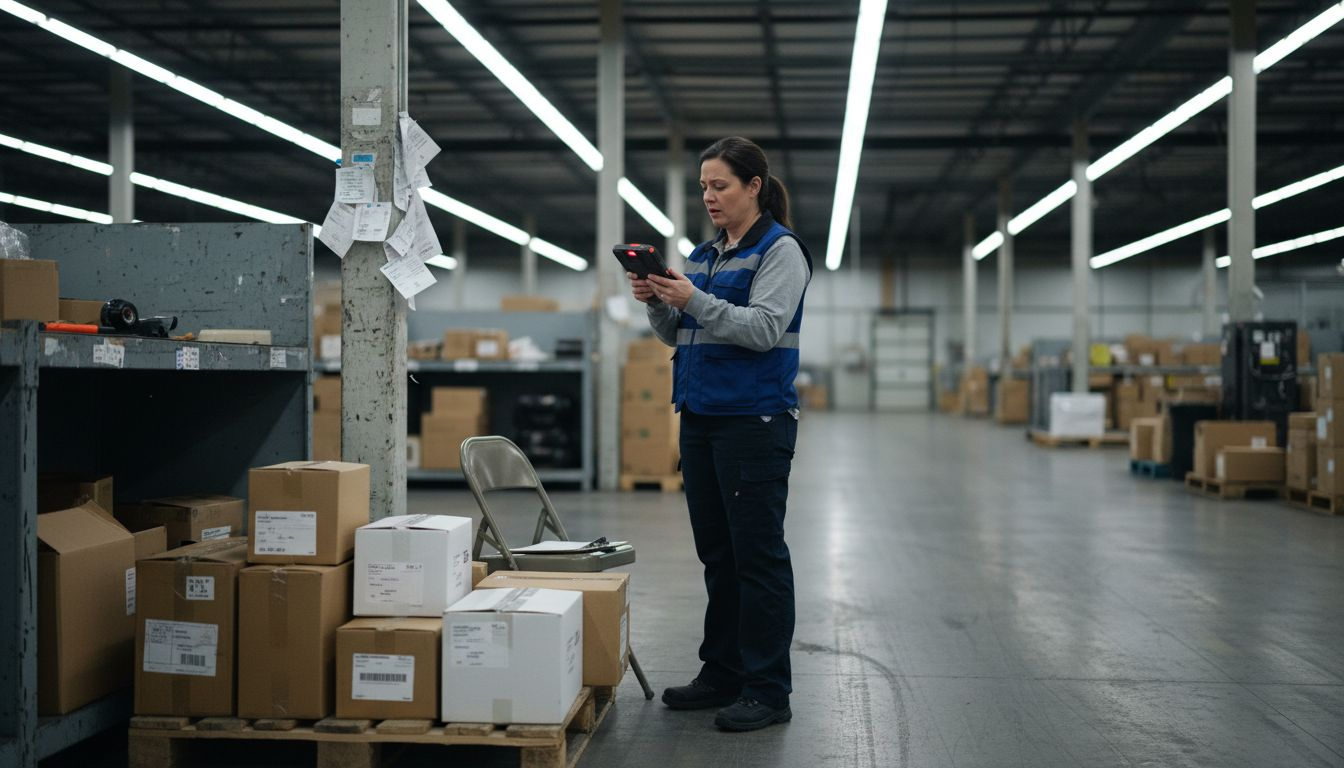
The choice between these platforms depends on a company’s scale, operational capabilities, and strategic goals. Smaller businesses might prefer Seller Central’s flexibility, while larger manufacturers may appreciate Vendor Central’s streamlined wholesale approach.
Here’s a concise comparison of Amazon Vendor Central and Seller Central to help you evaluate which model fits your business needs:
| Aspect | Vendor Central | Seller Central |
|---|---|---|
| Access | Invitation only | Open to all sellers |
| Inventory Ownership | Amazon owns inventory | Seller retains ownership |
| Pricing Control | Amazon sets pricing | Seller sets pricing |
| Customer Relationship | Amazon handles support | Seller manages interactions |
| Typical User | Large brands/manufacturers | Small and midsize businesses |
Pro Tip: Conduct a comprehensive financial analysis comparing potential margins and operational costs between Vendor Central and Seller Central before making your platform selection.
Who Qualifies and How to Onboard
Amazon Vendor Central represents an exclusive pathway for established brands seeking strategic wholesale partnerships. Vendor qualification process involves rigorous selection criteria that go far beyond traditional marketplace entry requirements.
Key qualifications for potential vendors include:
- Established brand with proven market performance
- Strong product catalog and consistent sales history
- Ability to meet Amazon’s wholesale volume requirements
- Trademark ownership and verified business documentation
- Robust supply chain and inventory management capabilities
- Compliance with Amazon’s operational standards
The onboarding journey requires comprehensive preparation. Vendors must complete multiple critical steps, including submitting detailed business information, agreeing to Amazon’s vendor terms, and setting up Electronic Data Interchange (EDI) systems for seamless order management. Vendor account registration demands meticulous attention to documentation and operational readiness.
Successful candidates typically represent mid to large-sized manufacturers with demonstrated product quality, consistent inventory capabilities, and the infrastructure to support Amazon’s demanding wholesale requirements. The invitation-only nature of Vendor Central means that not all businesses will qualify, making strategic positioning and brand reputation crucial factors.
Pro Tip: Develop a comprehensive business portfolio showcasing your brand’s scalability, product consistency, and operational excellence before seeking Amazon Vendor Central invitation.
Vendor Obligations, Costs, and Risks
Vendor Central participation requires comprehensive understanding of complex operational expectations and financial implications. Vendor compliance requirements involve intricate obligations that extend far beyond simple product delivery.
Key vendor obligations include:
- Timely fulfillment of purchase orders
- Consistent product quality maintenance
- Adherence to Amazon’s strict inventory standards
- Managing shipping and logistics requirements
- Compliance with detailed performance metrics
- Maintaining competitive wholesale pricing
Financial risks and potential costs are substantial. Hidden vendor expenses can dramatically impact profitability, including chargebacks, shipping fees, and promotional allowances. Vendors often face payment delays ranging from 30 to 90 days, creating significant cash flow challenges.
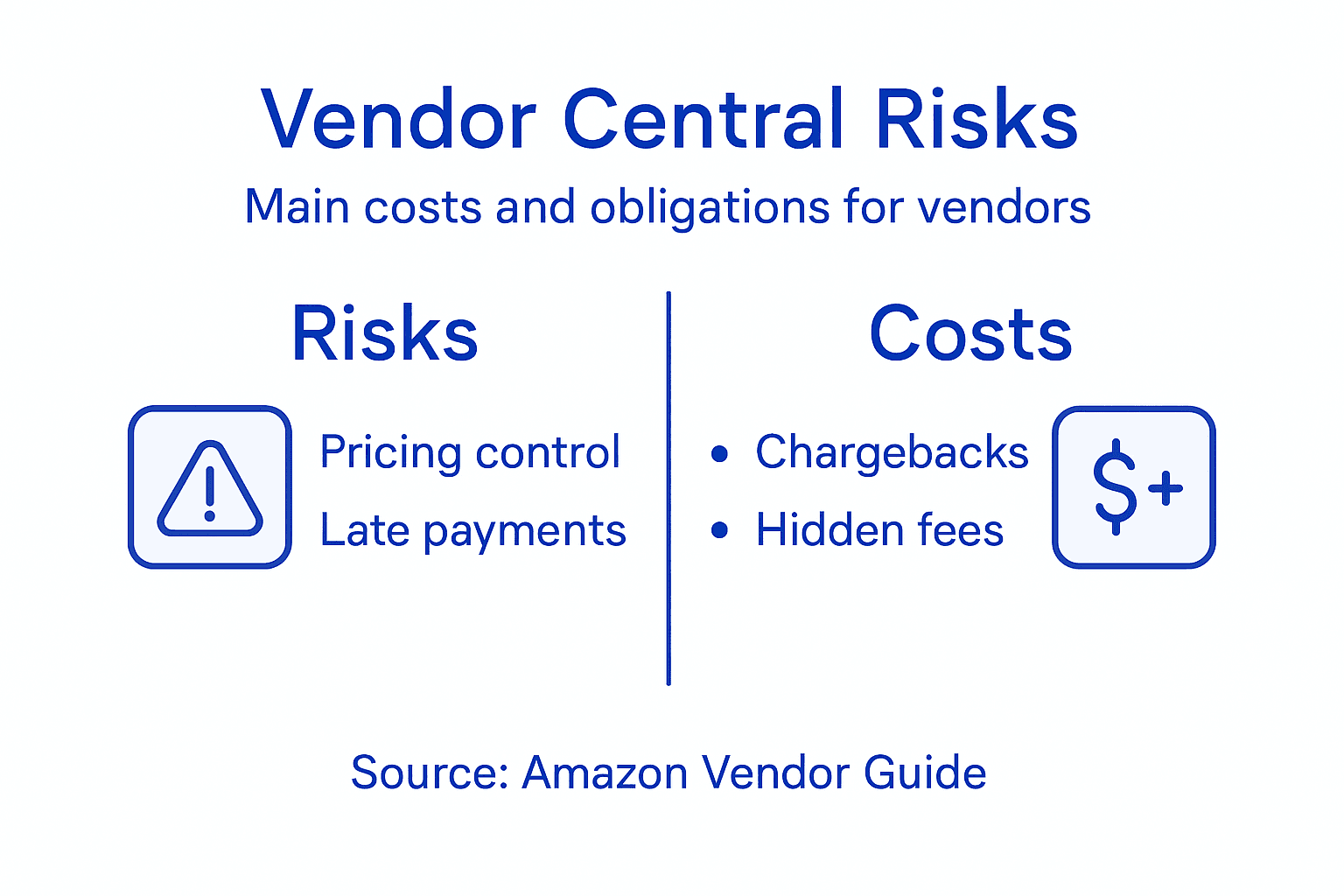
The most critical risks involve surrendering control over pricing, marketing, and inventory management. Amazon’s buying algorithms and strict performance standards mean vendors must remain exceptionally flexible, maintaining robust supply chains and operational resilience to survive in this demanding ecosystem.
This summary highlights important financial and operational risks for potential Vendor Central participants:
| Risk Type | Impact on Vendor | Mitigation Strategy |
|---|---|---|
| Payment Delays | Cash flow challenges | Maintain financial reserves |
| Chargebacks | Unexpected costs | Review compliance regularly |
| Loss of Pricing Control | Reduced margin flexibility | Analyze wholesale terms carefully |
| Shipping Expenses | Lower overall profitability | Optimize logistics efficiency |
Pro Tip: Create a comprehensive financial buffer and detailed contingency plan to mitigate potential cash flow disruptions and unexpected vendor compliance costs.
Making Vendor Central Work: Analytics Wins
Amazon’s analytics platform provides vendors with powerful insights for strategic decision-making. Sales performance analytics enable manufacturers to optimize their entire operational approach within the Vendor Central ecosystem.
Key analytics tools and metrics include:
- Detailed sales performance reports
- Inventory health tracking
- Customer behavior insights
- Market trend analysis
- Purchase order optimization metrics
- Product visibility measurements
Successful vendors leverage these analytics to make data-driven decisions. Vendor dashboard strategies transform raw data into actionable intelligence, helping businesses anticipate demand, reduce stockouts, and align product offerings with Amazon’s complex retail algorithms.
The most sophisticated vendors view analytics not just as reporting tools, but as strategic navigation systems. By continuously monitoring performance metrics, analyzing customer engagement patterns, and quickly adapting to marketplace shifts, vendors can create a dynamic, responsive approach to Amazon’s ever-changing retail landscape.
Pro Tip: Develop a weekly analytics review routine that systematically examines key performance indicators to identify emerging trends and potential optimization opportunities.
Maximize Your Success with Amazon Vendor Central and Expert E-commerce Strategies
Navigating the complexities of Amazon Vendor Central means mastering wholesale pricing, relinquished control over listings, and understanding Amazon’s powerful purchasing algorithms. If you want to avoid common pitfalls like unpredictable payment timelines or chargebacks, you need precise, data-driven support that aligns with Vendor Central’s demands. It’s crucial to optimize your product listings and leverage insightful analytics to stay competitive within Amazon’s ecosystem.
Discover how our services at SearchOneers can empower your business with expert Amazon Listing Optimization and advanced Amazon SEO & Analytics designed to boost visibility even when Amazon manages pricing and fulfillment. Learn proven E-commerce Tips & Strategies to Grow Your Online Business that help you adapt smoothly to Vendor Central’s challenges. Take control of your brand’s future on Amazon today by partnering with us to enhance your wholesale performance and analytics. Visit us now at https://searchoneers.com to begin your growth journey.
Frequently Asked Questions
What is Amazon Vendor Central?
Amazon Vendor Central is an invitation-only platform where manufacturers and distributors sell products directly to Amazon at wholesale prices, allowing Amazon to act as the retailer for those products.
How does the Vendor Central model work?
In the Vendor Central model, Amazon generates purchase orders, vendors ship bulk inventory to Amazon, and Amazon manages product listings, pricing, and customer interactions, simplifying operations for vendors.
What are the main differences between Amazon Vendor Central and Seller Central?
Vendor Central operates as an invite-only wholesale model where Amazon buys inventory upfront, while Seller Central allows open access for third-party sellers who maintain control over their inventory and pricing.
Who qualifies to use Amazon Vendor Central?
To qualify for Amazon Vendor Central, companies typically need to have an established brand, proven sales history, and robust supply chain capabilities, among other requirements, making it suitable for mid to large-sized manufacturers.