

Did you know that over 60 percent of product searches now begin on Amazon instead of Google? This shift means that finding the right keywords can make or break your sales. Shoppers rely on specific search terms to discover products like yours, so understanding how to align your listings with what people are actually searching for gives you a real edge in Amazon’s crowded marketplace.
Table of Contents
- Amazon Keyword Research Explained Clearly
- Essential Tools and Methods for Research
- Types of Amazon Keywords and Their Uses
- Optimizing Listings Using Target Keywords
- Avoiding Common Keyword Research Mistakes
Key Takeaways
| Point | Details |
|---|---|
| Keyword Research Importance | Understanding customer search behavior is crucial for product visibility on Amazon. Effective keyword research directly affects sales performance by aligning listings with shopper language. |
| Tools and Techniques | Utilize various tools like Amazon Autocomplete and reverse ASIN lookups to identify effective keywords. Periodic analysis of competitor listings and customer reviews can enhance your keyword strategy. |
| Types of Keywords | Differentiate between primary and secondary keywords, as well as short-tail and long-tail keywords, to optimize your product discoverability. Focusing on long-tail keywords can yield higher conversion rates. |
| Common Mistakes | Avoid pitfalls such as keyword stuffing and failing to adapt keyword strategies to market trends. Continuous monitoring and updating of keywords based on actual search patterns are essential for success. |
Amazon Keyword Research Explained Clearly
Amazon keyword research is the strategic process of identifying and analyzing search terms potential customers use when looking for products on Amazon’s platform. According to Perpetua, this process involves understanding the specific language and phrases shoppers utilize to discover items, which directly impacts product visibility and sales performance.
At its core, keyword research helps sellers understand customer search behavior. By analyzing actual shopper search patterns, sellers can optimize their product listings to match consumer language precisely. Similarweb emphasizes that effective keyword research involves examining real shopper searches to enhance discoverability and improve overall sales strategies.
Successful Amazon keyword research typically involves multiple techniques:
- Analyzing Amazon’s autocomplete search suggestions
- Reviewing competitor product listings
- Utilizing specialized Amazon keyword research tools
- Examining customer review language
- Tracking seasonal search trend variations
To maximize your keyword strategy, sellers should focus on finding terms that balance search volume, relevance, and competition level. This means identifying keywords that have significant search traffic, directly relate to your product, and aren’t so competitive that your listing gets lost among hundreds of similar products. For a deeper understanding of keyword selection strategies, check out our guide on how to choose Amazon keywords.
The ultimate goal of Amazon keyword research is transforming search visibility into tangible sales. By speaking the same language as your potential customers and strategically positioning your product listings, you can significantly improve your chances of connecting with buyers precisely when they’re ready to make a purchase.
Essential Tools and Methods for Research
Understanding the right tools and methods for Amazon keyword research can dramatically improve your product visibility and sales strategy. Helium 10 offers sophisticated solutions like Cerebro and Magnet, which provide advanced capabilities for sellers looking to optimize their keyword strategies. Cerebro allows sellers to perform a reverse ASIN lookup to identify effective keywords from competitor listings, while Magnet helps discover high-volume, relevant keywords that can boost product discoverability.
Among the most powerful keyword research methods are utilizing specialized Amazon keyword tools that analyze actual shopper search behaviors. Ahrefs provides an innovative Amazon Keyword Tool that generates keyword ideas by analyzing the precise search terms real customers use on the platform. By entering a broad product description, sellers can receive a comprehensive list of related search terms that can be strategically integrated into their product listings.
Key tools and methods for effective Amazon keyword research include:
Here’s a summary comparing key Amazon keyword research tools and methods:
| Tool/Method | Key Features | Best Use Case |
|---|---|---|
| Amazon Autocomplete | Real-time shopper suggestions | Discover trending search terms |
| Reverse ASIN Lookup (e.g., Helium 10 Cerebro) | Extract competitor keywords | Analyze competitor listings |
| Specialized Keyword Tools (e.g., Helium 10 Magnet, Ahrefs) | Comprehensive keyword ideas Search volume data | Build a diverse keyword list |
| Competitor Listing Analysis | Review competitor pages | Identify effective keywords in use |
| Customer Review Mining | Extract buyer language & phrases | Find conversion-focused keywords |
| Keyword Volume/Trend Tracking | Track keyword growth Analyze seasonality | Plan for trend shifts and seasonality |
- Amazon’s own search autocomplete feature
- Reverse ASIN lookup tools
- Competitor listing analysis platforms
- Keyword volume and trend tracking software
- Customer review mining tools
- Long-tail keyword discovery engines
When selecting keyword research tools, sellers should evaluate options based on several critical criteria:
- Accuracy of search volume data
- Depth of keyword suggestions
- Competitor analysis capabilities
- Ease of use and interface
- Cost-effectiveness for your business scale
For sellers serious about maximizing their Amazon presence, investing in robust keyword research tools is not just an option—it’s a strategic necessity. By leveraging advanced technologies and data-driven insights, you can transform your product listings from invisible to irresistible.
IMAGE:descriptive_key_1] Check out our [guide on how to choose Amazon keywords for more in-depth strategies to refine your approach.
Types of Amazon Keywords and Their Uses
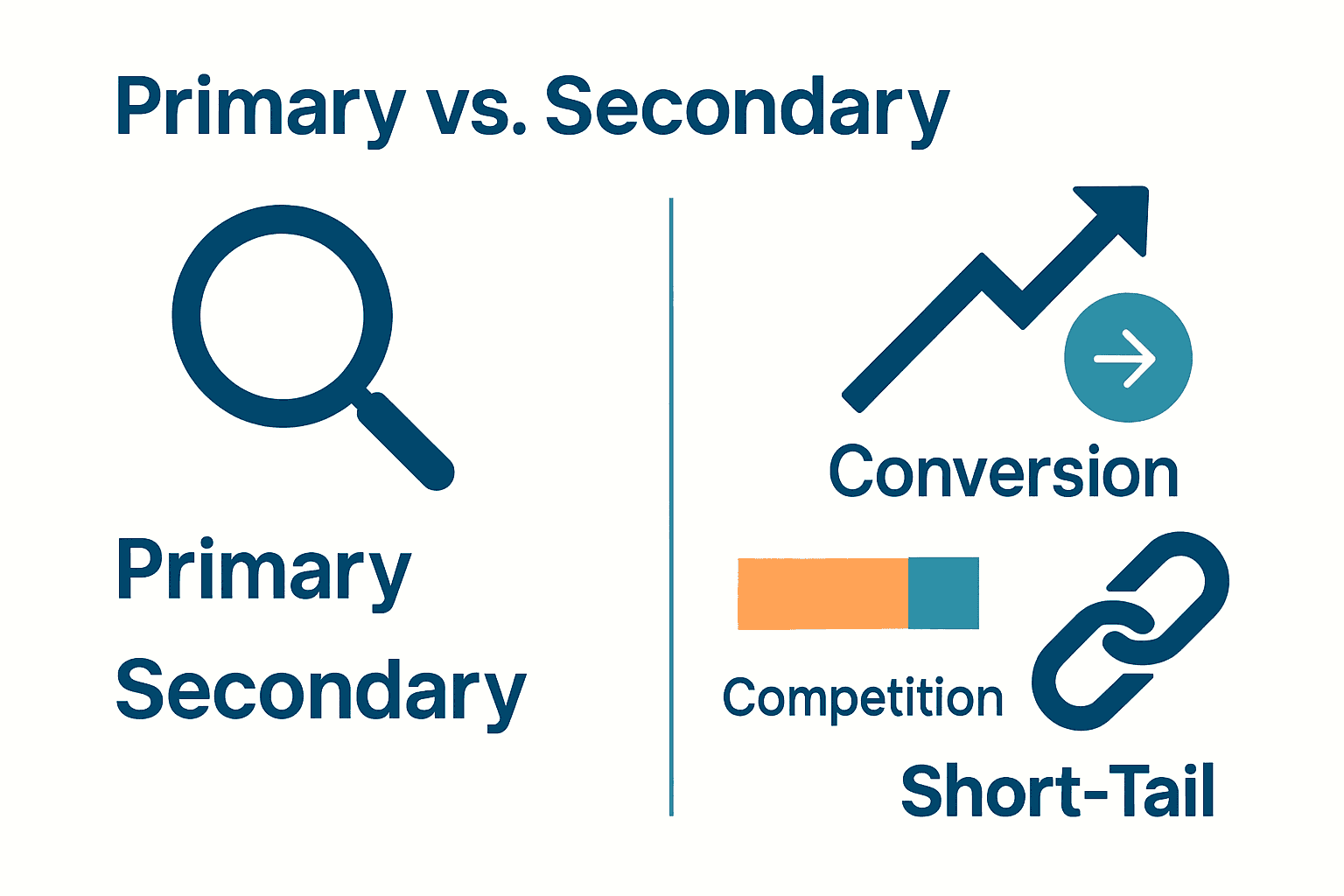
Understanding the diverse landscape of Amazon keywords is crucial for sellers seeking to optimize their product visibility. Perpetua highlights the fundamental distinction between primary keywords and secondary keywords. Primary keywords directly describe the product’s core features, while secondary keywords encompass related terms and synonyms that expand search coverage and enhance overall product discoverability.
Similarweb emphasizes the strategic importance of differentiating between short-tail and long-tail keywords. Short-tail keywords are broad, highly competitive search terms that generate significant traffic but often have lower conversion rates. Conversely, long-tail keywords are more specific, less competitive phrases that typically result in higher conversion rates by targeting customers with precise search intentions.
Key types of Amazon keywords include:
- Exact Match Keywords: Precise product descriptions
- Broad Match Keywords: Wider range of related search terms
- Phrase Match Keywords: Specific word combinations
- Synonym Keywords: Alternative product description terms
- Misspelled Keywords: Common search errors
- Seasonal Keywords: Time-specific search terms
Successful Amazon sellers develop a nuanced keyword strategy that balances different keyword types. Some critical considerations for keyword selection include:
- Search volume potential
- Relevance to product
- Competition level
- Customer search intent
- Conversion likelihood
For a comprehensive understanding of crafting an effective keyword approach, explore our guide on essential Amazon keyword types. By mastering these keyword variations, sellers can significantly improve their product’s visibility and connect more effectively with potential customers searching on Amazon’s platform.
Optimizing Listings Using Target Keywords
Helium 10 emphasizes that strategic keyword placement is fundamental to Amazon listing optimization. Incorporating target keywords isn’t just about stuffing phrases into your product description—it’s about intelligent, strategic integration across multiple listing elements to maximize search visibility and attract potential buyers.
Ahrefs highlights that keyword optimization requires a comprehensive approach, strategically positioning keywords throughout the product listing. This means carefully embedding keywords in critical areas like the product title, bullet points, description, and backend search terms to enhance search result rankings and drive potential customer engagement.
Key areas for strategic keyword placement include:
- Product Title: Primary and most important keyword location
- Bullet Points: Highlight key features and secondary keywords
- Product Description: Elaborate on product benefits with contextual keywords
- Backend Search Terms: Hidden keywords for additional searchability
- Image Alt Text: Subtle keyword integration for enhanced SEO
Successful Amazon sellers follow these critical keyword optimization principles:
- Maintain natural, readable language
- Avoid keyword stuffing
- Focus on customer-centric language
- Prioritize relevance over volume
- Continuously update and refine keywords
To further refine your approach to listing optimization, explore our guide on optimizing Amazon product listings. By mastering these strategic keyword placement techniques, sellers can significantly improve their product’s discoverability and attract more potential customers searching on Amazon’s platform.
Avoiding Common Keyword Research Mistakes
Perpetua reveals several critical pitfalls that Amazon sellers frequently encounter during keyword research. Keyword research mistakes can dramatically undermine a product’s visibility and sales potential, making it essential to understand and proactively address these common errors before they impact your listing’s performance.
Similarweb emphasizes that relying exclusively on generic keyword tools without understanding actual shopper behavior is a significant strategic misstep. Effective keyword research requires deep insights into real customer search patterns, not just algorithmic data points that might not reflect genuine market dynamics.
Common keyword research mistakes to avoid include:
- Keyword Stuffing: Overloading listings with irrelevant keywords
- Ignoring Competitor Analysis: Failing to understand competitor keyword strategies
- Static Keyword Approach: Not updating keywords based on market trends
- Overlooking Long-Tail Keywords: Focusing only on broad, high-volume terms
- Neglecting Search Intent: Using keywords without understanding customer motivation
To develop a robust keyword strategy, sellers should:
- Continuously monitor market trends
- Analyze actual customer search behaviors
- Regularly update keyword selections
- Balance broad and specific search terms
- Prioritize relevance over pure search volume
For those seeking a more comprehensive approach to keyword strategy, explore our guide on Amazon keyword strategies for success. By understanding and avoiding these common mistakes, sellers can create more targeted, effective product listings that genuinely connect with potential customers.
Unlock the Full Potential of Your Amazon Listings Today
The article highlights how crucial precise Amazon keyword research is to overcome the challenge of low product visibility and missed sales opportunities. If you want to avoid common pitfalls like keyword stuffing or ignoring long-tail keywords and instead master strategic placement of primary and secondary keywords, you need expert help that turns complex data into actionable results. Your goal is clear: enhance your product discoverability with relevant keywords that resonate with real customer intent and search behavior.
Ready to stop guessing and start growing your Amazon sales? Discover proven methods and hands-on support in our E-commerce Tips & Strategies to Grow Your Online Business where we share insider insights.

Take the next step now by visiting SearchOneers to access our Amazon listing optimization services tailored for maximum visibility. Our solutions enhance product titles, bullet points, descriptions, and backend keywords using smart, data-backed SEO tactics that keep pace with marketplace changes. Don’t wait for your competitors to outpace you. Optimize your listings with us and start turning keyword research into real sales today.
Frequently Asked Questions
What is Amazon keyword research?
Amazon keyword research is the process of identifying and analyzing the search terms customers use on Amazon to find products. It helps sellers optimize their listings to increase visibility and sales.
Why is keyword research important for Amazon sellers?
Keyword research is crucial for Amazon sellers because it enables them to understand customer search behavior and improve their product visibility. By using effective keywords, sellers can connect better with buyers and increase their chances of making sales.
What are the different types of keywords used in Amazon keyword research?
The key types of keywords include primary keywords, secondary keywords, short-tail keywords, long-tail keywords, exact match keywords, broad match keywords, phrase match keywords, synonym keywords, misspelled keywords, and seasonal keywords.
How can I optimize my Amazon listings using target keywords?
To optimize your Amazon listings, strategically place target keywords in important areas such as the product title, bullet points, description, backend search terms, and image alt text. This enhances search visibility while ensuring the content remains readable and relevant.

Comments
3 responses to “Complete Guide to Amazon Keyword Research”
[…] further refine your search term strategy, sellers can leverage the Complete Guide to Amazon Keyword Research which provides in-depth insights into selecting and implementing the most effective search terms. […]
[…] Complete Guide to Amazon Keyword Research – Searchoneers […]
[…] to dive deeper into keyword selection? Check out our comprehensive guide to Amazon keyword research to unlock advanced strategies for marketplace […]