

Amazon is home to millions of competing products, all vying for that top spot in search results. The top 3 search results on Amazon capture about 64 percent of all clicks. That sounds impossible to break into if you are not already a giant. But you might be surprised. Even a new seller can outrank seasoned competitors just by nailing keyword relevance, and the secret lies in how closely your listing matches the words real shoppers use.
Table of Contents
- What Is Keyword Relevance On Amazon?
- How Keyword Relevance Influences Search Rankings
- Key Concepts Behind Keyword Relevance And Optimization
Quick Summary
| Takeaway | Explanation |
|---|---|
| Keyword relevance drives visibility. | Matching product listings with actual customer search terms increases discoverability on Amazon. |
| Optimize all listing components. | Use keywords strategically in titles, descriptions, and metadata for better search algorithm alignment. |
| Higher ranking boosts sales potential. | Products in top search results get significantly more clicks, enhancing sales opportunities. |
| Focus on semantic relevance. | Understanding the contextual meaning behind search queries improves keyword optimization effectiveness. |
| Monitor performance metrics continuously. | Regularly assessing keyword performance helps refine strategies and maintain competitive advantage. |
What is Keyword Relevance on Amazon?
Keyword relevance on Amazon is a critical metric that determines how well your product matches specific search queries potential customers use when shopping. It represents the alignment between your product listing’s keywords and the search terms shoppers enter, directly impacting your visibility and ranking in Amazon’s search results.
Understanding the Amazon Search Algorithm
Amazon’s search algorithm, known as A9, evaluates keyword relevance through complex computational processes. The algorithm analyzes multiple factors to determine how closely your product matches a user’s search intent.
The following table summarizes the key factors Amazon’s search algorithm considers when evaluating keyword relevance. This helps sellers understand which areas of a product listing to optimize for maximum impact.
| Evaluation Factor | Description |
|---|---|
| Exact keyword matches in titles | Algorithm checks for keywords that exactly match search queries. |
| Keyword presence in descriptions | Inclusion of keywords within product descriptions is analyzed. |
| Backend search terms and metadata | Keywords in hidden fields are evaluated for relevance. |
| Click-through rates | Tracks how often shoppers click your product in search results. |
| Conversion rates for search queries | Monitors purchases tied to specific keyword searches. |
The search algorithm considers several key elements when assessing keyword relevance:
- Exact keyword matches in product titles
- Keyword presence in product descriptions
- Backend search terms and metadata
- Customer interaction signals like click-through rates
- Conversion rates associated with specific search queries
Why Keyword Relevance Matters for Sellers
For Amazon sellers, keyword relevance is more than a technical detail—it’s a fundamental driver of product discoverability and sales potential. Learn more about Amazon SEO strategies that can help you optimize your listings.
When your product demonstrates high keyword relevance, Amazon’s algorithm rewards you with higher search rankings. This means your product appears closer to the top of search results, increasing visibility and the likelihood of potential customers discovering and purchasing your item. Sellers who understand and strategically implement keyword relevance can significantly improve their competitive positioning on the platform.
Why Keyword Relevance Matters for Amazon Sellers
Keyword relevance transforms how sellers compete and succeed in Amazon’s massive marketplace. It represents a critical strategic lever that directly influences product visibility, customer discovery, and ultimately sales performance.
The Impact on Product Visibility
Understanding keyword relevance is crucial because it determines whether potential customers will find your product among millions of competing listings. Amazon’s search algorithm prioritizes products that most precisely match customer search queries. This means sellers who strategically align their product descriptions, titles, and backend keywords with actual customer search language gain a significant competitive advantage.
Learn how to optimize your Amazon search strategy to maximize your product’s visibility and potential sales.
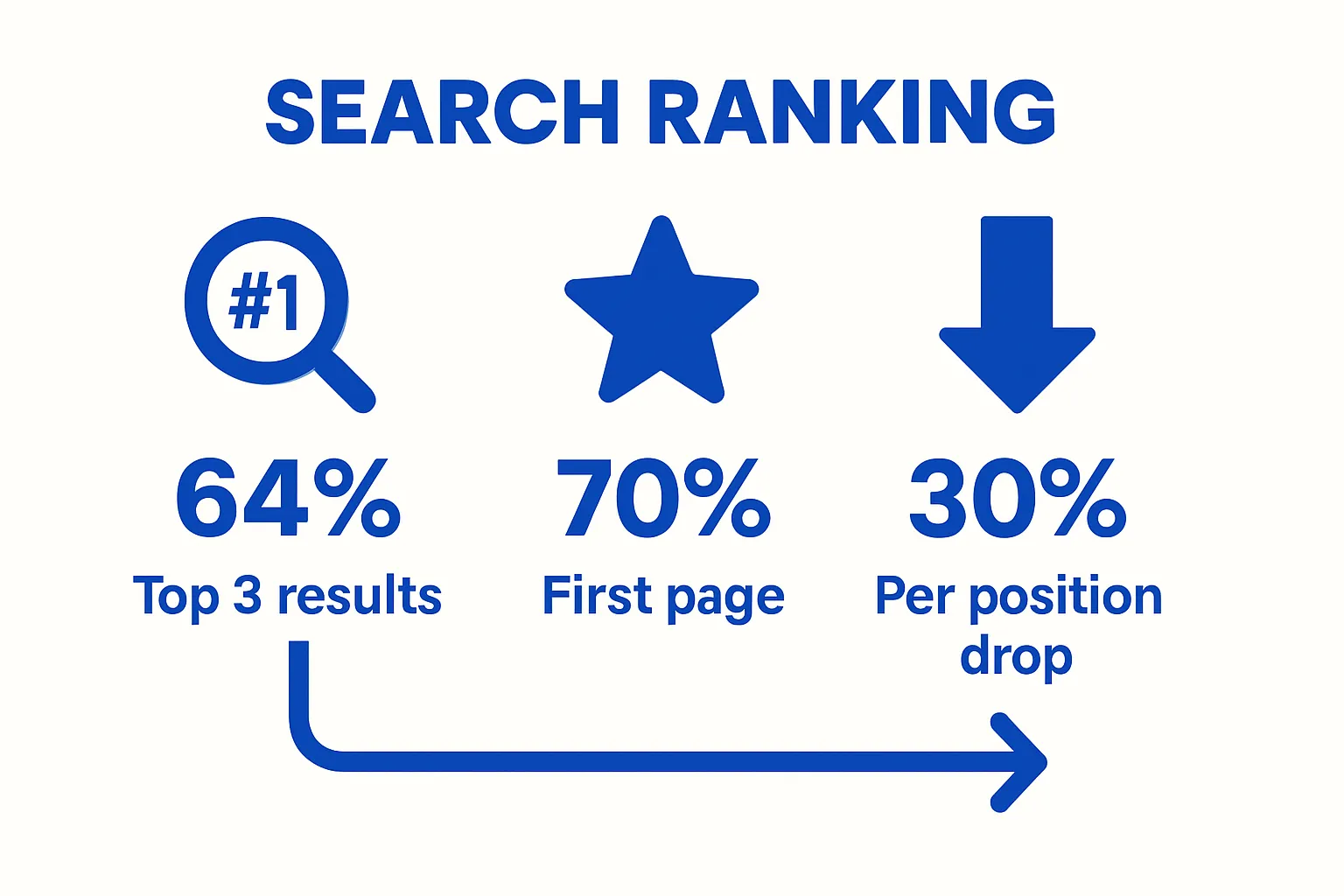
The competitive implications of keyword relevance are substantial. Products that rank higher in search results experience exponentially more visibility:
This table presents critical statistics about how keyword relevance and search ranking affect product visibility and sales potential on Amazon.
| Ranking Position | Share of Clicks/Attention | Impact |
|---|---|---|
| Top 3 Positions | About 64% of all clicks | Highest opportunity for exposure and sales |
| First Page Overall | Over 70% of customer attention | Dramatically higher product discoverability |
| Position Drop (per rank) | Up to 30% fewer clicks | Significantly reduces visibility and sales |
- Top 3 search results capture approximately 64% of all clicks
- Products on the first page receive over 70% of customer attention
- Each position drop in search results can reduce click-through rates by 30%
Financial Consequences of Keyword Optimization
Keyword relevance directly translates into financial performance for Amazon sellers. Products with high keyword relevance not only appear more frequently in search results but also tend to convert more effectively. This means lower advertising costs, higher organic traffic, and improved overall sales efficiency.
Moreover, consistently maintaining high keyword relevance signals to Amazon’s algorithm that your product is valuable and relevant. This can lead to additional algorithmic benefits, such as improved product recommendations and potentially lower advertising costs per click.
By investing time in understanding and implementing strategic keyword relevance, sellers can create a powerful competitive advantage that drives sustainable growth in Amazon’s highly competitive marketplace.
How Keyword Relevance Influences Search Rankings
Keyword relevance serves as the fundamental mechanism by which Amazon determines product placement in search results. It acts as a sophisticated filtering system that evaluates how closely product listings match customer search intentions and behaviors.
The Algorithmic Evaluation Process
Amazon’s search ranking algorithm considers multiple dimensions of keyword relevance beyond simple word matching. The system analyzes the contextual alignment between search queries and product listings through complex computational processes. Explore advanced Amazon keyword analysis techniques to understand these intricate ranking mechanisms.
The algorithmic evaluation encompasses several critical factors:
- Precise keyword placement within product titles
- Keyword density and distribution across listing content
- Semantic relevance and search intent matching
- Historical performance metrics associated with specific keywords
- Customer engagement signals like click-through and conversion rates
Performance Metrics and Ranking Dynamics
Keyword relevance directly influences a product’s search ranking through a dynamic scoring system. Products demonstrating higher relevance receive preferential treatment, appearing closer to the top of search results. This means sellers who strategically optimize their keyword alignment can significantly improve their product visibility.
According to research from Cornell University, products with high keyword relevance can experience up to a 40% improvement in search ranking positions. This substantive difference translates into exponentially higher visibility and potential sales opportunities.

The ranking mechanism operates as a continuous feedback loop, where customer interactions constantly refine and recalibrate keyword relevance scores. Sellers who consistently maintain strong keyword alignment and monitor performance metrics can develop a sustainable competitive advantage in Amazon’s dynamic marketplace.
Key Concepts Behind Keyword Relevance and Optimization
Keyword relevance optimization represents a strategic approach to aligning product listings with customer search behaviors and algorithmic ranking requirements. Understanding the fundamental principles enables sellers to develop more effective product visibility strategies.
Core Components of Keyword Strategy
Effective keyword optimization goes beyond simple term insertion. It requires a nuanced understanding of semantic relationships, search intent, and algorithmic interpretation. Learn about product description optimization techniques to enhance your keyword strategy.
The critical components of a robust keyword optimization approach include:
- Comprehensive keyword research reflecting actual customer language
- Strategic placement of keywords across multiple listing elements
- Understanding contextual and semantic search connections
- Continuous performance monitoring and refinement
- Balancing algorithmic requirements with natural, readable content
Semantic Relevance and Search Intent
Modern keyword optimization transcends traditional exact-match strategies. Semantic relevance represents the deeper contextual understanding of search queries, focusing on the underlying meaning rather than literal word matches.
According to research from Searchmetrics, advanced search algorithms now prioritize contextual understanding over simple keyword density. This means sellers must develop more sophisticated approaches that capture the nuanced intent behind customer searches.
Successful keyword optimization requires sellers to think like their potential customers, anticipating the precise language and conceptual frameworks they might use when searching for products. By developing a holistic understanding of search behavior and algorithmic interpretation, sellers can create more strategic and effective product listings that naturally align with Amazon’s ranking mechanisms.
Struggling to Make Your Amazon Listings Stand Out?
Mastering keyword relevance on Amazon is not easy. Maybe you are pouring hours into research and still find your products slipping down the ranks or missing out on clicks. With algorithms weighing every word in your titles and descriptions and with your competition investing in the same keywords, it is easy to feel lost. If finding the right balance between keyword placement and natural content feels impossible, you are not alone. Missing these details can cost you visibility, traffic, and sales.
Winning on Amazon starts with expert guidance and data-driven strategy. At Searchoneers, we deliver advanced Amazon Listing Optimization combined with analytics so you achieve superior visibility and fast results. See your product rise in the rankings and gain the edge you need for sustainable growth. Do not wait while the competition pulls ahead. Visit Searchoneers today and give your Amazon business the proven boost it deserves.
Frequently Asked Questions
What is keyword relevance on Amazon?
Keyword relevance on Amazon is the degree to which your product listing matches the specific search queries that potential customers use. It is crucial for enhancing visibility and product ranking in Amazon’s search results.
How does Amazon’s search algorithm evaluate keyword relevance?
Amazon’s search algorithm, known as A9, evaluates keyword relevance based on multiple factors such as exact keyword matches in product titles, keyword placement in descriptions, backend search terms, and customer interaction signals.
Why is keyword relevance important for sellers on Amazon?
Keyword relevance is vital for sellers because it directly affects a product’s visibility and sales potential. Listings with high keyword relevance are ranked higher in search results, leading to more discoverability and better conversion rates.
What strategies can I use to improve keyword relevance for my Amazon listings?
To improve keyword relevance, conduct comprehensive keyword research reflecting actual customer language, place keywords strategically throughout the listing, ensure semantic relevance, and continuously monitor performance metrics for refinement.

Comments
6 responses to “Understanding Keyword Relevance on Amazon for Sellers”
[…] must understand the contextual relevance of each term within Amazon’s complex search ecosystem. Explore advanced keyword optimization strategies to refine your […]
[…] Searchoneers’ guide on understanding keyword relevance can provide additional insights into refining your keyword research process. Remember that keyword research is an ongoing process – regularly revisit and update your strategy as market trends and consumer search behaviors evolve. […]
[…] enhance your keyword strategy, learn more about understanding keyword relevance on Amazon, which can dramatically improve your product’s search […]
[…] must critically evaluate keyword strategies, understanding that relevance trumps sheer volume. By understanding keyword relevance, sellers can develop more targeted and effective product […]
[…] can refine their approach by using keyword relevance guide to understand how different keyword strategies intersect and deliver optimal results. By […]
[…] carefully selected phrases that directly connect potential buyers with your products. According to understanding keyword relevance research, keywords function as the critical bridge between what customers type into the search bar and the […]