

Most american sellers are surprised to learn that nearly 80 percent of new Amazon product listings never reach their true sales potential. This happens because many overlook the complex factors that decide whether a listing thrives or quietly disappears. Understanding these pitfalls and the real reasons behind Amazon listing failures can help sellers protect their time, money, and brand. This guide offers practical insights that empower sellers to identify common misconceptions and improve their chances of success.
Table of Contents
- Defining Amazon Listing Failure And Misconceptions
- Major Types Of Amazon Listing Failures
- Key Factors That Undermine Listing Performance
- Optimization Mistakes That Lead To Failure
- Account Health And Policy Violations Impact
- Proven Strategies To Prevent Listing Failure
Key Takeaways
| Point | Details |
|---|---|
| Understanding Listing Dynamics | Sellers must recognize that listing success is not guaranteed by mere presence; it requires strategic optimization and active engagement with marketplace dynamics. |
| Critical Misconceptions | Misunderstandings about brand registration and listing effectiveness often lead to insufficient focus on essential product presentation techniques. |
| Performance Underminers | Key factors like inconsistent descriptions and neglecting customer feedback can significantly hinder listing performance. |
| Proactive Compliance | Maintaining account health demands a focus on compliance with Amazon’s guidelines to prevent policy violations and protect seller integrity. |
Defining Amazon Listing Failure and Misconceptions
Amazon listing failure represents more than a simple missed opportunity – it’s a complex ecosystem where sellers misunderstand critical performance metrics and marketplace dynamics. Most sellers incorrectly assume that creating a product listing guarantees visibility or sales, when in reality, numerous strategic factors determine a listing’s success or potential collapse.
According to research from Harvard Law Review, sellers often operate under significant misconceptions about marketplace legitimacy. For instance, many believe that simply registering a brand or creating an arbitrary trademark automatically translates to marketplace credibility. This misconception leads sellers to invest in superficial branding strategies rather than focusing on substantive product presentation and optimization.
Key Misconceptions About Amazon Listings
- Believing any listing will automatically generate sales
- Assuming brand registration guarantees marketplace success
- Thinking minimal product descriptions are sufficient
- Underestimating the importance of precise keyword optimization
Further insights from Cornell Law Publications reveal another critical misunderstanding: sellers often perceive Amazon as a passive platform when, in reality, the marketplace actively shapes seller visibility and performance. The platform’s complex algorithms evaluate listings through multiple dimensions – including conversion rates, customer feedback, pricing competitiveness, and product relevance.
Understanding these nuanced dynamics requires sellers to view their Amazon listings not as static product pages, but as dynamic marketing assets that demand continuous refinement and strategic attention. Successful sellers recognize that listing optimization is an ongoing process requiring data-driven insights, responsive adjustments, and a deep comprehension of Amazon’s intricate ecosystem.
Major Types of Amazon Listing Failures
Amazon listing failures are complex challenges that emerge through multiple strategic vulnerabilities, each capable of dramatically undermining a seller’s marketplace performance. While seemingly diverse, these failures generally cluster around core problematic patterns that systematically erode product visibility, credibility, and sales potential.
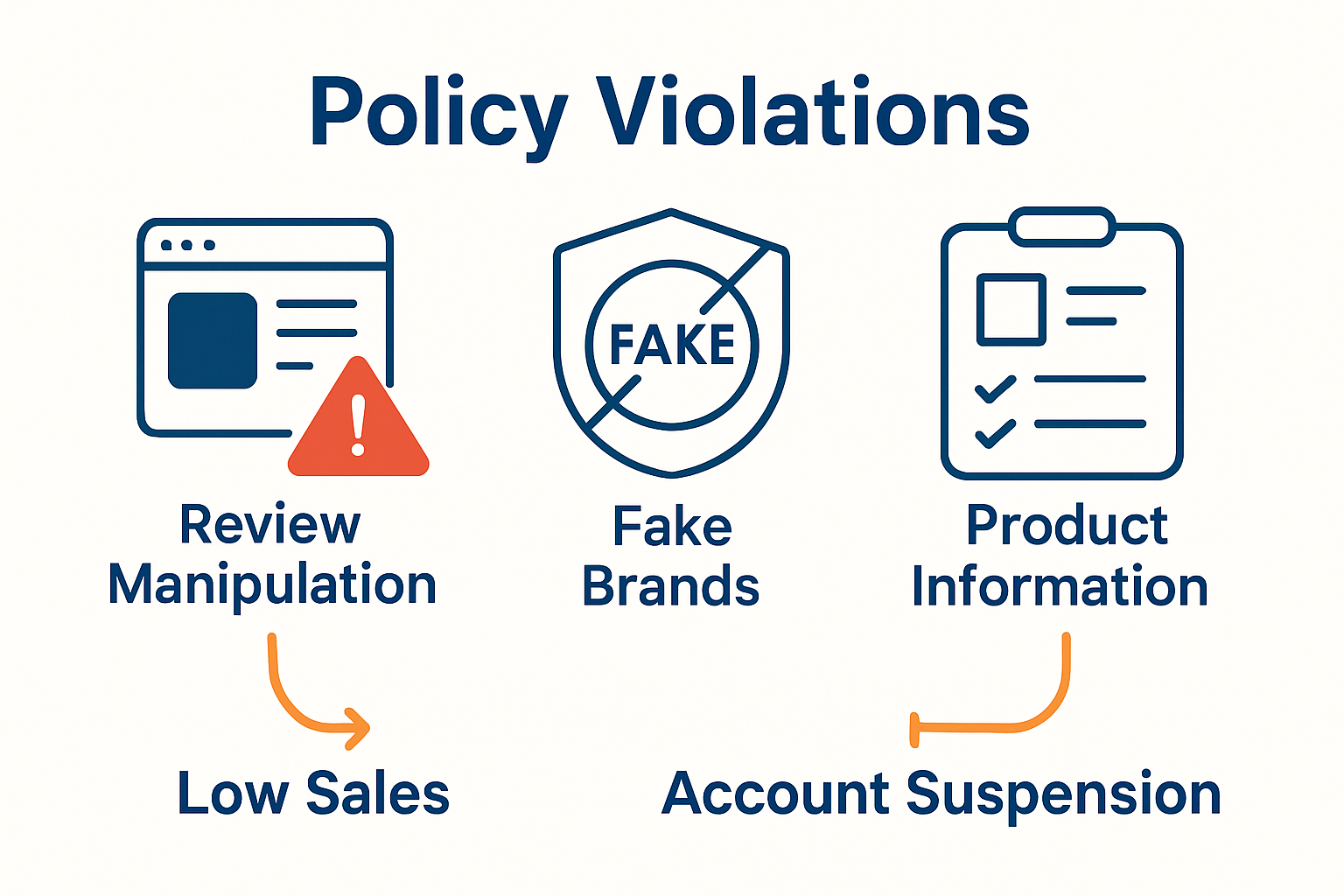
According to research from the U.S. Congress, some of the most destructive listing failures involve intentional marketplace manipulation. Review hijacking represents a particularly insidious practice where sellers repurpose existing listings with positive historical reviews to misrepresent entirely different products. This deceptive strategy not only misleads consumers but also undermines the fundamental trust mechanisms that drive Amazon’s recommendation algorithms.
Primary Categories of Amazon Listing Failures
- Fraudulent Review Manipulation
- Brand Identity Misrepresentation
- Product Information Inaccuracies
- Unauthorized Trademark Usage
- Persistent Listing Optimization Neglect
Additional insights from Federal Regulatory Downloads highlight another critical failure mode: the proliferation of fake brands. These listings exploit established trademarks without proper authorization, creating a landscape where counterfeit products can rapidly undermine legitimate seller efforts. Such practices not only violate Amazon’s terms of service but also expose sellers to potential legal challenges and immediate account suspension.

Understanding these failure types requires sellers to adopt a proactive, vigilant approach. Successful Amazon sellers must continuously monitor their listings, anticipate potential vulnerabilities, and implement robust strategies that maintain listing integrity, accuracy, and compliance with Amazon’s evolving marketplace standards.
Key Factors That Undermine Listing Performance
Amazon listing performance is a delicate ecosystem where multiple interconnected factors can rapidly derail a seller’s success. Understanding these critical performance undermining elements requires a nuanced approach that goes beyond surface-level analysis and demands strategic, proactive management.
Research from MIT Sloan reveals that even sophisticated companies struggle with performance challenges, highlighting how strategic misalignment can dramatically impact marketplace success. The study emphasizes that tolerance for experimentation must be balanced with rigorous performance metrics, a principle equally applicable to individual Amazon sellers navigating the complex marketplace ecosystem.
Primary Performance Undermining Factors
- Inconsistent Product Descriptions
- Poor Quality Product Images
- Misaligned Pricing Strategies
- Inadequate Keyword Optimization
- Neglected Customer Feedback Management
Additional insights from The Markup expose another critical performance risk: systematic listing manipulation. Sellers can exploit platform vulnerabilities by strategically altering listing categories and descriptions, creating potential enforcement challenges that compromise listing integrity and long-term visibility.
Successful Amazon sellers recognize that listing performance is not a static achievement but a dynamic, continuous process. This requires constant vigilance, data-driven optimization, and a willingness to adapt rapidly to the platform’s evolving algorithmic landscape. By understanding and proactively addressing these performance undermining factors, sellers can develop resilient, high-performing product listings that consistently attract and convert potential customers.
Optimization Mistakes That Lead to Failure
Amazon listing optimization is a razor’s edge where subtle missteps can transform promising products into marketplace failures. Sellers frequently underestimate the intricate mechanisms that govern product visibility, inadvertently creating barriers that prevent potential customers from discovering and purchasing their offerings.
According to research from the U.S. Congress, listing manipulation represents a critical optimization failure mechanism. The document reveals how sellers can unintentionally or deliberately compromise their listings through practices like review hijacking, where existing product listings are strategically altered to mislead consumers and circumvent Amazon’s algorithmic protections.
Critical Optimization Failure Categories
- Keyword Stuffing and Irrelevant Terminology
- Incomplete or Inaccurate Product Descriptions
- Low-Quality Product Images
- Inconsistent Pricing Strategies
- Neglecting Customer Questions and Feedback
Further insights from Federal Regulatory Downloads expose another profound optimization challenge: the proliferation of fake brands. These listings exploit trademark ambiguities, creating environments where unauthorized sellers can undermine legitimate product positioning and erode consumer trust through systematic marketplace manipulation.
Successful Amazon sellers recognize optimization as a continuous, dynamic process requiring constant refinement. By understanding these potential failure points, sellers can develop more resilient strategies that anticipate and neutralize optimization challenges, ultimately creating listings that not only survive but consistently thrive in Amazon’s competitive ecosystem.
Account Health and Policy Violations Impact
Amazon seller account health represents a delicate ecosystem where seemingly minor policy infractions can trigger catastrophic consequences. The platform’s complex regulatory framework demands absolute precision, with sellers walking a razor thin line between marketplace success and complete operational shutdown.
Research from the U.S. Congress reveals the severe ramifications of policy violations. Account suspensions emerge as a critical threat, with practices like review hijacking and listing manipulation capable of instantly derailing a seller’s entire business infrastructure. The document emphasizes that Amazon’s enforcement mechanisms are designed to swiftly identify and penalize sellers who deviate from established marketplace guidelines.
Primary Policy Violation Risk Categories
- Fraudulent Review Practices
- Intellectual Property Infringements
- Product Listing Misrepresentations
- Unauthorized Brand Representations
- Repeated Performance Metric Failures
Additional insights from Federal Regulatory Downloads underscore the comprehensive nature of potential policy violations. Unauthorized listings and fake brand representations not only risk immediate account suspension but can also trigger potential legal consequences that extend far beyond Amazon’s marketplace ecosystem.
Successful Amazon sellers recognize account health as a proactive management challenge. By developing robust compliance strategies, maintaining meticulous documentation, and consistently aligning with Amazon’s evolving guidelines, sellers can protect their marketplace investments and create sustainable, resilient business models that withstand rigorous platform scrutiny.
Proven Strategies to Prevent Listing Failure
Successful Amazon sellers understand that preventing listing failures requires a multifaceted, proactive approach that goes far beyond superficial marketplace tactics. Strategic prevention demands comprehensive understanding of Amazon’s complex ecosystem and a commitment to continuous improvement and adaptation.
Research from the Harvard Law Review emphasizes the critical importance of authentic brand development. Rather than creating arbitrary brand names solely to access Amazon’s Brand Registry, sellers should focus on building genuine brand identities that resonate with consumers and demonstrate true marketplace credibility.
Core Prevention Strategies
- Develop Comprehensive Product Documentation
- Implement Rigorous Quality Control Processes
- Create Detailed, Accurate Product Descriptions
- Maintain Consistent Pricing and Inventory Management
- Proactively Respond to Customer Feedback
Additional insights from Cornell Law Publications underscore the significance of operational transparency. Sellers must clearly identify themselves, maintain meticulous records, and ensure their marketplace presence reflects genuine, trustworthy business practices that align with Amazon’s evolving guidelines.
Ultimately, preventing listing failures is not about implementing a single strategy, but creating a holistic approach that integrates continuous learning, adaptive optimization, and unwavering commitment to marketplace excellence. By developing robust systems that anticipate and mitigate potential challenges, sellers can transform potential vulnerabilities into sustainable competitive advantages.
Take Control of Your Amazon Listing Success Today
Amazon listing failure is not just disappointing it can feel overwhelming when you face issues like review hijacking brand misrepresentation or poor keyword optimization. These pain points undermine your listing’s visibility credibility and sales potential. If you are tired of seeing your listings underperform despite your efforts it is time for a focused solution that addresses these specific challenges with precision and expertise.
Discover powerful strategies to optimize your product titles bullet points descriptions and backend keywords that really work. At Searchoneers we specialize in Amazon Listing Optimization and SEO techniques backed by data and designed to keep up with Amazon’s evolving marketplace. Whether you struggle with inconsistent pricing inadequate customer feedback management or want to build an authentic brand identity our proven methods can transform your listings into trusted assets that consistently perform.

Ready to stop guessing and start growing? Explore our E-commerce Tips & Strategies to Grow Your Online Business for actionable insights and connect with expert solutions at Searchoneers. Take the next step toward listing resilience and marketplace success now before challenges deepen and opportunities slip away.
Frequently Asked Questions
What are the common misconceptions about Amazon listings?
Many sellers believe that simply creating a product listing guarantees visibility or sales. They may also think brand registration automatically leads to success, or that minimal product descriptions are sufficient for selling products effectively.
What are the major types of Amazon listing failures?
Common types of Amazon listing failures include fraudulent review manipulation, brand identity misrepresentation, product information inaccuracies, unauthorized trademark usage, and neglecting ongoing optimization of listings.
What factors undermine Amazon listing performance?
Key factors that can negatively impact Amazon listing performance include inconsistent product descriptions, poor-quality product images, misaligned pricing strategies, inadequate keyword optimization, and neglected customer feedback management.
How can sellers prevent listing failures on Amazon?
Sellers can prevent listing failures by developing comprehensive product documentation, implementing quality control processes, creating accurate product descriptions, maintaining consistent pricing and inventory management, and proactively responding to customer feedback.

Comments
2 responses to “Complete Guide to Why Amazon Listings Fail”
[…] Comprehensive listing error guides emphasize that successful sellers treat listing optimization as an ongoing process. By developing a proactive approach to identifying and mitigating potential risks, Amazon sellers can create robust product listings that minimize errors, maximize visibility, and ultimately drive sustainable marketplace success. […]
[…] critical SEO pitfalls that can dramatically reduce their product visibility and sales potential. Common listing optimization errors often stem from a fundamental misunderstanding of how Amazon’s search algorithm evaluates and […]