

Getting noticed on Amazon is tough when thousands of sellers all compete for a single sale. You might spend hours perfecting product images or tweaking prices. But here’s a shocker. Meticulously optimized listings can boost conversion rates by up to 30 percent, leaving blurry or outdated product pages in the dust. Still, the brands making the biggest gains are not just following the playbook. They are constantly updating their listings to outsmart competition, keep shoppers engaged, and stay one step ahead of Amazon’s ever-changing rules.
Table of Contents
- The Importance Of Accurate Amazon Listings
- How Amazon Listings Impact Sales Performance
- Key Factors Influencing Listing Updates
- Best Practices For Maintaining Listings Over Time
- Real-World Examples Of Successful Listing Strategies
Quick Summary
| Takeaway | Explanation |
|---|---|
| Accurate listings build customer trust | Detailed and transparent product information reassures potential buyers, enhancing trust and reducing hesitation. |
| Optimize for Amazon’s search algorithm | Use relevant keywords and high-quality images to improve visibility and increase chances of winning sales. |
| Regularly update listings based on performance metrics | Analyze conversion rates and customer feedback to know when and how to refine product descriptions for better effectiveness. |
| Leverage quality images for better conversions | Engaging visuals that accurately represent products can significantly increase sales by drawing in more customers. |
| Stay updated on market trends and competition | Continuously adapt your listings based on shifts in consumer preferences and competitive strategies to maintain relevance and visibility. |
The Importance of Accurate Amazon Listings
In the competitive world of e-commerce, Amazon sellers face numerous challenges in standing out from the crowd. One critical factor that can make or break your success is maintaining accurate and compelling product listings. These digital storefronts are more than just product descriptions they are your primary communication channel with potential customers.
Why Listing Accuracy Matters
Accurate Amazon listings serve multiple strategic purposes beyond simple product representation. Our comprehensive guide on product listings highlights several key reasons why precision is paramount:
- Builds customer trust through transparent and detailed information
- Reduces potential return rates by setting clear product expectations
- Improves search ranking and visibility within Amazon’s algorithm
Customers rely heavily on product information when making purchasing decisions. A single inaccurate detail can trigger immediate distrust and potentially drive customers toward competing products.
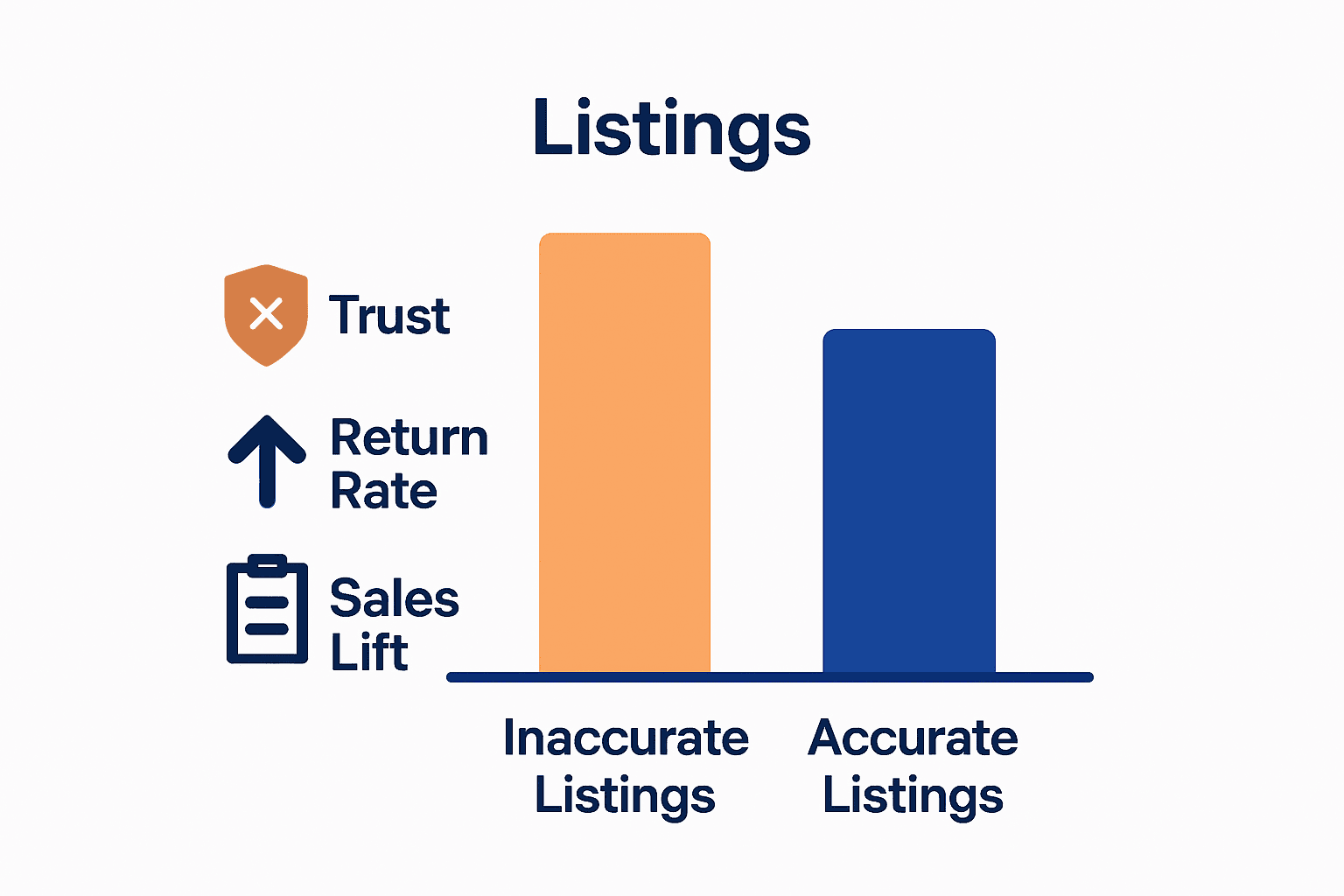 Whether it is a minor specification error or a significant misrepresentation, the consequences can be substantial.
The Impact on Sales Performance
Research from Practical Ecommerce demonstrates that meticulously crafted listings can increase conversion rates by up to 30%.
This statistic underscores the direct correlation between listing quality and sales performance.
Amazon’s complex search algorithm prioritizes listings that provide comprehensive, accurate, and relevant information. By consistently updating and refining your product details, you signal to both the platform and potential buyers that you are a serious, professional seller committed to delivering value.
Moreover, accurate listings help mitigate potential negative reviews stemming from customer disappointment. When product descriptions precisely match the actual item, you reduce the likelihood of misunderstandings and subsequent negative feedback that could damage your seller reputation.
How Amazon Listings Impact Sales Performance
The connection between product listings and sales performance is far more intricate than most Amazon sellers realize. A well-crafted listing does not just display product information it serves as a powerful conversion tool that directly influences purchasing decisions.
The Search Visibility Factor
Our guide to Amazon inventory ranking reveals that product listings are fundamental to search visibility. Amazon’s algorithm prioritizes listings with:
- Precise and relevant keywords
- High-quality product images
- Comprehensive product descriptions
- Strong customer engagement metrics
Sellers who optimize these elements can significantly improve their product’s search ranking, which translates directly into increased visibility and potential sales opportunities.
Conversion Rate Dynamics
Research from Jungle Scout indicates that top-performing Amazon listings typically achieve conversion rates between 10-15%, compared to the platform’s average of 10%. This marginal improvement can represent substantial revenue differences for sellers.
Customers make split-second decisions based on listing quality. A listing that communicates value, addresses potential concerns, and presents information clearly can dramatically increase the likelihood of purchase. Product descriptions that anticipate customer questions and highlight unique selling propositions create trust and reduce purchase hesitation.
Competitive Positioning Strategy
In the crowded Amazon marketplace, your listing is your primary competitive differentiator. By continuously refining product information, updating images, and responding to customer feedback, sellers signal professionalism and commitment. This proactive approach not only improves immediate sales potential but also builds long-term brand credibility that can lead to repeat purchases and positive reviews.
Key Factors Influencing Listing Updates
Successful Amazon sellers recognize that product listings are dynamic entities requiring continuous refinement. Understanding the multifaceted factors driving these updates is crucial for maintaining competitive advantage and marketplace relevance.
Below is a table summarizing the key factors that influence when and why Amazon sellers should update their product listings.
| Factor | Description | Example Impact |
|---|---|---|
| Product Performance Metrics | Analyzing conversion rates, customer feedback, sales trends, and search ranking fluctuations. | Identifies listings needing refinement |
| Market Dynamics and Competition | Responding to competitor strategies, new product features, and shifting consumer preferences. | Drives 67% of proactive updates |
| Compliance and Platform Requirements | Adjusting to changes in Amazon policies, category rules, and required product transparency. | Avoids listing suppression or penalties |
Product Performance Metrics
Our comprehensive Amazon listings optimization guide emphasizes that product performance data is a primary catalyst for listing updates. Sellers must closely monitor critical metrics such as:
- Conversion rates
- Customer feedback and reviews
- Search ranking fluctuations
- Sales volume trends
These performance indicators provide actionable insights into how customers perceive and interact with your product, signaling when strategic listing modifications are necessary.
Market Dynamics and Competition
Research from Marketplace Pulse reveals that marketplace competition drives approximately 67% of proactive listing updates. External factors like emerging product features, shifting consumer preferences, and competitor strategies compel sellers to continuously refine their product presentations.
Updating listings is not merely about maintaining accuracy but about staying ahead of market trends. Sellers who quickly adapt their product descriptions, images, and keywords to reflect current consumer demands gain a significant competitive edge.
Compliance and Platform Requirements
Amazon’s evolving platform policies and regulatory standards necessitate frequent listing updates. Product descriptions must align with current guidelines to prevent potential listing suppressions or account penalties. This includes updating product specifications, ensuring compliance with Amazon’s categorization rules, and maintaining transparency in product representations.
Best Practices for Maintaining Listings Over Time
Consistent and strategic listing maintenance is not a one-time task but an ongoing process that requires systematic attention and proactive management. Successful Amazon sellers understand that their product listings are living documents that demand continuous refinement and optimization.
Regular Performance Audits
Our comprehensive sales optimization guide recommends implementing periodic performance reviews to ensure listing effectiveness. Sellers should conduct comprehensive audits focusing on:
- Keyword relevance and search ranking
- Image quality and visual representation
- Pricing competitiveness
- Customer feedback and review trends
These systematic reviews provide critical insights into listing performance and highlight areas requiring strategic updates. By establishing a consistent audit schedule, sellers can stay ahead of potential performance issues and maintain marketplace competitiveness.
Data-Driven Content Refinement
Research from Sellics demonstrates that sellers who leverage analytics for listing optimization see up to 35% improvement in conversion rates. Effective content refinement involves analyzing customer interactions, search patterns, and engagement metrics to continuously enhance product descriptions.
This approach goes beyond simple text updates. It requires a holistic understanding of how customers search, interact with, and ultimately purchase products. Sellers must translate data insights into compelling, precise, and customer-centric listing content.
Technology and Automation Integration
Modern Amazon sellers are increasingly leveraging technological tools to streamline listing maintenance. Automated tracking systems can monitor critical performance indicators, flag potential issues, and provide real-time recommendations for listing optimization. By embracing these technological solutions, sellers can transform listing maintenance from a manual, time-consuming process into a strategic, data-driven approach.
Real-World Examples of Successful Listing Strategies
Translating theoretical knowledge into practical application distinguishes top-performing Amazon sellers. By examining successful strategies, sellers can uncover nuanced approaches that transform product listings from basic descriptions to powerful sales tools.
Here is a comparison table highlighting three successful real-world Amazon listing optimization strategies discussed in this section.
| Strategy | Description | Documented Outcome |
|---|---|---|
| Strategic Visual Storytelling | Uses high-res images, infographics, and lifestyle visuals to boost engagement. | Kitchenware brand gained 42% more conversions |
| Keyword Evolution & Semantics | Continuously refines keywords using real customer language and search data. | Aligns listings with consumer trends |
| Adaptive Pricing & Positioning | Rapidly adjusts pricing and content to marketplace and feedback shifts. | Creates more customer-centric listings |
Strategic Visual Storytelling
Our Amazon listing optimization service highlights how visual presentation can dramatically impact sales performance. Successful sellers understand that product images are not just representations but narrative tools that communicate value and build customer trust.
- High-resolution, multi-angle product shots
- Lifestyle images demonstrating product usage
- Infographics explaining unique product features
- Comparison visuals highlighting product advantages
One notable example involves a kitchenware brand that increased conversions by 42% after reimagining their product images. By showcasing their product in elegant, staged kitchen environments and including detailed feature infographics, they transformed passive viewing into an engaging visual experience.
Keyword Evolution and Semantic Optimization
Research from Helium10 demonstrates that top sellers treat keywords as dynamic entities requiring constant refinement. Successful listing strategies involve understanding not just current search trends but anticipating emerging consumer language.
These sellers do not simply stuff keywords but construct semantic narratives that align with customer search intentions. They analyze search query reports, customer reviews, and competitor listings to develop language that resonates authentically with their target audience.
Adaptive Pricing and Competitive Positioning
The most successful Amazon sellers view their listings as living ecosystems that respond to market dynamics. They continuously adjust pricing, emphasize unique value propositions, and rapidly incorporate customer feedback. This adaptive approach transforms listings from static product pages into responsive, customer-centric sales platforms that evolve in real-time with marketplace demands.

Supercharge Your Amazon Listings With Proven Updates
Are you constantly worried about your listings falling behind competitors or losing visibility in Amazon search? You are not alone. Many sellers struggle to keep pace with changing algorithms and evolving customer expectations. Accurate listings, optimized with the right keywords and vivid detail, are what drive both conversions and customer trust — a concept emphasized throughout this article. If you are looking for practical steps to grow your online business, our E-commerce Tips & Strategies to Grow Your Online Business page is packed with actionable insights tailored for sellers just like you.
Update your Amazon listings today with professional support that makes a real difference. Discover how our team at Searchoneers transforms titles, bullet points, and backend keywords for maximum visibility. Do not wait for your competitors to pull ahead. Visit Searchoneers now and see how smarter listing optimization can deliver better results for your e-commerce business.
Frequently Asked Questions
Why is updating Amazon listings essential for my sales?
Accurate and updated Amazon listings are crucial because they build customer trust and improve search visibility. To boost your sales, review and refresh your listings regularly, ideally every 30–60 days, to ensure all product information is precise and aligned with current market trends.
How can I identify when to update my product listings on Amazon?
You should update your product listings when you notice significant changes in conversion rates, customer feedback, or search ranking. Monitor these metrics closely and make adjustments as needed to maintain competitiveness and relevance.
What key factors should I consider when updating my Amazon listings?
Focus on enhancing product descriptions, optimizing keywords, and improving image quality. Regularly audit these elements to ensure they meet current customer expectations and potentially increase conversion rates by up to 30%.
How often should I conduct performance audits for my Amazon listings?
It’s best to conduct performance audits of your Amazon listings at least once every month. This consistent review will help you identify necessary updates and keep your listings optimized for better sales results.
What are the consequences of not updating my Amazon listings?
Failing to update your Amazon listings can lead to decreased visibility, increased return rates, and negative customer feedback. To avoid this, proactively review and refine your listings to ensure they reflect accurate product information and buyer expectations.
Can technology help in automating my Amazon listing updates?
Yes, automation tools can simplify the process of monitoring and updating your Amazon listings. Implement such tools to track key performance indicators and receive real-time recommendations, making your listing maintenance more efficient.

Comments
One response to “Understanding Why Update Amazon Listings is Essential”
[…] metrics to strategically optimize your product listings for maximum visibility and sales potential. Understanding why you should update Amazon listings can help you make informed decisions about your ongoing optimization […]