

Over 90 percent of sales on Amazon happen through the Buy Box, yet most sellers never uncover what their competitors are truly doing behind the scenes. Staying ahead on Amazon is not just about having a great product. It is about understanding every move your rivals make, from pricing shifts to SEO strategies. This guide reveals how a structured competitor analysis workflow helps you spot new opportunities, fine-tune your listings, and make smarter decisions backed by real marketplace data.
Table of Contents
- Defining Amazon Competitor Analysis Workflow
- Identifying And Categorizing Amazon Competitors
- Comparing Competitors’ Listings And SEO Tactics
- Evaluating Pricing, Buy Box And Inventory Dynamics
- Assessing Advertising And External Brand Presence
- Leveraging Tools For Continuous Competitor Monitoring
Key Takeaways
| Point | Details |
|---|---|
| Continuous Analysis | A robust Amazon competitor analysis is an ongoing process requiring constant monitoring and adaptation to refine product strategies and optimize seller performance. |
| Competitor Categorization | Classifying competitors into direct, secondary, and tertiary groups helps in understanding market dynamics and identifying potential growth opportunities. |
| SEO and Listing Optimization | Analyzing competitors’ listing structures, keyword strategies, and review management can inform improvements to your own product listings and enhance visibility. |
| Dynamic Pricing and Inventory | Regular evaluation of pricing strategies and inventory management is essential to maintain Buy Box eligibility and maximize sales potential on the platform. |
Defining Amazon Competitor Analysis Workflow
An Amazon Competitor Analysis Workflow is a systematic approach to understanding and evaluating competing sellers and products within the Amazon marketplace. According to Wikipedia, competitive intelligence involves systematically collecting and analyzing information about competitors to improve organizational performance. For Amazon sellers, this means creating a structured method to gain strategic insights about your marketplace rivals.
The core objective of a competitor analysis workflow is to decode your competitors’ strategies, strengths, and potential weaknesses. As AISAT Learning explains, the process involves understanding competitors’ motivations and predicting their future actions. In the Amazon context, this translates to a comprehensive examination of:
- Product listings and positioning
- Pricing strategies
- Customer review profiles
- Sales performance metrics
- Marketing and promotional approaches
Successful Amazon sellers recognize that a robust competitor analysis workflow is not a one-time event but an ongoing strategic process. It requires continuous monitoring, data collection, and adaptive insights. By methodically tracking and analyzing competing sellers, you can uncover opportunities for differentiation, optimize your own product strategies, and make data-driven decisions that enhance your marketplace performance. Learn more about Amazon content strategies in our comprehensive guide on content workflow.
Identifying And Categorizing Amazon Competitors
Identifying and categorizing Amazon competitors is a critical first step in developing a comprehensive competitive analysis strategy. According to ASAU Research, competitor identification involves systematically listing businesses offering similar products or services and strategically categorizing them across different competitive levels.
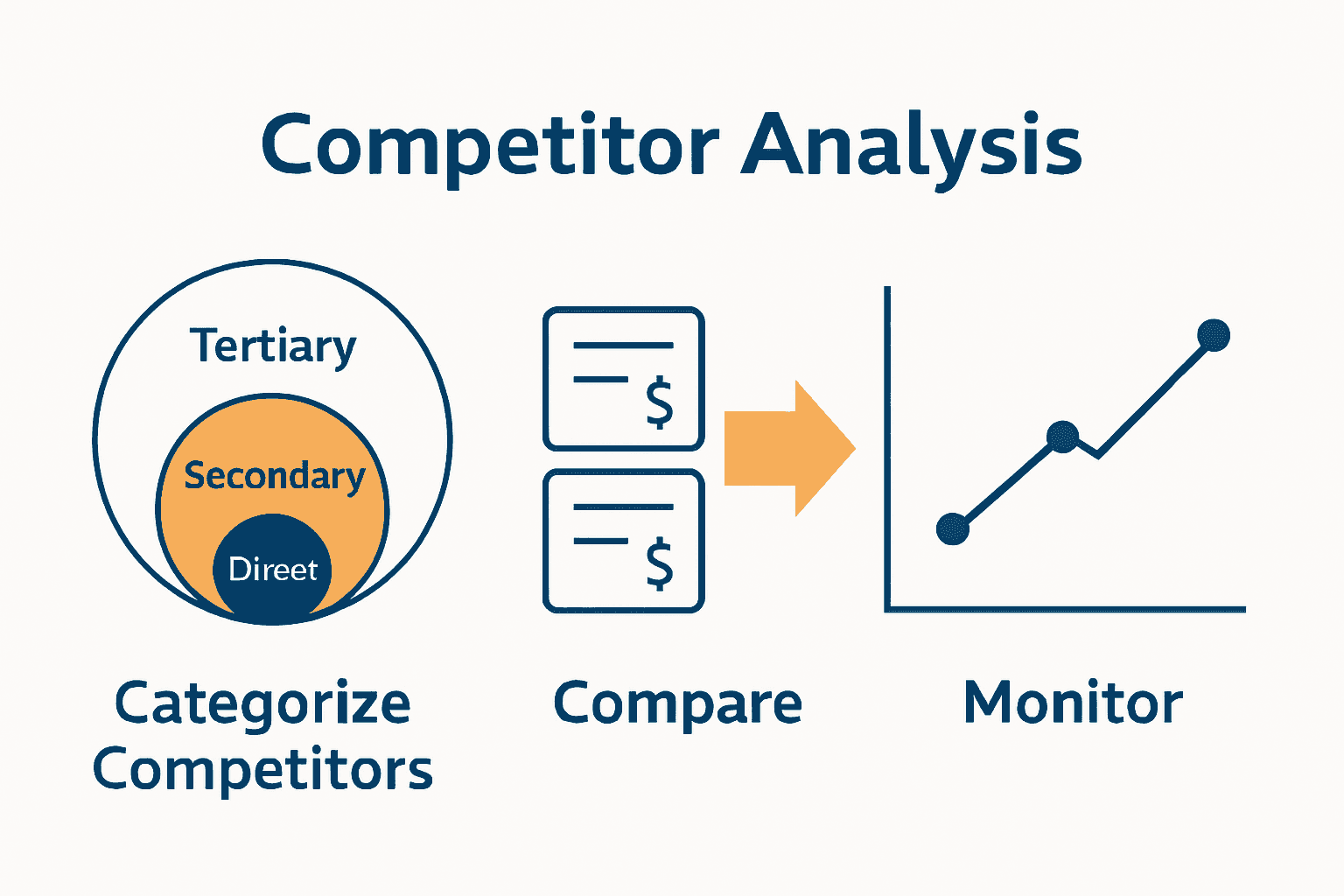
Competitors can be strategically classified into three primary categories:
- Direct Competitors: Sellers offering identical or nearly identical products targeting the same customer segment
- Secondary Competitors: Sellers offering high or low-end product variations or targeting slightly different audience segments
- Tertiary Competitors: Businesses with tangentially related products that might potentially satisfy similar customer needs
As AISAT Learning explains, these competitor categories help sellers understand nuanced market dynamics. Direct competitors represent your most immediate challenge, while secondary and tertiary competitors provide insights into potential market shifts and emerging opportunities. When conducting your analysis, consider factors like product positioning, pricing strategies, customer reviews, and overall market presence.
 Explore our comprehensive guide on competitive Amazon listings to deepen your understanding of strategic competitor evaluation.
Comparing Competitors’ Listings And SEO Tactics
Comparing competitors’ Amazon listings and SEO tactics is a sophisticated process that requires a meticulous and strategic approach. Understanding how your competitors structure their product listings, optimize their content, and leverage keywords can provide critical insights into improving your own marketplace performance.
Key areas to analyze in competitor listings include:
- Title Optimization: Examine how competitors craft product titles
- Keyword Placement: Identify strategic keyword usage in titles, bullet points, and descriptions
- Image Quality and Quantity: Assess the number and professional quality of product images
- Pricing Strategies: Compare pricing positioning and promotional approaches
- Review Management: Analyze review quantity, quality, and response strategies
Successful Amazon sellers recognize that effective competitive analysis goes beyond surface-level observations. It demands a comprehensive examination of each listing’s strengths and potential weaknesses. Dive deeper into Amazon SEO strategies with our guide on outranking your competition, which provides advanced techniques for dissecting and improving your marketplace presence. By systematically comparing these elements, you can develop a nuanced understanding of what makes top-performing listings successful and adapt your own approach accordingly.
Evaluating Pricing, Buy Box And Inventory Dynamics
Evaluating pricing, Buy Box, and inventory dynamics represents a critical strategic analysis for Amazon sellers seeking competitive advantage. The Buy Box is the primary purchasing pathway for most Amazon transactions, making it a crucial battleground for marketplace success. Understanding how to navigate and optimize these interconnected elements can significantly impact your sales performance and market positioning.
Key strategic considerations for pricing and inventory dynamics include:
- Dynamic Pricing: Monitoring real-time price fluctuations among competitors
- Buy Box Eligibility: Maintaining competitive pricing, shipping speed, and seller metrics
- Inventory Management: Balancing stock levels to prevent stockouts while avoiding excess inventory
- Competitive Price Positioning: Strategically pricing products to remain attractive without sacrificing profit margins
- Performance Metrics: Tracking seller performance indicators that influence Buy Box allocation
Successful Amazon sellers recognize that pricing and inventory are not static elements but dynamic systems requiring constant monitoring and strategic adjustment. The interplay between competitive pricing, inventory availability, and seller performance creates a complex ecosystem that demands sophisticated analysis and proactive management. Explore our comprehensive guide on increasing Amazon sales to unlock advanced strategies and gain deeper insights into optimizing your marketplace performance. By mastering these critical dynamics, you can develop a more resilient and competitive approach to selling on Amazon.
Assessing Advertising And External Brand Presence
Assessing a competitor’s advertising and external brand presence is a nuanced process that extends far beyond traditional marketplace metrics. Brand visibility represents a critical competitive advantage that can dramatically influence consumer perception and purchasing decisions across multiple channels.
Key areas to evaluate in comprehensive brand presence analysis include:
- Amazon Advertising Strategies: Examining sponsored product and display ad approaches
- Social Media Engagement: Analyzing brand interactions, follower count, and content quality
- External Marketing Channels: Investigating website, email marketing, and content marketing efforts
- Review and Reputation Management: Tracking brand sentiment across different platforms
- Cross-Platform Messaging Consistency: Evaluating how brand narrative remains cohesive across different marketing touchpoints
Successful Amazon sellers understand that brand presence is a multi-dimensional ecosystem requiring sophisticated, holistic analysis. The most effective competitive assessments look beyond immediate sales metrics to understand how brands build trust, engagement, and long-term customer loyalty. Discover advanced strategies for increasing your Amazon sales and brand visibility to transform your marketplace approach and create a more compelling brand narrative that resonates with your target audience.
Leveraging Tools For Continuous Competitor Monitoring
Continuous competitor monitoring requires sophisticated tools that transform raw marketplace data into actionable strategic insights. Competitive intelligence tools have revolutionized how Amazon sellers track, analyze, and respond to dynamic marketplace shifts, providing real-time visibility into competitor performance and strategic movements.
Key capabilities to seek in robust competitor monitoring tools include:
- Real-Time Price Tracking: Instant alerts on competitor pricing changes
- Keyword Performance Analysis: Monitoring keyword ranking and search visibility
- Listing Change Detection: Automated notifications about competitor listing modifications
- Sales Volume Estimation: Insights into competitor sales performance and trends
- Review and Reputation Monitoring: Tracking sentiment and review dynamics
Successful Amazon sellers understand that effective competitor monitoring is not about collecting data, but transforming that data into strategic advantages. The most powerful tools go beyond simple reporting, offering predictive analytics and actionable recommendations that help you anticipate market shifts and proactively adjust your strategy. Explore our comprehensive guide to Amazon SEO tools for advanced competitive intelligence and unlock the potential to stay several steps ahead of your competition in the ever-evolving Amazon marketplace.
Master Your Amazon Marketplace with Proven Strategies
Struggling to keep up with the fast-changing Amazon marketplace? This guide on the Amazon Competitor Analysis Workflow clearly shows how essential it is to understand your competitors’ pricing, SEO tactics, inventory, and brand presence. Many sellers face challenges like staying visible in the Buy Box, optimizing listings with the right keywords, and monitoring rival strategies continuously. Tackling these pain points requires more than just observation — it demands smart, data-driven actions.
Unlock the power of precise Amazon Listing Optimization and Amazon SEO & Analytics with our expert solutions designed to help you gain a real competitive edge. Whether you want to fine-tune your product titles, bullet points, or backend keywords or need insights that adapt as your competitors shift, we have you covered. Discover the difference a tailored approach can make by starting with E-commerce Tips & Strategies to Grow Your Online Business.

Don’t fall behind in your marketplace race. Explore proven methods and tools that turn competitor analysis into increased sales right now. Visit Searchoneers to take the next step, empower your brand, and dominate the Amazon marketplace with confidence.
Frequently Asked Questions
What is an Amazon Competitor Analysis Workflow?
An Amazon Competitor Analysis Workflow is a systematic approach to understanding and evaluating competing sellers and products on Amazon. It involves collecting and analyzing data on competitors to improve your own market strategies.
How can I identify my competitors on Amazon?
You can identify your competitors by categorizing them into direct, secondary, and tertiary competitors. This involves listing businesses that offer identical or similar products and understanding the different levels of competition in your market segment.
What key elements should I compare in competitor listings?
When comparing competitor listings, focus on title optimization, keyword placement, image quality, pricing strategies, and review management to gain insights into their success and areas for improvement in your own listings.
Why is continuous competitor monitoring important for Amazon sellers?
Continuous competitor monitoring is crucial as it allows sellers to stay updated on market shifts, competitor strategies, and pricing changes. This proactive approach helps to adapt your own strategies and maintain a competitive edge in the marketplace.

Comments
3 responses to “Amazon Competitor Analysis Workflow: Complete Guide”
[…] Learn more in our comprehensive guide on Amazon competitor analysis, which will help you develop a systematic approach to gathering actionable marketplace intelligence. […]
[…] Amazon Competitor Analysis Workflow suggests leveraging advanced AI tools that can provide instantaneous insights. These technologies allow sellers to pivot quickly and maintain a competitive edge. […]
[…] Amazon Competitor Analysis Workflow: Complete Guide – Searchoneers […]