Most American sellers on Amazon never realize that even a small increase in conversion rate can make a huge difference in their bottom line. With millions of products competing for attention, understanding what truly influences those crucial buying decisions is vital for online success. By examining the facts behind Amazon conversion rate, you discover which strategies help turn curious browsers into loyal customers while giving your product the edge it needs to stand out.
Table of Contents
- Defining Amazon Conversion Rate And Its Importance
- How Amazon Calculates Conversion Rate Metrics
- Key Factors That Influence Conversion Rate
- Common Misconceptions About Conversion Rate
- Benchmarks, Best Practices, And Seller Strategies
Key Takeaways
| Point | Details |
|---|---|
| Understanding Conversion Rate | Amazon Conversion Rate is crucial for measuring performance, calculated by dividing sales by page views and multiplying by 100. A strong conversion rate enhances product visibility and sales potential. |
| Key Factors for Improvement | Elements like competitive pricing, high-quality images, and detailed descriptions significantly impact conversion rates and can drive sales growth. |
| Regular Monitoring | Sellers should track conversion rates weekly and perform incremental changes to listings, focusing on improving images, descriptions, and pricing strategies for better performance. |
| Avoiding Misconceptions | A high conversion rate does not guarantee profitability; understand the nuances of customer behavior and market dynamics for sustainable growth. |
Defining Amazon Conversion Rate and Its Importance
Amazon Conversion Rate represents the percentage of potential buyers who complete a purchase after visiting a product listing. In the competitive world of online selling, this metric acts as a critical performance indicator measuring your ability to transform product views into actual sales. Understanding conversion rates goes beyond simple mathematics – it reflects the effectiveness of your product presentation, pricing strategy, and overall marketplace appeal.
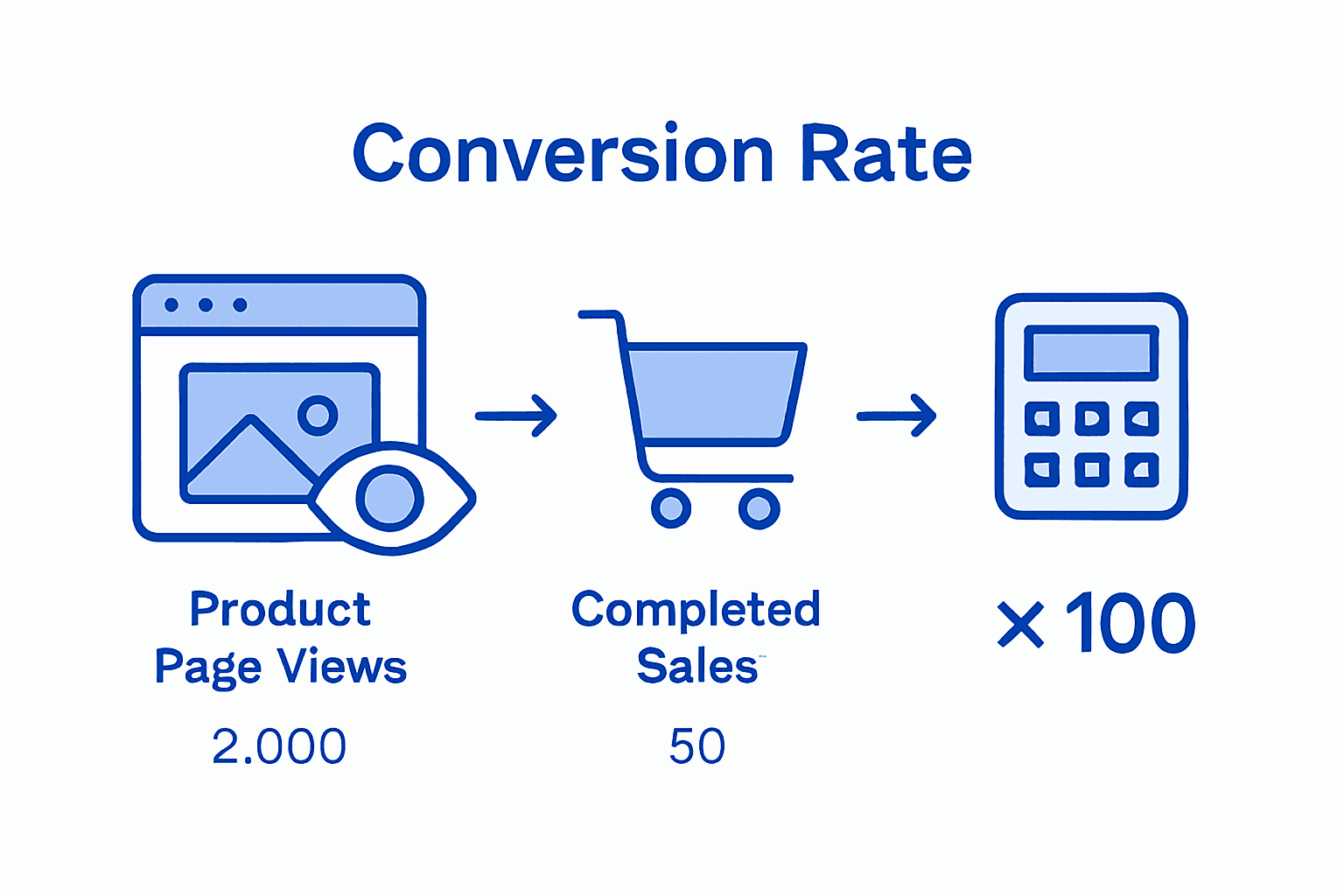
At its core, conversion rate is calculated by dividing the number of sales by total product page visits, then multiplying by 100 to get a percentage. For Amazon sellers, this means tracking how many shoppers who view your product actually click “Buy Now” or add items to their cart. A robust conversion rate typically ranges between 10% and 15% on the Amazon platform, though top performers can achieve even higher percentages through strategic optimization.
The significance of Amazon Conversion Rate cannot be overstated. Higher conversion rates directly correlate with improved product rankings, increased visibility, and ultimately, more revenue. Amazon’s algorithm rewards listings that demonstrate strong consumer interest by pushing them higher in search results. This means sellers who consistently convert browsers into buyers gain a substantial competitive advantage. Metrics like conversion rate help determine your overall marketplace performance and can significantly impact long-term selling success.
Pro Seller Tip: Track your conversion rate weekly and identify specific elements that might be preventing potential buyers from completing purchases – such as pricing, product images, or unclear descriptions. Small tweaks can lead to dramatic improvements in your sales performance.
Key Factors Influencing Amazon Conversion Rates:
Here’s a comparison of how various elements impact Amazon conversion rate and business outcomes:
| Optimization Area | Conversion Rate Impact | Business Benefit |
|---|---|---|
| Competitive Pricing | Raises conversion % | Boosts sales volume |
| High-Quality Images | Increases shopper trust | Reduces return rates |
| Detailed Descriptions | Lowers buyer hesitation | Improves review quality |
| Fast Shipping Options | Reduces cart abandonment | Enhances brand reputation |
| Responsive Service | Improves buyer confidence | Increases repeat purchases |
- Competitive product pricing
- High-quality, professional product images
- Clear and comprehensive product descriptions
- Positive customer reviews
- Fast shipping options
- Responsive customer service
How Amazon Calculates Conversion Rate Metrics
Amazon calculates conversion rate metrics through a sophisticated tracking system that measures the effectiveness of product listings and seller performance. Product conversion is determined by dividing total orders by the number of customer page views, providing sellers with a precise understanding of how successfully their listings transform potential interest into actual purchases.
The calculation process involves several critical data points beyond simple order tracking. Amazon considers factors like customer page views, time spent on product page, click-through rates, and actual purchase completions. This comprehensive approach ensures that conversion rate metrics reflect not just raw sales numbers, but the nuanced interactions between potential buyers and product listings. Advertising metrics like Cost of Sale (ACOS) and Return on Ad Spend (ROAS) further complement these calculations by providing insights into marketing efficiency.
Sellers should understand that Amazon’s conversion rate calculation is dynamic and continuously updated. The platform uses advanced algorithms that factor in recent performance, historical sales data, customer reviews, pricing competitiveness, and shipping options. These metrics help Amazon determine not just current conversion rates, but also potential future performance of product listings. Higher conversion rates signal to Amazon’s algorithm that a product is desirable, which can lead to improved search rankings and increased visibility.
Pro Performance Tip: Regularly analyze your product listing’s conversion rate metrics and identify specific elements that might be reducing customer engagement. Small improvements in product images, descriptions, or pricing can significantly boost your conversion performance.
Key Components in Amazon’s Conversion Rate Calculation:
- Total customer page views
- Number of completed orders
- Average time spent on product page
- Click-through rates
- Customer review quality
- Product price competitiveness
- Shipping speed and options
Key Factors That Influence Conversion Rate
Product conversion rates on Amazon are dramatically impacted by multiple interconnected factors that sellers must carefully optimize. The clarity and uniqueness of a product’s value proposition plays a crucial role in driving customer engagement, determining whether potential buyers will be compelled to complete their purchase.
Visual and informational elements significantly influence conversion performance. High-resolution product images that showcase multiple angles, detailed specifications, and clear value propositions can dramatically increase customer confidence. Pricing strategy also plays a critical role – competitive pricing that aligns with market expectations while communicating product value can reduce purchase hesitation. Understanding customer behavior through continuous audience segmentation and interaction analysis enables sellers to systematically address potential conversion barriers.

Product listings that demonstrate credibility through customer reviews, accurate descriptions, and transparent shipping information tend to convert more effectively. Amazon’s algorithm rewards listings that consistently show strong consumer interest, which means sellers must focus on creating comprehensive, trustworthy product presentations. Factors like quick shipping options, responsive customer service, and competitive pricing create a holistic approach to improving conversion rates.
Pro Seller Tip: Implement a systematic testing approach by making incremental changes to your product listings and tracking conversion rate impacts. Small adjustments in imagery, description, or pricing can yield significant improvements in sales performance.
Key Conversion Rate Influencing Factors:
- Product image quality
- Competitive pricing
- Detailed product descriptions
- Shipping speed and options
- Customer review quantity and quality
- Clear value proposition
- Responsive customer service
Common Misconceptions About Conversion Rate
A high conversion rate does not automatically guarantee business success, contrary to what many Amazon sellers mistakenly believe. Many entrepreneurs become fixated on conversion percentages without understanding the deeper nuances of profitability and sustainable growth. Simply converting more visitors into buyers means little if the profit margins remain razor thin or if customer acquisition costs exceed the revenue generated.
Another prevalent misconception is that conversion rates are solely determined by website design or product presentation. While visual elements and user interface are critically important, customer behavior, content relevance, and value proposition play equally significant roles in driving conversions. Sellers often overlook the psychological aspects of purchasing, such as trust signals, social proof, and perceived value, which can dramatically impact a customer’s decision to complete a transaction.
Many sellers also erroneously assume that a consistent conversion rate across all product categories and market segments is realistic. In reality, conversion rates can vary dramatically based on product type, price point, target demographic, and seasonal fluctuations. What works for a low-cost electronic accessory might not translate to a high-end fashion item or specialized professional equipment. Understanding these nuanced differences requires continuous market research and adaptive strategies.
Pro Strategy Tip: Develop a holistic view of your conversion metrics by tracking not just the rate itself, but the underlying factors that contribute to customer purchasing decisions. Context is king in understanding true performance.
Common Conversion Rate Misconceptions:
- High conversion rate equals guaranteed profitability
- Design is the only factor influencing conversions
- Conversion rates should be uniform across all products
- One-size-fits-all marketing strategies work universally
- Conversion improvement is a one-time effort
- Ignoring customer psychology in purchase decisions
Benchmarks, Best Practices, and Seller Strategies
Monitoring conversion rates with precision is crucial for evaluating marketing performance and strategic success. Industry benchmarks suggest that top-performing Amazon sellers typically achieve conversion rates between 10% to 15%, with exceptional sellers reaching up to 20%. However, these numbers can vary significantly depending on product category, price point, and market competition. Understanding these benchmarks provides a realistic framework for sellers to set achievable goals and measure their performance effectively.
Successful Amazon sellers implement a multifaceted approach to improving conversion rates. This involves continuous optimization of product listings, strategic pricing, and leveraging social media and community engagement to enhance brand visibility. Key best practices include high-quality product photography, comprehensive and clear product descriptions, competitive pricing, robust customer reviews, and responsive customer service. Sellers must also focus on understanding their target audience’s specific needs and preferences, tailoring their approach to meet those unique requirements.
Technical strategies play a critical role in conversion rate optimization. A/B testing different product images, experimenting with pricing models, and analyzing customer interaction data can provide valuable insights. Advanced sellers utilize tools that track customer behavior, identify potential friction points in the purchasing process, and provide actionable recommendations for improvement. Understanding that conversion rate optimization is an ongoing process rather than a one-time effort is crucial for long-term success on the Amazon marketplace.
Pro Strategy Tip: Develop a systematic approach to conversion rate improvement by creating a quarterly optimization plan. Track your metrics, experiment with small changes, and consistently analyze the results to refine your strategy.
Key Benchmarks and Best Practices:
Here is a summary of typical and top Amazon conversion rate benchmarks by product type:
| Product Category | Average Conversion Rate | High Performer Rate |
|---|---|---|
| Consumer Electronics | 8% | 12-15% |
| Apparel & Accessories | 10% | 15-18% |
| Home & Kitchen | 12% | 16-20% |
| Beauty & Personal Care | 11% | 15-18% |
| Specialized Equipment | 6% | 10-12% |
- Aim for 10-15% conversion rate
- Optimize product listings continuously
- Use high-quality, professional product images
- Maintain competitive and strategic pricing
- Encourage and manage customer reviews
- Provide clear, detailed product descriptions
- Implement responsive customer service
- Utilize A/B testing for continuous improvement
Boost Your Amazon Conversion Rate With Proven Strategies
Struggling to turn visitors into buyers on Amazon is a common challenge highlighted in the article. You know how crucial conversion rates are for climbing search rankings and increasing sales. Key pain points include optimizing product listings with competitive pricing, compelling images, and clear descriptions to reduce buyer hesitation and improve trust. That is why focusing on Amazon Listing Optimization and SEO backed by solid analytics can make all the difference.

Activate your sales potential today by leveraging expert help from Search Oneers. Explore our E-commerce Tips & Strategies to Grow Your Online Business for actionable insights or visit our main site to get started with tailored Amazon conversion rate solutions. Don’t let an average conversion rate hold you back—take control now and transform browsers into loyal customers.
Frequently Asked Questions
What is Amazon Conversion Rate?
Amazon Conversion Rate is the percentage of potential buyers who complete a purchase after visiting a product listing. It measures how effectively product views are transformed into actual sales.
How is the Amazon Conversion Rate calculated?
The Amazon Conversion Rate is calculated by dividing the number of sales by the total product page visits, then multiplying by 100 to get a percentage. This gives sellers insight into how many visitors end up buying the product.
What factors influence my Amazon Conversion Rate?
Key factors influencing the Amazon Conversion Rate include competitive pricing, high-quality product images, detailed product descriptions, positive customer reviews, fast shipping options, and responsive customer service.
Why is a higher Conversion Rate important for Amazon sellers?
A higher Conversion Rate is crucial because it correlates with improved product rankings and visibility on Amazon, leading to more sales and revenue. It indicates strong consumer interest, which can enhance a seller’s competitive advantage.