

More than 90 percent of American online shoppers use Amazon, making its product rankings a major influence on buying choices. Understanding how sales rank works can be the difference between sustained success and missed opportunities in the competitive Amazon marketplace. This guide explains the real meaning behind Amazon Sales Rank, why it matters to both sellers and shoppers, and how it can shape your strategy for better results.
Table of Contents
- Defining Amazon Sales Rank And Its Purpose
- How Amazon Calculates Sales Rank Metrics
- Differences Between Bestseller Rank And Category Rank
- Factors Impacting Your Product’s Sales Rank
- Common Seller Mistakes With Amazon Sales Rank
Key Takeaways
| Point | Details |
|---|---|
| Understanding Amazon Sales Rank | Amazon Sales Rank reflects product performance and popularity, with lower rankings indicating higher sales volumes. Regularly monitoring this metric can help sellers optimize their marketing strategies. |
| Importance of Sales Velocity | Consistent sales velocity is crucial for improving Amazon Sales Rank; recent sales outweigh historical sales in impacting rankings. Sellers should focus on maintaining steady sales rather than relying on sporadic bursts. |
| Difference Between Ranking Metrics | The Best Seller Rank provides an overall sales benchmark, while Category Rank focuses on performance within specific niches. Tracking both metrics offers sellers a comprehensive view of their market position. |
| Common Seller Errors | Many sellers misunderstand the ranking system, prioritizing short-term sales spikes over sustainable growth. A more effective strategy involves enhancing product quality and customer experiences to ensure ongoing competitiveness. |
Defining Amazon Sales Rank and Its Purpose
Amazon Sales Rank represents a dynamic metric that reveals how well a product performs in sales compared to other items within its category. Product sales performance on Amazon is tracked through a continuously updated ranking system where lower numerical ranks indicate higher sales volumes.
At its core, Amazon Sales Rank provides sellers and customers with real-time insights into product popularity. The ranking changes with each sale, creating a fluid representation of market demand. When a product sells, its rank improves, signaling increased consumer interest and potentially attracting more buyers who are drawn to popular items.
The calculation involves complex algorithms that consider multiple factors beyond simple transaction numbers. These include recent sales velocity, historical performance, and comparative sales within specific product categories. A top-ranked product might indicate consistent sales performance, while a lower-ranked item suggests less market traction.
The ranking system serves dual purposes for sellers and shoppers. For sellers, it offers a transparent performance indicator that helps track product competitiveness. For customers, it provides a quick reference point to understand which products are currently trending or most frequently purchased.
Pro Tip for Sellers: Monitor your Amazon Sales Rank regularly and use it as a strategic tool to understand your product’s market performance, identifying opportunities for optimization and marketing strategies.
How Amazon Calculates Sales Rank Metrics
Amazon’s sales rank calculation is a sophisticated process that goes far beyond simple transaction counting. Sales performance tracking uses a complex weighted algorithm that dynamically adjusts product rankings based on recent sales activity. The system assigns points for each sale and download, creating a nuanced representation of product popularity.
The core mechanism involves a rolling calculation where each day’s sales points are halved and combined with current performance data. This means recent sales carry significantly more weight in determining a product’s rank. Sales Velocity becomes the critical factor, with a product’s most recent sales having a more substantial impact on its overall ranking compared to historical performance.
Ranking Dynamics involve multiple sophisticated factors that Amazon keeps proprietary. While the exact algorithm remains confidential, sellers understand that frequent sales can rapidly improve a product’s rank. The system considers not just total sales volume, but also the recency and consistency of those sales. Products with steady, recent sales tend to rank higher than those with sporadic or historical sales spikes.
Interestingly, the ranking system operates across millions of products, creating a competitive and constantly shifting marketplace. Sales performance comparisons happen in real time, meaning a small number of strategic sales can potentially boost a product’s visibility dramatically. This dynamic approach ensures that Amazon’s rankings remain current and reflective of true market demand.
Pro Tip for Sellers: Focus on consistent sales and strategic marketing to maintain steady sales velocity, as this will have a more positive impact on your Amazon Sales Rank than occasional sales bursts.
Differences Between Bestseller Rank and Category Rank
Amazon’s ranking system offers two distinct metrics that provide sellers with comprehensive insights into product performance. Sales rank measurements differ between overall and category-specific rankings, allowing sellers to understand their product’s competitive positioning from multiple perspectives.
The Best Seller Rank (BSR) represents a product’s overall performance across all Amazon products, creating a universal benchmark of sales success. This comprehensive ranking considers sales volume across every category, meaning a low number indicates higher total sales. A product ranked #1 in BSR means it is the top-selling item across all products on Amazon at that specific moment, which is an incredibly competitive achievement.

In contrast, the Category Rank provides a more specialized view of performance within a specific product niche. This metric allows sellers to understand how their product performs against direct competitors in a narrowly defined market segment. A product might have a mediocre overall Best Seller Rank but could simultaneously be a top performer in its specific category, such as ranking #3 among kitchen appliances or #5 in romance novels.
Understanding these ranking systems is crucial for strategic product positioning. Category-specific rankings offer nuanced performance insights that help sellers identify strengths, weaknesses, and potential growth opportunities. The interplay between overall and category rankings provides a multilayered view of a product’s market performance, enabling more informed marketing and inventory decisions.
Here’s a summary of key differences between Best Seller Rank and Category Rank on Amazon:
| Ranking Metric | Scope of Measurement | Competitive Comparison | Strategic Use for Sellers |
|---|---|---|---|
| Best Seller Rank | All products on Amazon | Against all Amazon products | Benchmark total market performance |
| Category Rank | Specific product category or subcategory | Against niche competitors | Assess product performance within niche |
Pro Tip for Sellers: Track both your overall Best Seller Rank and category-specific ranks to develop a comprehensive understanding of your product’s market performance and competitive positioning.
Factors Impacting Your Product’s Sales Rank
Amazon’s ranking system involves complex algorithms that evaluate multiple critical factors determining a product’s sales performance. Product visibility depends on intricate ranking mechanisms that consider numerous variables beyond simple sales numbers.
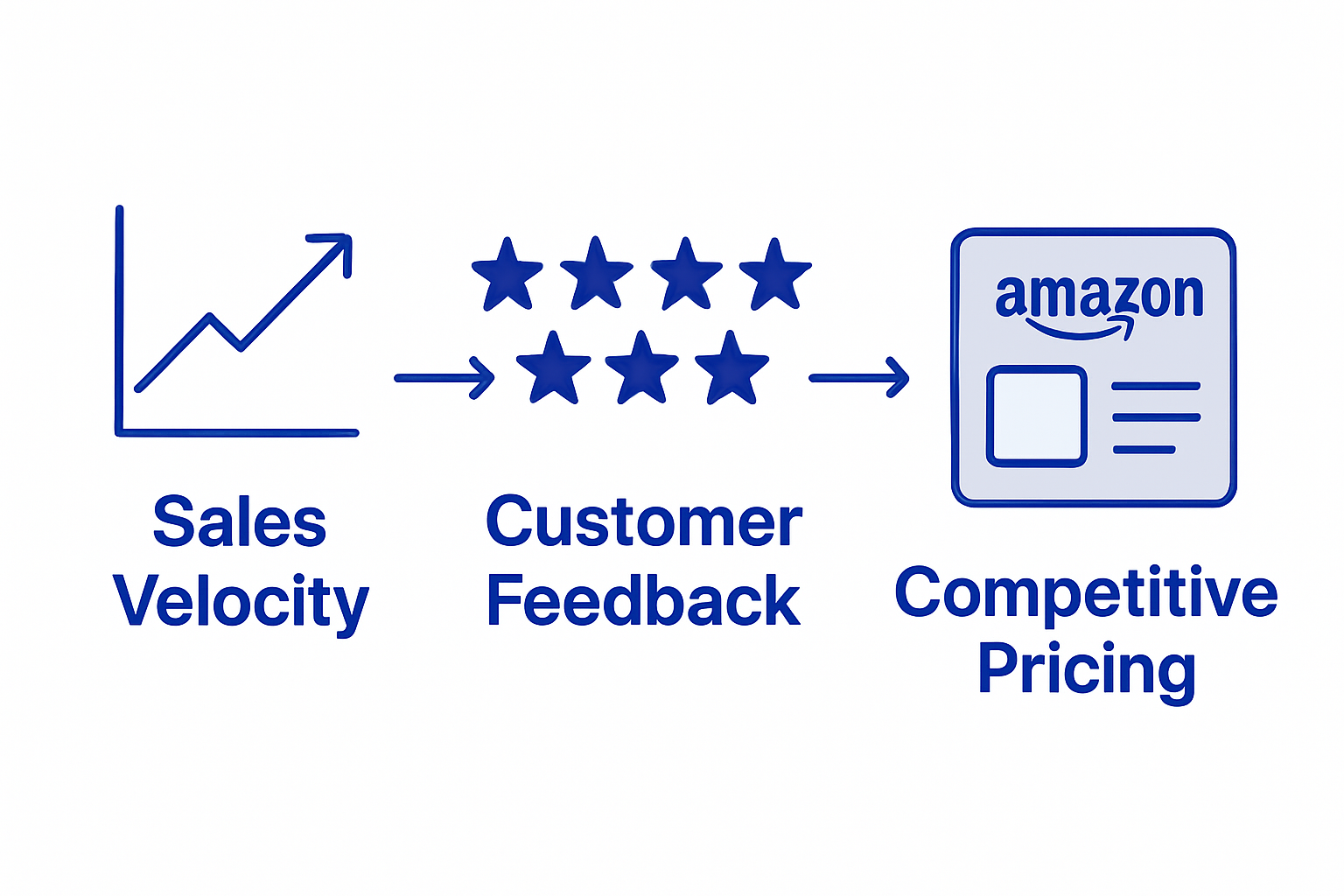
Sales Velocity emerges as the most pivotal factor in Amazon’s ranking system. The A9 algorithm prioritizes products with consistent and rapid sales performance, which means products that sell quickly and frequently receive higher rankings. Sellers must focus on maintaining a steady stream of sales rather than experiencing sporadic spikes, as sustained performance signals product relevance and market demand.
Additional critical factors include customer interaction metrics, pricing strategy, and product relevance. Elements such as the number of customer reviews, review quality, conversion rates, and purchasing patterns surrounding a product significantly influence its ranking. A competitively priced item with positive customer feedback and consistent sales will naturally rise in Amazon’s rankings, demonstrating the platform’s commitment to promoting high-quality, customer-satisfactory products.
The algorithm also considers broader contextual elements like related product purchases, customer browsing behavior, and overall market trends. Products that generate additional customer interactions, such as being frequently added to shopping carts or viewed alongside complementary items, receive algorithmic advantages that can boost their visibility and sales rank.
Pro Tip for Sellers: Develop a holistic strategy that focuses on consistent sales, positive customer experiences, competitive pricing, and generating ongoing customer interactions to improve your product’s overall ranking potential.
Common Seller Mistakes With Amazon Sales Rank
Misunderstanding Amazon’s sales rank dynamics leads many sellers into strategic pitfalls that can significantly impact their product’s market performance. The Amazon ranking system is nuanced and requires a sophisticated approach beyond simple sales tracking.
Short-Term Sales Tactics represent one of the most critical errors sellers make. Many incorrectly believe that generating sudden sales spikes will dramatically improve their ranking. However, Amazon’s algorithm actually prioritizes consistent, sustained sales performance over time. Sporadic bursts of purchases might provide temporary ranking boosts, but they do not create the sustained momentum needed for long-term visibility.
Ranking Misinterpretation is another common mistake that can mislead sellers. Sales rank fluctuations are relative and dynamic, meaning a product’s ranking changes not just based on its own performance but also in comparison to other products in its category. Sellers who obsess over minute-to-minute ranking changes often misunderstand the broader context of their product’s market position.
Additionally, sellers frequently overlook the importance of holistic performance metrics. Ranking is not just about sales volume, but also involves factors like customer reviews, conversion rates, and overall product relevance. Focusing narrowly on sales without improving product quality, customer experience, or listing optimization can lead to stagnant or declining rankings.
Below is a comparison of common seller mistakes and recommended corrective strategies:
| Common Mistake | Why It Hurts Performance | Corrective Approach |
|---|---|---|
| Relying on short-term sales | Ranking does not favor sales spikes | Focus on sustained sales and growth |
| Obsessing over rank changes | Rankings are dynamic and relative | Track long-term trends, not instant changes |
| Ignoring holistic metrics | Sales rank is multifactorial | Enhance reviews, pricing, and user experience |
Pro Tip for Sellers: Develop a comprehensive strategy that emphasizes consistent sales, ongoing product improvements, and a deep understanding of your specific product category’s competitive dynamics.
Boost Your Amazon Sales Rank with Expert Strategies
Understanding the complexities of Amazon Sales Rank is crucial, but turning insights into action can be challenging. If you struggle with maintaining consistent sales velocity or optimizing your listings to stand out in competitive categories, you are not alone. This article highlights how factors like sales velocity, category rank, and holistic product performance influence your position on Amazon. To truly capitalize on these insights, consider enhancing your product visibility through proven Amazon listing optimization techniques and data-driven SEO strategies.

Ready to transform your Amazon sales approach? Explore our E-commerce Tips & Strategies to Grow Your Online Business for actionable advice that aligns perfectly with Amazon’s evolving algorithms. At SearchOneers, we specialize in optimizing your product titles, bullet points, descriptions, and backend keywords to boost visibility. Combine that with smart Amazon SEO and analytics services to maintain a steady sales performance that the algorithm favors. Take the next step now and unlock your product’s full potential with our expert guidance.
Frequently Asked Questions
What is Amazon Sales Rank and how is it calculated?
Amazon Sales Rank is a metric that reflects a product’s sales performance relative to others in its category. It is calculated using a complex algorithm that considers factors such as recent sales velocity, historical performance, and comparisons within specific categories. A lower sales rank number indicates higher sales volume.
How can I improve my Amazon Sales Rank?
To improve your Amazon Sales Rank, focus on maintaining consistent sales, optimizing your product listings, and generating positive customer interactions. Engage in strategic marketing efforts and ensure your pricing is competitive to enhance sales velocity and visibility.
What is the difference between Best Seller Rank and Category Rank?
The Best Seller Rank (BSR) measures a product’s overall performance across all Amazon products, while Category Rank reflects performance within a specific product niche. Understanding both metrics provides insight into overall market competitiveness and targeted positioning within a category.
What common mistakes do sellers make regarding Amazon Sales Rank?
Common mistakes include relying on short-term sales tactics, obsessing over minute-to-minute rank changes, and ignoring holistic metrics like customer reviews and product relevance. Sellers should focus on sustained sales performance and overall customer experience to maintain and improve their rankings.

Comments
2 responses to “Amazon Sales Rank: What It Means for Sellers”
[…] sellers can leverage Amazon Sales Rank tracking strategies to gain deeper competitive insights and optimize their product […]
[…] Amazon Sales Rank: What It Means for Sellers – Searchoneers […]