

Amazon SEO decides whether shoppers even notice your products. With over 70 percent of Amazon customers never scrolling past the first page, missing out on search visibility can cost you sales fast. Most sellers obsess over ads and pricing but ignore the real opportunity hiding right in their product listings. Winning on Amazon is less about luck and more about mastering the subtle details of how the algorithm thinks.
Table of Contents
- What Is Amazon Seo And Its Importance For Sellers?
- Key Terms You Need To Know For Effective Amazon Seo
- How Amazon’s Search Algorithm Influences Product Visibility
- Understanding Keyword Research In Amazon Seo
- Measuring Success: Metrics That Matter In Amazon Seo
Quick Summary
| Takeaway | Explanation |
|---|---|
| Optimize product listings for visibility | Effective optimization increases visibility and ranking on Amazon search results pages, driving more traffic to products. |
| Focus on sales performance metrics | Amazon prioritizes sales velocity, conversion rates, and customer reviews to enhance product ranking, establishing the importance of these metrics. |
| Leverage keyword research strategically | Identifying relevant keywords connects products to customer searches, ensuring better alignment with buyer intent and improved visibility. |
| Monitor critical performance indicators | Tracking metrics like click-through rates and conversion rates provides insight into product performance and necessary adjustments for improvement. |
| Create listings that satisfy customer intent | Listings should be crafted to meet both algorithmic requirements and customer expectations, balancing keywords with quality descriptions. |
What is Amazon SEO and its Importance for Sellers?
Amazon SEO represents a strategic approach to optimize product listings to improve visibility and ranking within Amazon’s search ecosystem. Unlike traditional search engine optimization, Amazon’s algorithm prioritizes sales performance, relevance, and customer engagement metrics to determine product placement.
Understanding Amazon’s Search Algorithm
The Amazon search algorithm evaluates multiple factors to rank products. Research from Columbia Business School reveals that over 70% of Amazon customers never scroll past the first search results page, making optimization critical for sellers. Key ranking factors include:
- Product title relevance
- Sales velocity and conversion rates
- Customer review quality and quantity
- Backend search term optimization
- Price competitiveness
- Product image quality
Strategic Importance for Amazon Sellers
Successful Amazon SEO can transform a seller’s marketplace performance. By understanding and implementing targeted optimization strategies, sellers can significantly enhance product discoverability. Learn more about advanced Amazon SEO techniques to maximize your competitive edge.
Unlike traditional web search, Amazon’s algorithm directly connects optimization efforts with sales potential. Products that rank higher receive exponentially more visibility, leading to increased click through rates and potential conversions. This means sellers who master Amazon SEO can experience substantial revenue growth without increasing advertising spend.
The core objective of Amazon SEO is creating product listings that simultaneously satisfy both algorithmic requirements and customer search intent. This involves crafting compelling, keyword rich descriptions, maintaining competitive pricing, and consistently delivering high quality products that generate positive customer feedback.
Key Terms You Need to Know for Effective Amazon SEO
Understanding the core terminology of Amazon SEO is crucial for sellers aiming to maximize their product visibility and sales potential. These specialized terms form the foundation of strategic marketplace optimization.
Essential Amazon SEO Terminology
Research from the Journal of Medical Internet Research highlights the complexity of search algorithms, emphasizing the importance of precise terminology. Key terms every Amazon seller must comprehend include:
- Keywords: Specific words or phrases customers type when searching for products
- Backend Keywords: Hidden search terms sellers add to improve discoverability
- Conversion Rate: Percentage of visitors who complete a purchase
- Click Through Rate (CTR): Ratio of users who click on a product listing versus total impressions
- Relevance Score: Amazon’s metric measuring how closely a product matches search intent
Strategic Interpretation of Amazon SEO Language
Each term represents a critical component in Amazon’s sophisticated ranking ecosystem. Keywords act as the bridge between customer search queries and product listings, determining whether a product appears in search results. Backend keywords provide additional opportunities for matching customer search patterns without being visible on the product page.
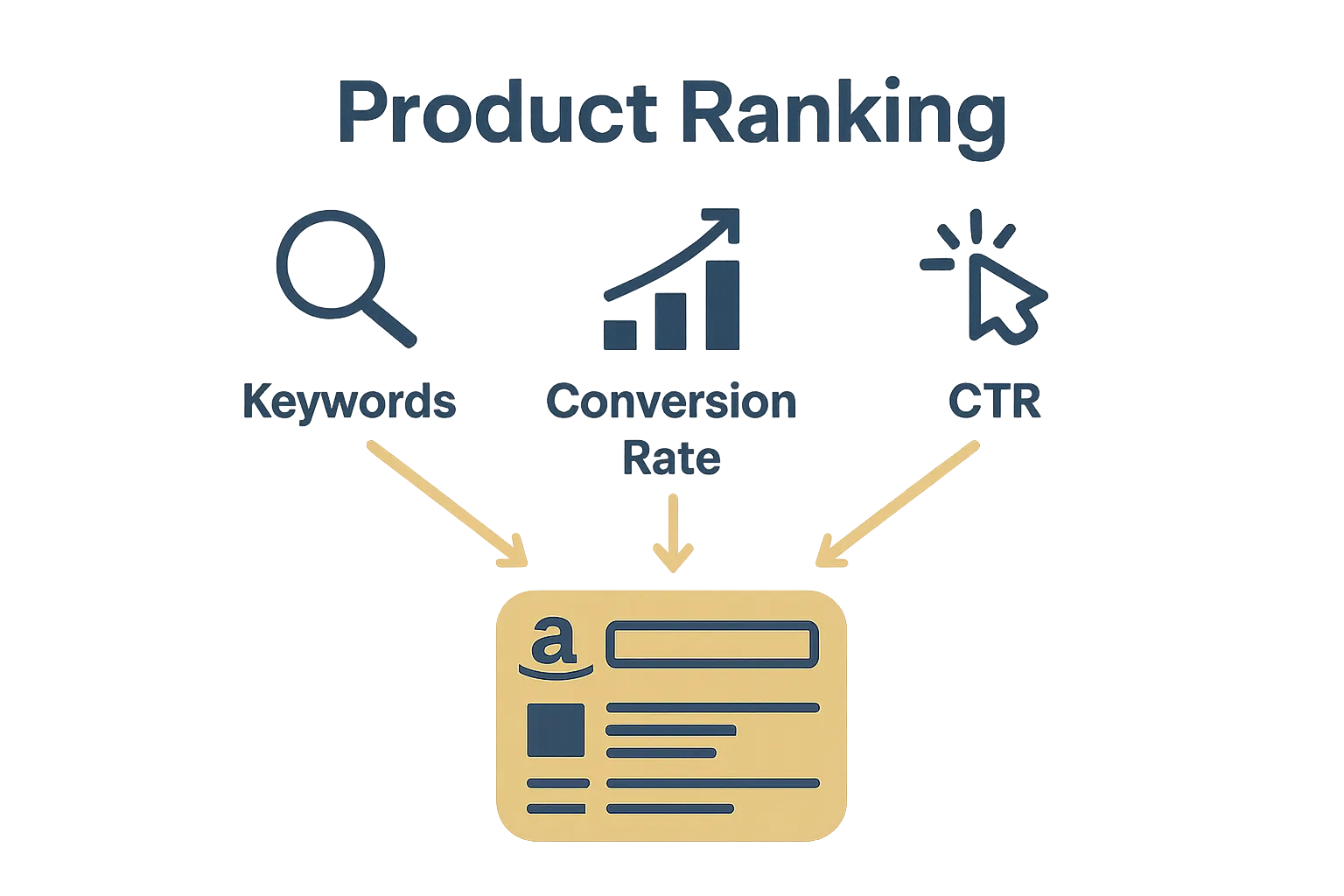
Discover advanced strategies for Amazon marketplace optimization to leverage these technical definitions effectively. Conversion rates and click through rates directly influence a product’s algorithmic ranking, making them more than mere statistical measurements.
Mastering these terms transforms them from abstract concepts into actionable optimization strategies.
Below is a table summarizing essential Amazon SEO terminology and their definitions to help sellers quickly reference the most important concepts discussed in this section.
| Term | Definition |
|---|---|
| Keywords | Specific words or phrases customers type when searching for products |
| Backend Keywords | Hidden search terms sellers add to improve discoverability |
| Conversion Rate | Percentage of visitors who complete a purchase |
| Click Through Rate | Ratio of users who click on a product listing versus total impressions |
| Relevance Score | Amazon’s metric measuring how closely a product matches search intent |
How Amazon’s Search Algorithm Influences Product Visibility
Amazon’s search algorithm functions as a sophisticated marketplace matchmaker, connecting customers with the most relevant products through complex computational processes. This intricate system goes far beyond simple keyword matching, evaluating multiple dynamic factors to determine product placement.
Algorithmic Ranking Mechanisms
Research from ACM Digital Library reveals that Amazon’s algorithm uses machine learning models to predict product purchase likelihood. The ranking process considers numerous interconnected performance metrics that dynamically adjust product visibility.
Key algorithmic ranking factors include:
- Sales velocity and recent performance trends
- Customer review quality and quantity
- Product price competitiveness
- Conversion rate and click through statistics
- Relevance of product listing to search query
- Historical customer engagement patterns
Performance Signals and Visibility Dynamics
Seller performance directly impacts product algorithmic ranking, creating a continuous feedback loop where high quality listings generate more visibility. Products demonstrating consistent sales, positive reviews, and strong customer satisfaction signals receive preferential treatment in search results.
Learn more about understanding Amazon’s complex search mechanisms to gain deeper insights into marketplace optimization strategies. The algorithm continuously learns and adapts, rewarding sellers who maintain exceptional product listings and customer experience standards.
Understanding these algorithmic nuances allows sellers to strategically position their products, transforming visibility from a random occurrence into a predictable, manageable outcome.
This table organizes the key Amazon search algorithm ranking factors for clear comparison and easier review by sellers targeting improved listing visibility.
| Ranking Factor | How It Impacts Visibility |
|---|---|
| Sales Velocity | Higher, consistent sales improve search placement |
| Customer Review Quality | Positive reviews boost ranking; negative reviews can decrease it |
| Product Price Competitiveness | Competitive pricing enhances likelihood of higher ranking |
| Conversion Rate & CTR | Strong performance here signals relevance to Amazon’s algorithm |
| Listing Relevance | Better matches to search queries increase display likelihood |
| Past Customer Engagement | Consistent engagement and satisfaction strengthen algorithmic trust |
Understanding Keyword Research in Amazon SEO
Keyword research represents the strategic foundation of effective Amazon product visibility, transforming how sellers connect their offerings with potential customers. This nuanced process involves more than simply identifying popular search terms.
The Strategic Importance of Keyword Discovery
Research from Digital Library at Texas State University highlights keyword research as a critical mechanism for understanding customer search behaviors. Successful keyword research bridges the gap between product characteristics and customer search intent, enabling sellers to optimize their listings precisely.
Essential elements of comprehensive keyword research include:
- Identifying precise customer search terminology
- Analyzing search volume and competition levels
- Understanding long tail and short tail keyword variations
- Evaluating keyword relevance to specific product categories
- Monitoring seasonal and trending search patterns
Advanced Keyword Optimization Techniques
Keyword selection goes beyond mere volume metrics. Sellers must understand the contextual relevance of each term within Amazon’s complex search ecosystem. Explore advanced keyword optimization strategies to refine your approach.
The most effective keyword strategies integrate multiple data points, considering not just search frequency but also conversion potential, competitive landscape, and alignment with product specifications. Successful sellers recognize that keywords are dynamic tools requiring continuous refinement and strategic adaptation to changing marketplace dynamics.
Measuring Success: Metrics That Matter in Amazon SEO
Successful Amazon sellers understand that performance measurement extends far beyond simple sales tracking. Strategic metric analysis provides a comprehensive view of product visibility, customer engagement, and marketplace competitiveness.
Critical Performance Indicators
Research from ResearchGate reveals the complexity of digital marketplace performance metrics. Effective Amazon SEO measurement requires a holistic approach that evaluates multiple interconnected performance signals.
Key performance metrics sellers should consistently track include:
- Click Through Rate (CTR)
- Conversion Rate
- Organic Sales Volume
- Product Ranking Trajectory
- Customer Review Quality
- Average Order Value
- Search Result Page Position
Strategic Metric Interpretation
Metrics are not standalone numbers but interconnected insights that reveal marketplace performance dynamics. Discover advanced product visibility strategies to transform these metrics into actionable optimization strategies.
Understanding metric relationships allows sellers to develop nuanced strategies. For instance, a high CTR coupled with a low conversion rate might indicate misalignment between product listing and actual customer expectations. Continuous monitoring and strategic adaptation become the cornerstone of sustained marketplace success.

Turn Your Amazon SEO Knowledge Into Real Sales Growth
Struggling to make sense of Amazon SEO terminology can feel overwhelming, especially when every keyword and metric impacts your visibility and sales. The pain of watching your listings get buried by competitors is real. But you do not have to figure this out alone. Our expertise in enhanced titles, bullet points, descriptions, and backend keywords is designed to move you from confusion to confidence. Discover practical E-commerce Tips & Strategies to Grow Your Online Business that directly connect with the key terms you have just learned. See how analytics and optimization can actually drive results in the Amazon marketplace.
Ready to transform your understanding into results? Visit Searchoneers right now to access tailored Amazon SEO solutions. Take advantage of our data-backed strategies before your competitors do. Elevate your Amazon performance today.
Frequently Asked Questions
What are backend keywords in Amazon SEO?
Backend keywords are hidden search terms that sellers add to their product listings to enhance discoverability without displaying them on the product page. They help match customer search patterns more effectively.
Why is understanding conversion rate important for Amazon SEO?
The conversion rate measures the percentage of visitors who make a purchase. A higher conversion rate indicates effective product listings and can significantly improve a product’s algorithmic ranking on Amazon.
How do keywords affect product visibility on Amazon?
Keywords act as a bridge between customer search queries and product listings. Effective use of keywords ensures that products appear in relevant search results, increasing visibility and potential sales.
What is the relevance score in Amazon’s search algorithm?
The relevance score is a metric used by Amazon to evaluate how closely a product listing matches a customer’s search intent. A higher relevance score improves the chances of a product being displayed prominently in search results.

Comments
2 responses to “Understanding Key Terms for Amazon SEO Explained”
[…] components, sellers can develop targeted strategies to enhance their product’s ranking potential. Learn more about advanced Amazon SEO terms to deepen your understanding of this intricate […]
[…] tools now offer unprecedented market intelligence. Read more about Amazon SEO terms and concepts to understand how these technologies integrate with traditional selling strategies. Imagine having […]