Product listings can disappear overnight when sellers underestimate the risks of non-compliance on Amazon. For every American electronics seller, keeping up with strict certification standards means more than clearing a checklist. It protects your account, secures product visibility, and preserves your brand’s reputation. This guide explains product compliance on Amazon, showing you how proper documentation, testing, and certification shield your consumer electronics business from unnecessary account suspensions and costly listing removals.
Table of Contents
- Product Compliance on Amazon Defined
- Key Regulations for Electronics Sellers
- Documentation and Testing Requirements
- Consequences of Non-Compliance
- Tips for Maintaining Ongoing Compliance
Key Takeaways
| Point | Details |
|---|---|
| Product Compliance is Essential | Ensuring products meet regulatory requirements is critical for account activity and visibility on Amazon. Non-compliance can lead to account suspension or worse. |
| Understand Specific Regulations | Different product types face unique compliance standards; staying informed about these is vital for ongoing business success. |
| Maintain Thorough Documentation | Accurate and accessible compliance documentation is crucial to defend against Amazon audits and regulatory inquiries. |
| Ongoing Compliance Management | Compliance is not a one-time task; develop systems to track requirements, maintain relationships with manufacturers, and update documentation regularly. |
Product Compliance on Amazon Defined
Product compliance on Amazon means ensuring your products meet all applicable regulatory requirements, safety standards, and Amazon’s own policies before you list them for sale. It’s not just about following rules. Compliance directly impacts whether your account stays active, whether your listings remain visible, and ultimately whether your business survives on the platform.
For sellers in consumer electronics, this takes on extra weight. Your products get scrutinized more closely than many categories because they involve electrical systems, battery safety, wireless frequencies, and direct consumer contact. Amazon enforces strict policies requiring products tested and certified by accredited bodies to verify they meet health and safety standards. Think of it this way: Amazon has built its reputation on customer safety. A single defective product that harms someone doesn’t just hurt the customer. It creates legal liability, generates negative publicity, and puts Amazon’s entire marketplace at risk. That’s why they take compliance so seriously.
Compliance covers multiple dimensions. You need to understand and meet safety certifications required for your specific product type, whether that’s FCC certification for wireless devices, UL certification for electrical safety, or specialized compliance for batteries and power supplies. You also need to follow Amazon’s essential policies governing product listings and seller conduct, which include restrictions on certain materials, banned substances, and prohibited claims. Beyond that, there’s the liability question. Courts have examined Amazon’s role in marketing and distributing third-party products, particularly through the Fulfillment by Amazon (FBA) program, meaning product defects can trigger accountability that extends beyond just the seller.
What makes this challenging is that compliance requirements vary by product type and by jurisdiction. A smartphone charger sold to customers in California faces different lead and cadmium regulations than one sold in Texas. A wireless speaker must comply with FCC rules about radio frequency emissions. A power bank carrying lithium batteries must meet specific transportation and safety standards. Missing even one requirement can result in your listing being removed, your inventory being seized, or your account being suspended entirely. And yes, I learned this the hard way watching sellers lose accounts over compliance issues they thought were minor.
The foundation of compliance starts before you even create your Amazon listing. You need to verify what certifications and testing your product requires, obtain documentation from accredited laboratories, and ensure your supply chain maintains consistency. You need to understand which standards apply to your specific product category. Then you need to maintain that documentation and be ready to provide it to Amazon on demand. The sellers who avoid compliance headaches are the ones who treat it as a continuous process, not a one-time checkbox.
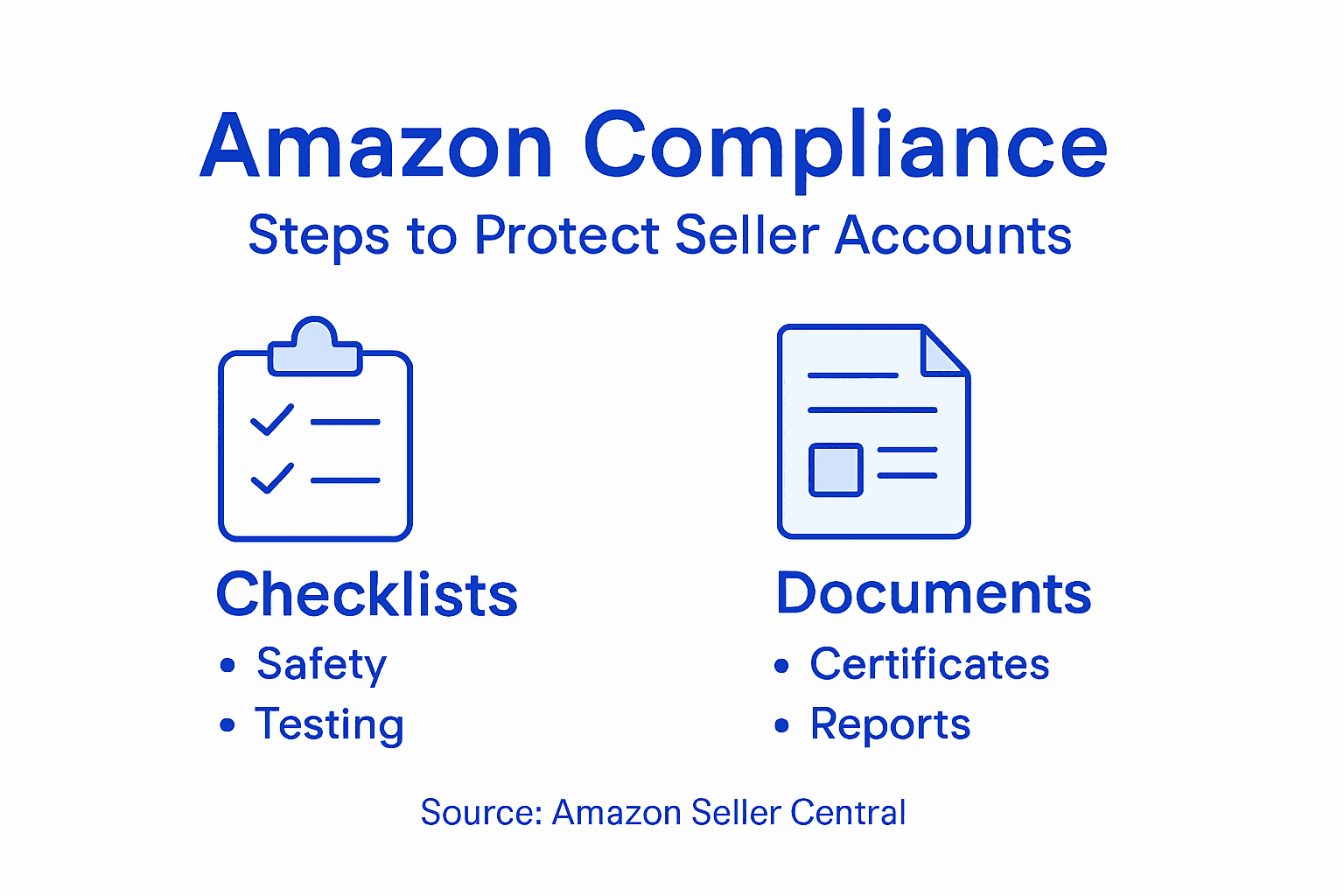
Here’s a quick overview of major product certifications and their typical business impact for Amazon electronics sellers:
| Certification Type | Main Regulatory Body | Applies To | Business Impact |
|---|---|---|---|
| FCC Certification | Federal Communications Commission | Wireless & RF Devices | Enables legal sales in the U.S. market |
| UL Certification | Underwriters Laboratories | Electrical, battery products | Reduces fire hazard and liability risk |
| NSF/ANSI Certification | NSF International | Water filtration devices | Helps meet drinking water safety laws |
| CPSC Safety Standards | Consumer Product Safety Commission | General consumer electronics | Required for Amazon approval |
Pro tip: Request certification test reports and compliance documentation from your manufacturer before placing your first order, then store these files in a centralized location you can quickly access if Amazon requests proof of compliance during an account audit.
Key Regulations for Electronics Sellers
When you sell consumer electronics on Amazon, you’re not just following Amazon’s rules. You’re also navigating a complex web of federal regulations, international trade laws, and safety standards that exist whether you’re aware of them or not. The difference between a thriving electronics business and one that gets shut down often comes down to understanding and respecting these regulations from day one.
The most immediate regulatory framework you’ll encounter involves product safety standards and certifications. Electronics sold in the United States must comply with standards set by organizations like the Federal Communications Commission (FCC), Underwriters Laboratories (UL), and the Consumer Product Safety Commission (CPSC). Your wireless headphones need FCC certification to confirm they don’t emit dangerous radio frequencies. Your phone charger needs UL certification to prove it won’t overheat and cause fires. Your power bank needs specific battery safety certifications. These aren’t suggestions. They’re legal requirements backed by federal law. When Amazon receives a complaint about a product or conducts a routine audit, they ask for documentation proving your items meet these standards. If you can’t provide it, your listing disappears and your inventory gets quarantined.

Beyond safety certifications, there’s the trade compliance layer that most sellers overlook until it’s too late. Export Administration Regulations govern the export of electronics, which includes licensing requirements, embargoes, and controls on dual-use technologies that could potentially be used for restricted purposes. This means certain electronic components, semiconductor technologies, and devices with encryption capabilities require specific licenses or classifications before they can legally leave the United States or be sold internationally. Additionally, electronics sellers must comply with complex trade policies and tariffs that vary by destination country, product classification, and origin of components. A power supply manufactured in Vietnam with parts sourced from multiple countries faces different tariff classifications than one made entirely domestically. These tariff differences directly impact your costs and pricing ability.
What makes this even more complicated is that regulations change. The FCC updates its standards. New countries impose new restrictions. Trade agreements shift tariff rates. A product that was perfectly compliant six months ago might now require additional documentation or certification. The sellers who stay compliant long term aren’t the ones who did the work once and moved on. They’re the ones who maintain relationships with their manufacturers and compliance partners, subscribe to regulatory update services, and periodically audit their product documentation against current requirements. They also understand that non-compliance carries real penalties. Amazon can suspend your account indefinitely. Customs can seize your shipments. The Federal Trade Commission can impose fines. In worst cases, you could face criminal liability if a product defect causes injury and compliance violations are involved.
Start by identifying exactly which regulations apply to your specific products. A lithium battery pack faces different rules than a USB cable. A wireless router faces different rules than a power adapter. Work with your manufacturer or a compliance consultant to obtain all necessary certifications and documentation. Then maintain a detailed compliance file for each product, organized by SKU, that includes test reports, certification documents, and proof of compliance. When Amazon requests compliance documentation, you respond within hours with complete files instead of scrambling to find documents you’re not even sure you have.
Pro tip: Create a compliance checklist for each product type you sell, documenting required certifications, testing standards, documentation needs, and renewal dates, then schedule quarterly reviews to catch changes in regulations before they impact your listings.
Documentation and Testing Requirements
Documentation and testing aren’t just bureaucratic hurdles you jump through to get your products listed. They’re the evidence that proves your products are safe, functional, and compliant with standards that protect consumers. Without solid documentation and testing, you have no defense when Amazon questions your products or regulators come calling. This is where most sellers either build a fortress around their accounts or create the vulnerabilities that lead to suspensions.
The testing process starts with understanding what your specific products actually need to prove. Rigorous testing procedures vary from design-stage screening to full environmental simulations, depending on your product category and complexity. A simple USB cable might require basic electrical safety testing through UL. A wireless device requires FCC testing to verify radio frequency emissions stay within legal limits. A lithium battery pack requires thermal testing, short circuit testing, and crush testing to prove it won’t explode or catch fire under stress. A water filtration device needs microbial testing and lead leaching tests. The testing isn’t optional or something you can cut corners on. Independent, accredited laboratories conduct these tests using standardized protocols. You pay for the testing, you submit the results, and those results become part of your permanent compliance documentation.
Amazon requires documentation that goes beyond just having a passing test result. Amazon mandates independent certification for many product categories, with full documentation submitted for verification. This means for certain products, you need certification from bodies like NSF International, UL, or the FCC, not just laboratory test reports. The difference matters. A test report shows your product was tested and passed. A certification means an accredited third party reviewed the testing, verified the methodology, and officially certifies the product meets the standard. For water products, this includes compliance with NSF/ANSI standards. For electrical products, it means UL certification. For wireless devices, it means FCC certification. When Amazon’s compliance team pulls your file, they’re looking for these official certifications paired with complete documentation trails.
Here’s what your documentation package actually needs to include. First, the test reports from accredited laboratories showing exactly what was tested, under what conditions, and the results. Second, certificates of compliance from recognized certification bodies. Third, test standards documentation showing which specific standards your products were tested against. Fourth, a bill of materials listing all components in your product with their own compliance information. Fifth, user manuals or safety warnings that comply with labeling requirements. Sixth, any applicable safety data sheets for materials used in your product. Seventh, records of where testing was performed and who performed it. This documentation needs to be organized, searchable, and ready to provide to Amazon within 48 hours if requested. Many sellers use spreadsheets or shared drives organized by product SKU, with dates products were tested, test report file names, certification dates, and renewal dates.
This summary table highlights key documentation elements needed to pass Amazon compliance audits:
| Documentation Type | Purpose | Must Include |
|---|---|---|
| Accredited Lab Test Report | Verifies product testing | Test method, results, lab contact |
| Certificate of Compliance | Validates third-party review | Issuer name, product details |
| Component Bill of Materials | Identifies materials/components | All components, supplier info |
| Safety Data Sheets | Explains substance safety | Hazard data, handling instructions |
The testing and documentation process also isn’t a one-time event. Standards evolve. New testing requirements emerge. Some certifications expire and require renewal. You might test a product once and remain compliant for five years, but you should still have a system that flags when certifications approach their expiration dates or when regulatory bodies announce new testing requirements. The sellers with the strongest accounts maintain ongoing relationships with testing laboratories and certification bodies, not one-off testing engagements.
Pro tip: Assign one person on your team responsibility for maintaining a master compliance database with product SKU, testing date, certification expiration date, and documentation file location, then set calendar reminders 90 days before any certification expires so you can schedule retesting well in advance.
Consequences of Non-Compliance
Non-compliance isn’t a minor issue that Amazon overlooks or a risk you can manage later. The consequences are immediate, severe, and often irreversible. A single compliance violation can transform a profitable business into a shuttered account within days. Understanding what actually happens when you fail to comply isn’t meant to scare you. It’s meant to clarify exactly what’s at stake so you treat compliance with the seriousness it demands.
The first and most visible consequence is account suspension. Amazon monitors listings continuously for compliance issues. When they discover products without proper certifications, sellers making unsubstantiated claims, or documentation that doesn’t match regulatory requirements, they don’t send you a warning email asking you to fix things. They remove your listings and suspend your selling privileges. That suspension can be temporary, lasting a few weeks while you gather documentation and appeal. Or it can be permanent, meaning you lose the account entirely and all the history, reviews, and ranking you’ve built over years. The permanent suspension is becoming more common as Amazon tightens compliance enforcement. Even worse, non-compliance with product safety regulations exposes sellers to legal liability under product liability laws, especially if products cause injury or harm. Amazon has shifted liability toward sellers in recent years, particularly through its Fulfillment by Amazon program where Amazon stores and ships your products. If a defective product harms a customer, you could face lawsuits, settlements, and legal fees that dwarf your annual revenue.
Beyond Amazon’s actions, there are regulatory consequences you might not immediately connect to compliance failures. When a product violates safety standards and causes harm, regulatory agencies like the Consumer Product Safety Commission (CPSC) or the Federal Trade Commission (FTC) investigate. Non-compliance leads to removal from marketplaces, financial penalties, and reputational damage. The CPSC can issue recalls affecting all your products in the field, forcing you to reimburse customers or pay for return shipping. The FTC can issue cease and desist orders preventing you from selling similar products. They can also impose civil penalties ranging from thousands to hundreds of thousands of dollars depending on violation severity. If violations are willful or repeated, criminal penalties can apply, including fines and imprisonment for responsible executives. These aren’t theoretical possibilities. The CPSC and FTC actively pursue sellers on Amazon marketplaces.
There’s also the financial disruption that starts immediately. When Amazon flags compliance issues, they often freeze your account balance while they investigate. You can’t withdraw funds for weeks or months. Your inventory gets quarantined. You can’t fulfill orders. If you’re dropshipping or using a consignment model, your suppliers stop accepting orders. Your business revenue drops to zero while your fixed costs continue. Even if you ultimately resolve the compliance issue and get reinstated, the time and legal costs add up quickly. A typical compliance investigation requiring you to hire a lawyer, provide documentation, and potentially conduct additional testing can cost thousands of dollars. Many sellers never recover financially from a suspension because the costs exceed their profit margins.
The reputational damage is harder to quantify but equally destructive. A compliance suspension makes you look unreliable to customers who had positive experiences with your products. It damages relationships with suppliers who question whether you’re a viable partner. It signals to future investors or acquirers that your business has regulatory risk. Some sellers who get reinstated find that their conversion rates never fully recover because customer trust was damaged during the suspension period.
The most insidious consequence is the compliance debt you accumulate by ignoring the issue early. One non-compliant product that doesn’t get caught might seem like a small risk. But when Amazon discovers it, they don’t just suspend that one listing. They review your entire account. If other products lack proper documentation, all of them get flagged simultaneously. Now you’re scrambling to obtain testing and certification for ten products instead of one, multiplying your costs and timeline. A six-week problem becomes a six-month nightmare.
Pro tip: Before you source your first inventory unit, spend the time and money to verify compliance requirements with your manufacturer and a compliance consultant, then build the testing and certification costs into your product pricing so you never face the false choice between being compliant and being profitable.
Tips for Maintaining Ongoing Compliance
Ongoing compliance isn’t something you achieve once and then ignore. It’s a continuous process that requires systems, relationships, and vigilance. The sellers who maintain healthy accounts year after year aren’t the ones who got lucky with compliant products. They’re the ones who built compliance into their operational DNA, treating it as fundamental to how they do business rather than a box to check.
Start by establishing strong relationships with your manufacturers and suppliers. They’re your first line of defense in maintaining compliance. Before you place your first order, have explicit conversations about compliance requirements, certifications, and testing standards. Get commitments in writing that your manufacturer will maintain compliance and provide updated documentation as standards evolve. Many sellers skip this step and end up with manufacturers who cut corners or fail to inform them about regulatory changes. During production, maintain thorough due diligence and audits of manufacturers, clearly defining quality standards and implementing quality assurance plans. This means conducting factory audits at least annually, reviewing their testing procedures, and verifying they’re using accredited laboratories. It also means building quality assurance checkpoints into your supply chain where you spot check products for compliance before they ship to your Amazon warehouse.
Create a compliance calendar system that tracks critical dates and renewal requirements. Your certifications don’t last forever. FCC certifications, UL listings, and compliance test results all have expiration dates. When you discover a certification expires in six months, you need time to arrange retesting before that date arrives. Your system should include product SKUs, certification types, expiration dates, renewal costs, and responsible parties. Many sellers use spreadsheets or project management tools like Asana or Monday.com for this. The key is having something visible that sends alerts when action is needed. When you’re managing dozens of products across multiple certifications, a manual memory-based system guarantees you’ll miss a renewal and discover it only when Amazon questions your compliance.
Stay informed about regulatory changes affecting your product category. Standards bodies like the FCC, UL, and CPSC regularly update their requirements. Amazon also updates its own compliance policies quarterly. Subscribe to regulatory update services specific to your industry. If you sell electronics, follow FCC announcements. If you sell anything with batteries, monitor CPSC updates on battery regulations. If you sell products touching food or water, track FDA changes. This isn’t optional research. When a new standard is announced, you typically have a grace period of six months to twelve months before it becomes mandatory. The sellers who use that grace period to update their products stay ahead. The sellers who ignore the announcements until Amazon starts questioning their compliance are scrambling under pressure.
Implement a compliance management system that guides your organization to establish, implement, evaluate, and continuously improve compliance programs. You don’t need to be ISO certified, but the framework is worth understanding. A solid compliance system documents your policies, assigns responsibilities, tracks compliance activities, identifies risks, and creates feedback loops so you learn from near-misses. This might sound corporate, but even a small one-person operation benefits from written procedures. Document how you source products, how you verify certifications, how you store compliance documentation, and what you do when you discover a potential issue. Written procedures mean you have consistency even as your team grows. They also demonstrate to Amazon that you take compliance seriously if they ever question your practices.
Finally, create a compliance escalation process for when you discover potential issues. If a customer reports a product defect or you notice inconsistent test results, you need a process for investigating quickly rather than hoping the problem goes away. That process should include stopping sales of the affected product, notifying your compliance team, reviewing documentation, potentially contacting your manufacturer, and determining whether you need to inform Amazon or regulatory agencies. Most sellers don’t have this process until they face a crisis, then they scramble. Having it in place before you need it means you can respond professionally when problems emerge.
Pro tip: Schedule a quarterly compliance review meeting with your team where you audit certifications due for renewal, review any customer complaints or quality issues, confirm your documentation is organized and accessible, and discuss any regulatory changes announced in your product category.
Protect Your Amazon Seller Account with Expert Strategies
Navigating the complex world of product compliance on Amazon can be overwhelming. From obtaining the right certifications like FCC or UL to maintaining thorough documentation and meeting Amazon’s strict policies, sellers face serious risks of account suspension or legal penalties if they fall short. You need clear, actionable guidance to protect your business, optimize your listings, and rise above the competition.

At SearchOneers, we specialize in helping Amazon sellers like you tackle these challenges head-on. Our services include Amazon Listing Optimization with enhanced titles, bullet points, and backend keywords to boost visibility. Plus, our data-driven Amazon SEO & Analytics strategies evolve with marketplace changes so you stay compliant and competitive. Start by exploring our E-commerce Tips & Strategies to Grow Your Online Business for practical advice on scaling safely. Take control today—visit SearchOneers and build a resilient Amazon business with confidence.
Frequently Asked Questions
What does product compliance mean for Amazon sellers?
Product compliance on Amazon requires sellers to ensure their products meet all applicable regulatory requirements, safety standards, and Amazon policies before listing them for sale. This is crucial for maintaining account status and visibility on the platform.
Why is compliance particularly important for consumer electronics on Amazon?
Consumer electronics are scrutinized more closely due to safety concerns related to electrical systems, battery safety, and wireless frequencies. Complying with these standards protects both customers and the seller’s account from potential liabilities and suspensions.
What are the main certifications that electronics sellers need to be aware of?
Electronics sellers typically need to understand certifications like FCC for wireless devices, UL for electrical safety, NSF/ANSI for water filtration devices, and CPSC safety standards for general consumer electronics.
What are the consequences of non-compliance for Amazon sellers?
Non-compliance can lead to severe consequences, including account suspension, legal liability for product defects, financial penalties from regulatory agencies, and reputational damage, making it essential to maintain rigorous compliance protocols.
Recommended
- 7 Essential Amazon Policies Every Seller Must Know – Searchoneers
- 7 Ways to Spot and Avoid an Amazon Scam Seller Wisely – Searchoneers
- Complete Guide to Amazon Marketplace Terms – Searchoneers
- Seller Central Explained: Complete Guide for Amazon Sellers – Searchoneers
- Nectar Blog | Three Phase Amazon Reseller Quality Control Plan