

More than eight out of ten American online shoppers admit they read product information thoroughly before making a purchase. For sellers building their Amazon presence, understanding how each product page section works is crucial. The structure goes far beyond simple photos or descriptions. This guide breaks down what every section means for visibility and helps e-commerce sellers use Amazon’s unique design to maximize global sales opportunities.
Table of Contents
- Defining Amazon Product Page Structure
- Essential Elements of Every Product Page
- Optimizing Listings for Maximum Visibility
- Leveraging A+ Content and Advanced Features
- Common Listing Mistakes to Avoid
Key Takeaways
| Point | Details |
|---|---|
| Optimizing Product Pages is Crucial | Sellers must strategically enhance each section of their Amazon product pages to improve visibility and conversion rates. |
| A+ Content Enhances Engagement | Utilizing A+ Content allows for greater storytelling and emotional connection, which can significantly boost sales. |
| Avoid Common Listing Mistakes | Sellers should regularly audit listings to eliminate errors such as keyword stuffing or using low-quality images. |
| Continuous Performance Analysis is Key | Regularly analyzing product page performance helps sellers make data-driven decisions for ongoing optimization. |
Defining Amazon Product Page Structure
Amazon product pages represent a complex digital storefront where sellers can showcase their offerings and convince potential buyers to make a purchase. These pages are strategically designed with multiple critical components that work together to provide comprehensive product information and drive conversions. Understanding the anatomy of Amazon product listings requires examining each structural element and its specific purpose.
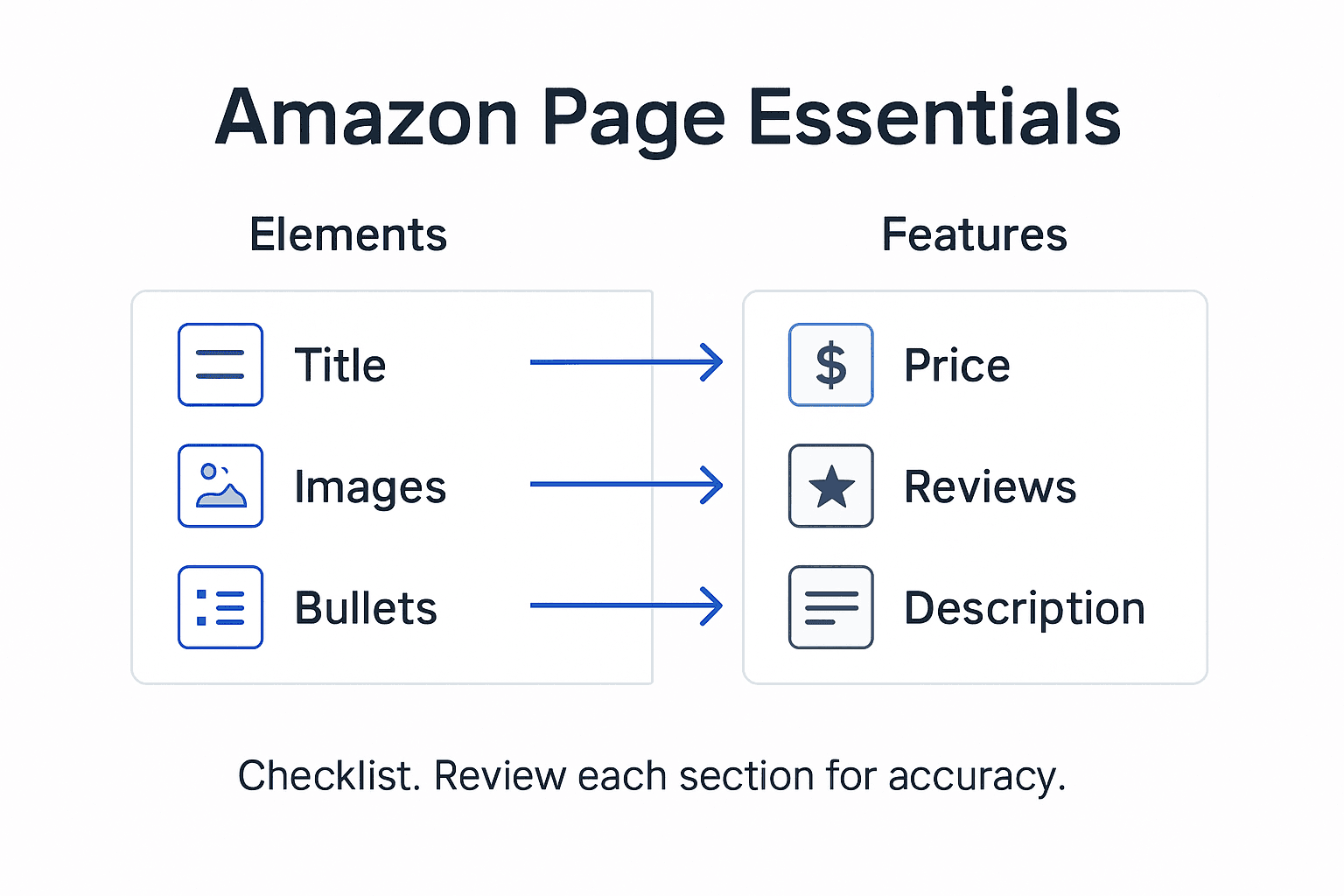
The fundamental structure of an Amazon product page typically includes several key sections: the product title, main image gallery, pricing information, bullet points, product description, and backend search keywords. Each section plays a unique role in communicating product details and persuading customers. The product title serves as the primary identifier, while high-quality images provide visual representation. Pricing details and availability create immediate transparency, and detailed bullet points highlight key product features and benefits.
Sellers must recognize that Amazon’s page structure is not just about displaying information but strategically presenting it to maximize visibility and conversion potential. The layout is meticulously engineered to guide customer decision-making, with elements like customer reviews, ratings, and comparison features integrated seamlessly. Technical specifications, size charts, and compatibility information are strategically positioned to answer potential buyer questions and reduce purchase hesitation.
Pro tip: Optimize each section of your Amazon product page with precise, keyword-rich content that speaks directly to your target customer’s needs and search behaviors.
Here’s how the main Amazon product page sections each influence buyer behavior:
| Section | Primary Function | Impact on Buyer Decision |
|---|---|---|
| Title | Identifies product, aids search | First impression, relevance |
| Images | Visual showcase, detail clarity | Builds trust, confirms expectations |
| Pricing & Availability | Communicates cost and urgency | Drives purchase motivation |
| Bullet Points | Highlights benefits, quick facts | Supports quick comparisons |
| Product Description | Explains details and use cases | Reduces uncertainty, answers doubts |
| Reviews & Ratings | Shows customer satisfaction | Builds trust, reduces hesitation |
| Technical Information | Details specs, dimensions | Supports informed purchase choice |
Essential Elements of Every Product Page
Successful Amazon product pages are meticulously crafted digital storefronts that combine multiple strategic elements to attract, inform, and convert potential buyers. While each product category may have unique nuances, certain core components remain consistent across all listings. Sellers who understand and optimize their product listing strategies can significantly improve their visibility and sales performance.
The essential elements of an Amazon product page include several critical components that work synergistically to provide comprehensive product information. These key sections are carefully arranged to guide the customer’s purchasing journey:
- Product Title: Acts as the primary identifier, incorporating key search terms and essential product characteristics
- Image Gallery: Provides high-resolution, multiple-angle visual representations of the product
- Pricing Information: Displays current price, potential discounts, and comparative pricing
- Bullet Points: Highlight key features, benefits, and unique selling propositions
- Product Description: Offers detailed explanation of product specifications and use cases
- Customer Reviews and Ratings: Provide social proof and credibility
- Technical Specifications: Give precise details about product dimensions, materials, and performance
Understanding the psychology of online shoppers is crucial when designing these page elements. Each section must not only provide information but also create an emotional connection and build trust. Technical details, compelling visuals, and clear communication work together to reduce purchase hesitation and encourage potential customers to click the “Add to Cart” button.

Pro tip: Continuously analyze your product page performance using Amazon’s analytics tools and be prepared to make data-driven adjustments to improve conversion rates.
Optimizing Listings for Maximum Visibility
Amazon’s competitive marketplace demands strategic approach to product listing optimization. Sellers who master the art of listing optimization techniques can dramatically improve their product’s search rankings and conversion potential. Successful optimization goes far beyond simply inserting keywords – it requires a holistic understanding of Amazon’s complex search algorithms and customer behavior.
Effective listing optimization involves multiple critical components that work synergistically:
- Keyword Research: Identifying high-volume, relevant search terms specific to your product
- Title Optimization: Crafting compelling titles that balance searchability and readability
- Image Quality: Using professional, high-resolution images that showcase product features
- Compelling Bullet Points: Highlighting unique value propositions and key product benefits
- Backend Search Terms: Strategically incorporating additional searchable keywords
- Competitive Pricing: Positioning your product competitively within your market segment
- Regular Performance Analysis: Continuously monitoring and adjusting listing strategy
Understanding Amazon’s ranking algorithms requires sellers to think like both a marketer and a data analyst. The platform rewards listings that demonstrate high relevance, conversion rates, and customer satisfaction. This means every element of your product page must be meticulously crafted to provide value, answer potential customer questions, and create a seamless purchasing experience.
Pro tip: Conduct weekly audits of your product listings, tracking key performance metrics and making incremental improvements to maintain competitive edge.
Leveraging A+ Content and Advanced Features
Successful Amazon sellers understand that advanced content strategies can transform a standard product listing into a compelling brand storytelling platform. A+ Content represents a powerful opportunity to differentiate products beyond basic listing requirements, offering sellers a sophisticated canvas to communicate their unique value proposition.
Premium A+ Content provides sellers with multiple advanced features designed to enhance customer engagement:
- Enhanced Visual Storytelling: Create immersive brand narratives through professional graphics and layouts
- Comparative Module: Showcase product features and advantages against potential alternatives
- Technical Specification Charts: Present detailed product information in easy-to-read formats
- Interactive Hotspots: Allow customers to explore product details through clickable image elements
- Video Integration: Demonstrate product functionality and use cases directly within the listing
- Brand Story Sections: Build deeper connections by sharing company background and mission
- Q&A Modules: Proactively address potential customer questions
Understanding the psychological impact of visual content is crucial. Customers make purchasing decisions based on emotional responses and perceived value, not just technical specifications. A+ Content allows sellers to craft a narrative that goes beyond simple product descriptions, creating an immersive experience that can significantly increase conversion rates and build brand loyalty.
Pro tip: Update your A+ Content quarterly, analyzing performance metrics and incorporating customer feedback to continually refine your visual storytelling approach.
Here is a comparison of standard vs. A+ Content features on Amazon product pages:
| Feature Type | Standard Listing Capabilities | A+ Content Enhancements |
|---|---|---|
| Images | Basic image gallery | Custom graphics, interactive elements |
| Text Formatting | Plain bulleted descriptions | Rich formatting, storytelling |
| Comparison Tools | None | Product comparison modules |
| Branding Impact | Minimal, generic | Strong, brand-focused narrative |
Common Listing Mistakes to Avoid
Amazon sellers frequently encounter critical errors that can dramatically undermine their product visibility and sales potential. Understanding and identifying listing mistakes is crucial for maintaining competitive marketplace performance. These errors can range from subtle technical oversights to significant strategic missteps that directly impact conversion rates.
The most prevalent listing mistakes sellers consistently make include:
- Keyword Stuffing: Overloading titles and descriptions with excessive, unnatural keywords
- Low Quality Images: Using blurry, unprofessional, or insufficient product photography
- Incomplete Product Descriptions: Failing to provide comprehensive, clear product details
- Inconsistent Pricing: Misaligning prices with market expectations and competitor rates
- Neglecting Backend Search Terms: Underutilizing critical searchable keywords
- Ignoring Customer Feedback: Not updating listings based on review insights
- Noncompliant Content: Violating Amazon’s strict listing guidelines and requirements
Successful Amazon sellers approach their listings as dynamic marketing assets rather than static product pages. This means continuously monitoring performance metrics, staying updated on platform algorithm changes, and proactively refining listing strategies. The most effective sellers treat their product listings as living documents that require regular optimization, strategic keyword integration, and responsive content management.
Pro tip: Conduct monthly comprehensive audits of your Amazon listings, systematically reviewing each element for potential improvements and alignment with current marketplace trends.
Unlock Your Amazon Page’s Full Sales Potential Today
Understanding the complex structure of Amazon product pages is just the first step. Many sellers struggle with optimizing titles, bullet points, descriptions, and backend keywords that truly connect with their target audience while boosting search rankings and conversions. This article highlights common challenges like keyword stuffing, low-quality images, and incomplete descriptions that prevent listings from reaching their full potential.
Now is the time to transform your product listings into powerful sales drivers. With expertise in Amazon Listing Optimization and data-driven SEO & Analytics, we help you craft compelling content that resonates with buyers and keeps pace with Amazon’s evolving algorithms. Explore practical solutions and growth strategies in our E-commerce Tips & Strategies to Grow Your Online Business and take decisive action by visiting SearchOneers to start optimizing your Amazon presence for greater visibility and higher sales.
Frequently Asked Questions
What are the key components of an Amazon product page?
The key components of an Amazon product page include the product title, image gallery, pricing information, bullet points, product description, customer reviews and ratings, and technical specifications. Each element serves a unique purpose in informing potential buyers and encouraging conversions.
How can I optimize my Amazon product title for better visibility?
To optimize your Amazon product title, incorporate relevant keywords that your target audience is likely to search for while ensuring the title remains clear and readable. Highlight essential product features and specifications to capture buyer attention effectively.
What are common mistakes to avoid when creating an Amazon listing?
Common mistakes include keyword stuffing, using low-quality images, providing incomplete product descriptions, inconsistent pricing, neglecting backend search terms, ignoring customer feedback, and failing to comply with Amazon’s listing guidelines.
How can A+ Content enhance my Amazon product listing?
A+ Content enhances product listings by offering advanced features like enhanced visual storytelling, comparative modules, and video integration. This allows sellers to create immersive experiences that communicate their brand values and product advantages, thereby increasing customer engagement and potentially boosting conversion rates.

Comments
One response to “Amazon Page Structure Explained: Boosting Sales”
[…] Amazon Page Structure Explained: Boosting Sales – Searchoneers […]