Over 80 percent of American shoppers begin their product search directly on Amazon rather than anywhere else. Standing out in such a massive marketplace demands more than just a great product. Sellers must master the art of keyword planning, listing optimization, and strategic adjustments to keep up with fierce competition. Learn how to harness proven methods that raise your product’s profile, drive targeted sales, and help you claim your share of growing customer attention.
Table of Contents
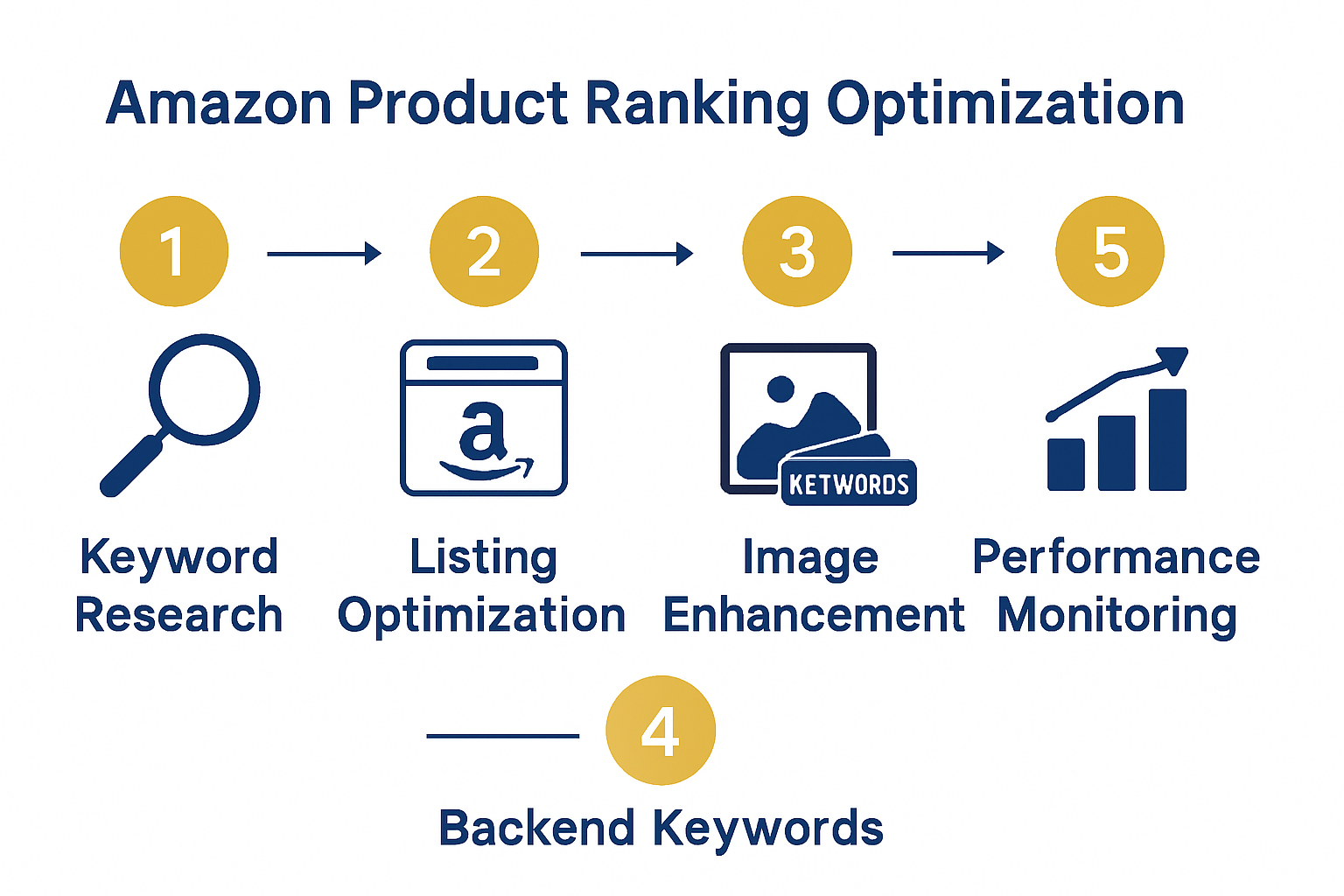
- Step 1: Conduct Comprehensive Keyword Research
- Step 2: Optimize Product Titles And Descriptions
- Step 3: Enhance Images And Bullet Points
- Step 4: Leverage Backend Keywords Effectively
- Step 5: Monitor Performance And Adjust Strategies
Quick Summary
| Essential Takeaway | Meaningful Explanation |
|---|---|
| 1. Conduct thorough keyword research | Utilize Amazon’s search bar and tools to find high-volume keywords relevant to your product. |
| 2. Optimize titles for readability | Craft product titles by balancing important keywords with clear, informative language. |
| 3. Use high-quality images strategically | Showcase products from multiple angles and include lifestyle shots to enhance appeal. |
| 4. Implement relevant backend keywords | Use synonyms, variations, and misspellings in backend keywords to boost search visibility. |
| 5. Regularly monitor and adjust strategies | Track key performance indicators to refine your approach and improve selling effectiveness. |
Step 1: Conduct Comprehensive Keyword Research
Keyword research forms the critical foundation for improving your Amazon product visibility and driving targeted sales. By strategically identifying and implementing the right keywords, you can significantly boost your product’s search ranking and attract potential buyers.
To conduct comprehensive keyword research, start by leveraging multiple research methods. According to ijfmr, effective Search Engine Marketing strategies emphasize the importance of content quality and strategic keyword targeting. Begin with Amazon’s own search bar by typing partial product names and examining the autocomplete suggestions. These suggestions represent real customer search patterns and provide immediate insights into popular search terms.
Next, utilize specialized keyword research tools that can help you uncover high-volume, relevant keywords specific to your product category. Analyze competitors’ product listings to identify the keywords they are successfully using. Pay close attention to long tail keywords that have lower competition but higher conversion potential. As arxiv suggests, a multi-level computational approach to keyword optimization can significantly enhance your product’s performance in sponsored search advertising.
Pro tip: Always prioritize keywords that directly relate to your product’s core features, benefits, and specific use cases. Avoid keyword stuffing and focus on natural, meaningful integration that genuinely helps potential customers understand your product’s value.
Once you’ve compiled your keyword list, you’re ready to move on to the next critical step of optimizing your Amazon product listing.

Step 2: Optimize Product Titles and Descriptions
Creating compelling and searchable product titles and descriptions is crucial for standing out in Amazon’s competitive marketplace. Your goal is to craft clear, informative content that not only captures customer attention but also improves your product’s search visibility.
Start by constructing a strategic product title that balances important keywords with readability. According to arxiv, leveraging advanced language models can help automate and enhance product description generation to improve search visibility. Your title should include key details like brand name, product type, key features, size, color, and quantity. Place the most important keywords at the beginning of the title to ensure maximum impact.
When writing product descriptions, focus on creating value-driven content that speaks directly to potential buyers. Copywriting for Amazon Listings emphasizes the importance of highlighting unique product benefits and addressing customer pain points. Break down your description into clear, scannable sections that showcase your product’s key features, specifications, and potential use cases. Avoid dense paragraphs and use bullet points to make information easily digestible.
Pro tip: Always write descriptions from the customer’s perspective. Answer the questions they might have before making a purchase and use language that resonates with your target audience. Remember that Amazon’s search algorithm rewards detailed, keyword rich content that provides genuine value to shoppers.
With your optimized title and description in place, you are now ready to enhance your product’s visual presentation and marketing strategy.
Step 3: Enhance Images and Bullet Points
Visual presentation and concise information are critical for capturing potential buyers’ attention and improving your Amazon product listing’s performance. Your goal is to create a compelling visual and textual experience that quickly communicates your product’s unique value proposition.
Start with high quality product images that showcase your item from multiple angles. According to arxiv, advanced multimodal systems now emphasize the importance of accurate image representations in e-commerce listings. Ensure your primary image features a clean white background and displays the entire product. Include additional images that demonstrate scale, functionality, and specific features. Aim for at least 6 images, including lifestyle shots, detailed close-ups, and images showing the product in use.
When crafting bullet points, focus on creating clear, benefit-driven statements that address customer needs. 8 Strong Examples of Bullet Points highlights the importance of structuring information for maximum readability. According to arxiv, leveraging advanced language models can help generate comprehensive and engaging bullet point content. Each bullet point should lead with a strong value proposition, highlighting key features, specifications, and unique selling points.
Pro tip: Prioritize the first three bullet points, as these are most likely to be read by potential customers. Use action-oriented language, include specific details, and avoid generic marketing speak. Your bullet points should answer the key questions a customer would have about your product.
With optimized images and strategic bullet points in place, you are now prepared to further refine your Amazon product listing strategy.
Step 4: Leverage Backend Keywords Effectively
Backend keywords are your secret weapon for improving Amazon search visibility without cluttering your product listing. These hidden keywords help Amazon’s algorithm understand and match your product with relevant customer searches, ultimately boosting your ranking potential.
According to ijfmr, strategic keyword targeting plays a crucial role in enhancing organic reach for e-commerce platforms. When selecting backend keywords, focus on variations and synonyms that customers might use to search for your product. 7 Essential Amazon Keyword Types provides insights into developing a comprehensive keyword strategy. Include misspellings, alternate names, and related terms that potential buyers might enter when searching.
Research from arxiv highlights the importance of a multi-level computational approach to keyword optimization. Maximize your 250-character backend keyword limit by prioritizing the most relevant and high-volume search terms. Avoid repeating words already used in your title or bullet points, and steer clear of competitor brand names or irrelevant terms that could trigger inappropriate search results.
Pro tip: Think like your customer. Consider the various ways someone might describe or search for your product, including technical specifications, common misspellings, and alternative product names. Use lowercase keywords and separate them with spaces, avoiding punctuation and repetitive terms.
With your backend keywords strategically implemented, you are now ready to fine-tune your Amazon product listing for maximum visibility and search performance.
Step 5: Monitor Performance and Adjust Strategies
Successful Amazon selling requires continuous performance tracking and strategic adaptation. Your ability to analyze metrics, understand trends, and make data driven adjustments will determine your long term marketplace success.
According to ijfmr, monitoring Search Engine Marketing strategies is critical for maintaining organic reach in e-commerce platforms. Focus on key performance indicators such as conversion rate, click through rate, sales volume, and search ranking. Amazon Seller Central provides robust analytics that allow you to track these metrics in real time. Pay special attention to your product’s visibility, customer reviews, and comparative performance against similar listings in your category.
Research from arxiv highlights the importance of using advanced optimization techniques like linear programming to improve sponsored listing rankings. Implement a systematic approach to performance review by establishing a regular monitoring schedule. Aim to review your metrics weekly, looking for patterns in customer behavior, seasonal trends, and potential areas of improvement.
 Consider A/B testing different elements of your listing such as images, titles, or backend keywords to understand what drives better performance.
Pro tip: Create a performance tracking spreadsheet that allows you to document and compare your metrics over time. This will help you identify long term trends and make more informed strategic decisions about your Amazon selling approach.
With a robust performance monitoring system in place, you are now equipped to continuously refine and optimize your Amazon selling strategy.
Boost Your Amazon Sales with Expert Listing Optimization
Ranking higher on Amazon means overcoming tough challenges like finding the right keywords, crafting compelling titles, and leveraging backend search terms strategically. You want to stand out from the competition by creating listings that attract clicks and convert browsers into buyers. This article highlights key pain points such as keyword research, product description optimization, and performance monitoring that sellers face daily.
Take control of your Amazon success by partnering with specialists who know exactly how to enhance your product visibility and sales performance. Visit our E-commerce Tips & Strategies to Grow Your Online Business to discover proven tactics that align with what you just learned.

Start transforming your Amazon listings today with our tailored solutions. From enhanced titles and bullet points to backend keyword management and actionable SEO insights, we provide smart, data-driven strategies designed for lasting growth. Don’t wait to unlock higher rankings, more traffic, and increased sales. Explore more on our website and get the competitive edge now.
Frequently Asked Questions
How can I conduct keyword research for my Amazon products?
To conduct keyword research, start by using Amazon’s search bar to see autocomplete suggestions for your product. Then, utilize keyword research tools to find high-volume, relevant keywords, and analyze your competitors’ listings for additional insights.
What should I include in my product titles and descriptions to rank higher on Amazon?
Your product titles should include key details like brand name, product type, and essential features, placing the most important keywords at the beginning. In descriptions, focus on the unique benefits of your product and structure the content in scannable sections with bullet points for better readability.
How can I improve my product images to enhance my Amazon listing?
Use high-quality images that display your product from multiple angles and include lifestyle shots to show its use. Aim for at least six images that illustrate different features, helping potential buyers visualize the product.
What are backend keywords and how do I use them effectively?
Backend keywords are hidden search terms that improve your product’s visibility without cluttering your listing. Use the 250-character limit to include relevant variations, synonyms, and misspellings related to your product, ensuring they are not repeated from your title or bullet points.
How can I monitor the performance of my Amazon listings?
Track key performance indicators such as sales volume, conversion rate, and click-through rate using Amazon Seller Central’s analytics tools. Set a regular schedule for review, such as weekly, to analyze your metrics and optimize your listings based on customer behavior and trends.
What steps should I take to adjust my Amazon selling strategies over time?
Establish a routine for monitoring your performance metrics and be prepared to make data-driven adjustments. Consider A/B testing different aspects of your listings, such as product images or titles, to identify changes that lead to better performance.