Most American e-commerce entrepreneurs discover that standing out on Amazon is far more complex than listing great products. With over 350 million products competing for attention on the platform, mastering your storefront is no longer an option but a necessity. The difference between a static storefront and a dynamic brand hub shapes long-term visibility and sales. Here you will find real insights that challenge common myths and guide you to smarter strategies for optimizing your Amazon presence.
Table of Contents
- Amazon Storefronts Defined And Common Myths
- Types Of Storefronts And Key Distinctions
- Core Features That Drive Brand Visibility
- Requirements For Access And Setup In 2025
- Sales Impact, Costs, And Mistakes To Avoid
Key Takeaways
| Point | Details |
|---|---|
| Understanding Amazon Storefronts | An Amazon Storefront allows brand-registered sellers to create a dedicated space to showcase products and brand identity. Regular updates and high-quality visuals are essential for optimal impact. |
| Storefront Types | There are two primary Storefront types: Third-Party Seller and Vendor-Managed, each catering to different business needs and control levels. Choosing the right type can enhance brand visibility significantly. |
| Investment and Costs | Establishing a storefront involves both direct and indirect costs, including seller fees and content creation. Effective storefront management can lead to substantial returns on investment through increased visibility and sales. |
| Common Mistakes | Avoid inconsistent branding, poor imagery, and neglecting analytics, as these can harm customer trust and sales. A strategic approach is vital for ongoing success in the Amazon marketplace. |
Amazon Storefronts Defined and Common Myths
An Amazon Storefront represents a powerful digital real estate opportunity for brand-registered sellers, offering a dedicated space within the Amazon ecosystem to showcase products and brand identity. Storefronts provide a distraction-free, branded shopping environment that allows businesses to control their narrative and customer experience.
At its core, an Amazon Storefront functions like a mini-website, enabling sellers to organize products strategically, share brand stories through compelling visuals and text, and leverage built-in performance tracking analytics. Unlike generic product listings, these storefronts give brands a unique opportunity to create a cohesive visual presentation that goes beyond individual product details.
However, several common myths persist about Amazon Storefronts that can mislead sellers. Contrary to popular belief, a storefront does not automatically protect against competitor interference or guarantee increased visibility. Successful storefront management requires active optimization, consistent branding, and understanding of Amazon’s marketplace dynamics. Sellers must invest time in curating their storefront, selecting representative products, and creating engaging visual narratives that resonate with potential customers.
Pro tip: Treat your Amazon Storefront like a digital brand showroom by regularly updating product collections, using high-quality images, and maintaining a consistent visual narrative that reflects your brand’s unique value proposition.
Types of Storefronts and Key Distinctions
Amazon offers two primary storefront configurations designed to meet different business needs and seller strategies. These storefront types primarily include third-party seller storefronts and vendor-managed storefronts, each with distinct access and control mechanisms.
Third-party seller storefronts, typically accessed through Amazon’s Brand Registry, allow brand-registered sellers to create a customized digital storefront that showcases their complete product lineup. These storefronts provide sellers with significant design flexibility, enabling them to craft a unique brand narrative, organize products strategically, and create a cohesive visual experience that transcends individual product listings.
Vendor-managed storefronts operate differently, offering specialized tools and programs for manufacturers and wholesale suppliers who sell directly to Amazon. These storefronts often have more integrated analytics and inventory management features, reflecting the unique relationship between the vendor and the Amazon marketplace. The key difference lies in control, customization options, and the strategic objectives of each storefront type.
Pro tip: Carefully evaluate your business model and sales strategy before selecting your Amazon storefront type, as the right choice can significantly impact your brand’s online visibility and customer engagement.
Here’s a comparison of the two main Amazon Storefront types to help guide your selection:
| Storefront Type | Access Requirements | Design Flexibility | Best Suited For |
|---|---|---|---|
| Third-Party Seller | Brand Registry enrollment | High | Brand owners & private labels |
| Vendor-Managed | Direct vendor contract | Moderate | Manufacturers & wholesalers |
Core Features That Drive Brand Visibility
Amazon Storefronts provide sophisticated tools designed to elevate brand presence in a crowded digital marketplace. These storefronts offer customizable drag-and-drop layouts that create a distraction-free environment completely free of competitor advertisements, enabling brands to craft a focused and compelling visual narrative.

The core features driving brand visibility include high-quality imagery capabilities, strategic product categorization, and rich media integration. Sellers can showcase their entire product lineup through visually engaging layouts, utilizing professional photographs, lifestyle images, and compelling product videos that communicate brand identity more effectively than traditional listing formats. Optimize for Amazon Search: Boost Your Product Visibility becomes significantly easier with these enhanced storefront design options.
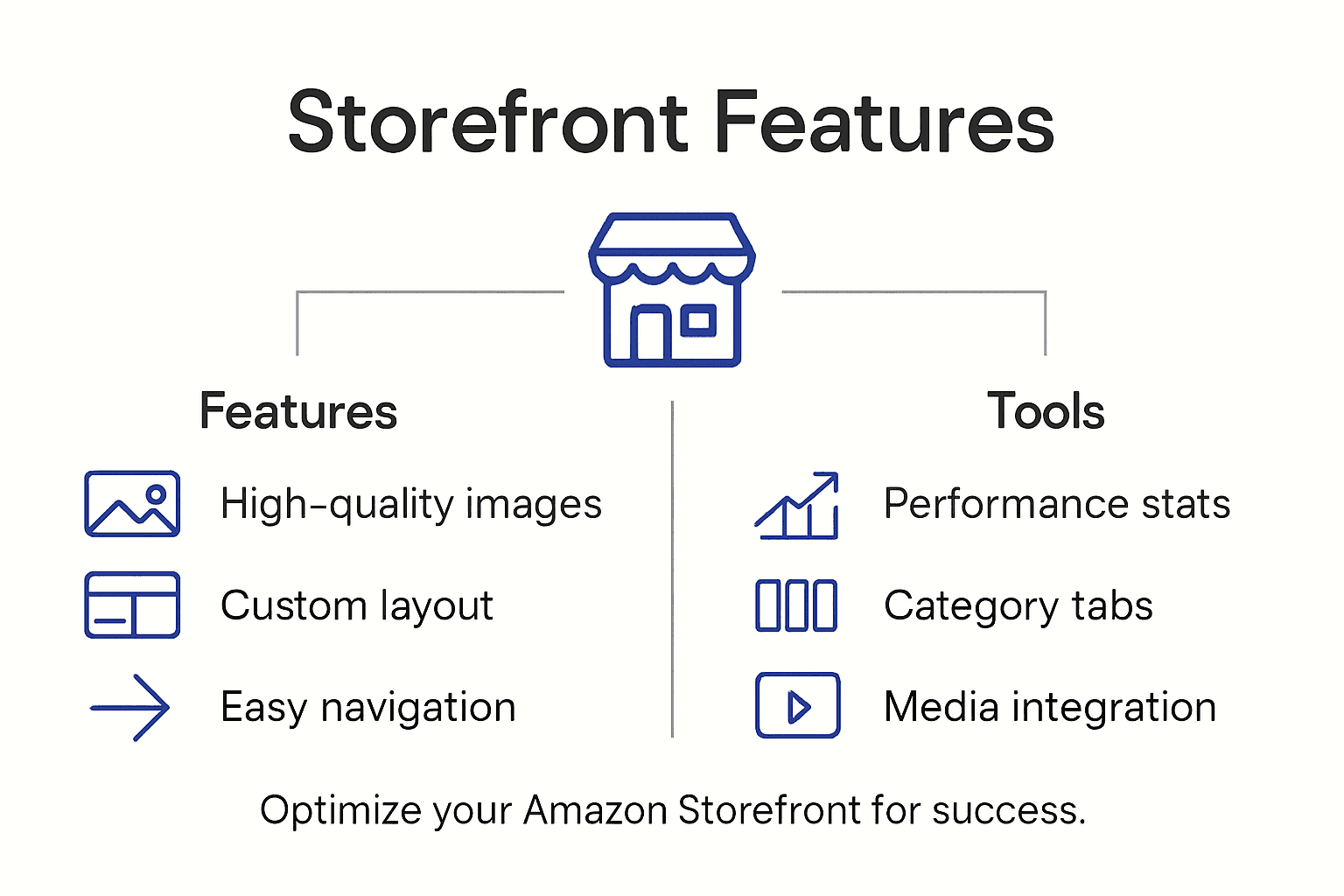
Perhaps most critically, Amazon Storefronts provide comprehensive performance dashboards that allow brands to track traffic, analyze customer engagement, and continuously refine their digital strategy. These analytics tools transform storefronts from simple product displays into dynamic marketing platforms, giving sellers unprecedented insights into customer behavior and preferences.
Pro tip: Invest time in creating a visually consistent and professionally designed storefront that tells your brand’s unique story, as visual cohesiveness can significantly improve customer trust and conversion rates.
Requirements for Access and Setup in 2025
Establishing an Amazon Storefront requires sellers to navigate a series of strategic prerequisites that have become increasingly sophisticated. Amazon Marketing Strategy Case Study: Boosting Seller Success highlights the critical importance of understanding these foundational requirements before launching a digital storefront.
To access an Amazon Storefront, sellers must first complete several mandatory steps. Brand Registry enrollment stands as the primary gateway, demanding sellers provide verifiable trademark documentation, high-quality product images, and comprehensive brand information. Sellers must maintain an active professional selling account, demonstrate a consistent sales history, and meet Amazon’s evolving compliance standards, which increasingly emphasize authenticity, product quality, and customer experience metrics.
The technical setup process involves multiple layers of verification and strategic configuration. Sellers need to integrate robust product catalogs, develop visually compelling brand narratives, and implement advanced analytics tracking. This multifaceted approach requires sellers to balance technical proficiency with creative brand storytelling, ensuring their storefront not only meets Amazon’s technical requirements but also effectively communicates their unique value proposition to potential customers.
Pro tip: Invest in professional trademark registration and maintain impeccable seller metrics well before applying for Brand Registry, as these preparatory steps can significantly streamline your Amazon Storefront access process.
Sales Impact, Costs, and Mistakes to Avoid
Amazon Storefronts represent a strategic investment with nuanced financial implications for sellers seeking to expand their digital marketplace presence. Examples of Optimized Amazon Listings demonstrate that successful storefronts can drive significant revenue growth when implemented strategically.
The financial landscape of Amazon Storefronts involves both direct and indirect costs. Seller account fees range from $39.99 monthly for professional accounts, with additional transaction fees typically between 8-15% depending on product category. Indirect costs include content creation, professional photography, brand storytelling development, and ongoing analytics monitoring. While these investments might seem substantial, the potential for increased visibility and conversion rates often outweighs the initial expenditure.
Common mistakes can critically undermine storefront performance. Sellers frequently err by neglecting visual consistency, using low-quality imagery, failing to update product collections regularly, or presenting disjointed brand narratives. Successful storefronts require continuous optimization, responsive design, and a deep understanding of target audience preferences. Sellers must approach their storefront as a dynamic marketing platform rather than a static product display, continuously refining their approach based on performance metrics and customer engagement data.
Review these common mistakes and their business impact before launching an Amazon Storefront:
| Mistake | Short-Term Impact | Long-Term Consequence |
|---|---|---|
| Inconsistent branding | Lower customer trust | Reduced brand loyalty |
| Poor imagery quality | Reduced click-through rates | Lower conversion & sales |
| Outdated product selection | Missed promotional opportunities | Loss of returning customers |
| Ignoring analytics | Uninformed optimization efforts | Declining profitability |
Pro tip: Allocate at least 10-15% of your monthly marketing budget specifically for storefront optimization, including professional content creation, analytics tools, and periodic design refinements.
Enhance Your Amazon Storefront for Lasting E-Commerce Success
Mastering the role of Amazon Storefronts means overcoming challenges like creating cohesive branding and driving higher visibility through optimized listings and powerful analytics. If you want to avoid pitfalls such as inconsistent imagery or missed promotional opportunities, focusing on strategic optimization is key. Our expertise in Amazon Listing Optimization and Amazon SEO & Analytics can help you tell your brand story effectively while boosting product search ranking.
Explore proven methods through E-commerce Tips & Strategies to Grow Your Online Business that align perfectly with the goals outlined in the article.

Take control of your brand narrative now by partnering with us. Visit searchoneers.com to start elevating your Amazon Storefront experience. Don’t wait to transform your digital presence with expert-driven optimization and data-backed strategies that evolve as the marketplace does.
Frequently Asked Questions
What is an Amazon Storefront?
An Amazon Storefront is a customized digital space for brand-registered sellers to showcase their products and brand identity within the Amazon ecosystem, functioning like a mini-website that enhances the shopping experience.
How can an Amazon Storefront improve my brand’s visibility?
Amazon Storefronts offer customizable layouts, high-quality imagery, and rich media integration, allowing sellers to create a focused and compelling visual narrative that helps elevate their brand presence in a competitive marketplace.
What are the requirements to set up an Amazon Storefront?
To set up an Amazon Storefront, sellers must enroll in Brand Registry, which requires verifiable trademark documentation, quality product images, a professional selling account, and compliance with Amazon’s standards for authenticity and product quality.
What common mistakes should I avoid when managing my Amazon Storefront?
Common mistakes to avoid include neglecting visual consistency, using low-quality imagery, failing to update product collections regularly, and ignoring analytics, as these can negatively impact customer trust, conversion rates, and overall sales.