Over 55 percent of american shoppers now begin their product searches directly on Amazon, outpacing even traditional search engines. For anyone selling in this massive online marketplace, understanding how to improve your product listings is vital for standing out and winning sales. This guide breaks down practical steps that will help you analyze, refine, and maximize every part of your Amazon presence for stronger visibility and real results.
Table of Contents
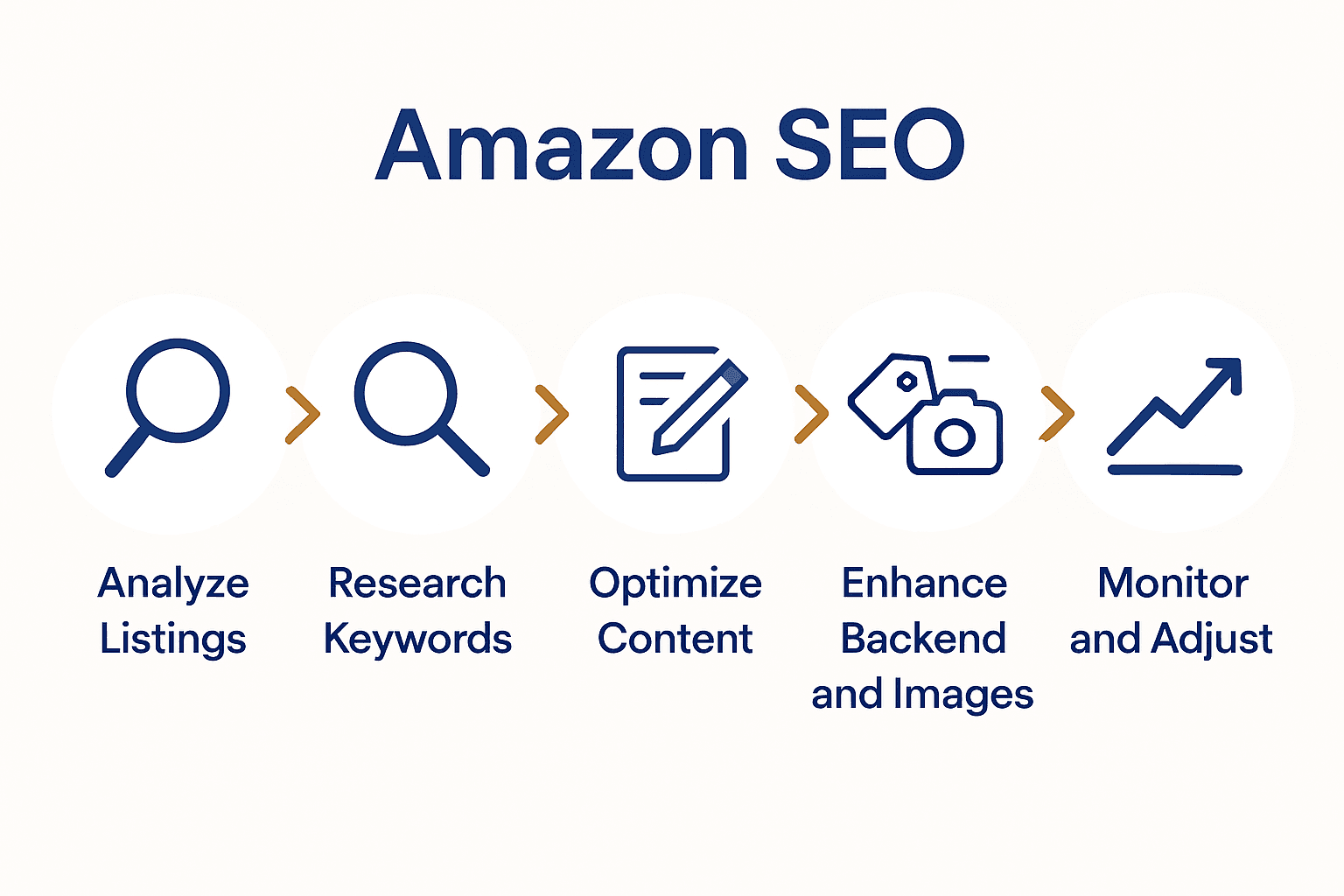
- Step 1: Analyze Your Current Amazon Listings
- Step 2: Research and Select Target Keywords
- Step 3: Optimize Titles, Bullets, and Descriptions
- Step 4: Enhance Backend Keywords and Images
- Step 5: Monitor Performance and Adjust Strategies
Quick Summary
| Key Point | Explanation |
|---|---|
| 1. Analyze Current Listings | Evaluate your Amazon listings to identify optimization opportunities that can enhance visibility and sales. |
| 2. Conduct Strategic Keyword Research | Use tools and competitor analysis to identify relevant keywords that match customer search habits and enhance product visibility. |
| 3. Optimize Content Structure | Craft compelling titles, bullet points, and descriptions that blend keyword visibility with engaging customer communication. |
| 4. Leverage Backend Keywords and Images | Utilize backend keywords strategically and select high-quality images to improve product discoverability and engagement. |
| 5. Monitor and Adjust Regularly | Continuously track performance metrics to refine your strategy and adapt to changing market conditions for long-term success. |
 |
|
Step 1: Analyze Your Current Amazon Listings
Unveiling the performance of your existing Amazon product listings is the crucial first step in optimizing your search ranking and sales potential. According to Search Engine Land, a comprehensive evaluation of your current listings can reveal critical opportunities for improvement that directly impact your visibility and conversion rates.
To conduct a thorough analysis, start by examining each of your product listings through a strategic lens. Review your current product titles, checking for keyword relevance and search volume. Assess your bullet points and descriptions for clarity, compelling language, and strategic keyword placement. Pay special attention to your product images – high quality, professional visuals can significantly boost customer engagement and click through rates.
Pro tip: Use Amazon’s own performance metrics and third party analytics tools to track critical data points like click through rate, conversion rate, and search ranking for each listing. By understanding these metrics, you can pinpoint exactly where your listings need optimization and develop a targeted strategy for improvement. Your next step will involve detailed keyword research to strengthen these foundational insights and prepare for strategic listing enhancements.
For a comprehensive deep dive into listing optimization, check out our Amazon Listing Enhancement Guide to learn advanced techniques for maximizing your product visibility.
Step 2: Research and Select Target Keywords
Researching and selecting the right keywords is a strategic process that can dramatically improve your Amazon product visibility and sales potential. According to Search Engine Land, successful keyword research involves identifying high-traffic terms that precisely match customer search behavior and product relevance.
To effectively research keywords, leverage multiple tools and strategies. Start with Amazon’s own search bar by typing partial product names and observing autocomplete suggestions. Explore competitor listings in your product category and analyze the language and terms they use. Use specialized keyword research tools that provide search volume, competition level, and relevance metrics. Witailer highlights how brands like Lavazza have successfully enhanced their marketplace presence by integrating carefully chosen keywords into product listings.
Pro tip: Focus on long tail keywords that demonstrate specific user intent. These more detailed phrases often have lower competition and higher conversion potential. Look for keywords that balance search volume with specificity about your product. Your goal is to match exactly what potential customers are searching for while standing out from generic competitors.
Ready to dive deeper into keyword selection? Check out our comprehensive guide to Amazon keyword research to unlock advanced strategies for marketplace success.

Step 3: Optimize Titles, Bullets, and Descriptions
Optimizing your Amazon product listing content is a critical strategy for improving search visibility and driving sales conversions. According to Search Engine Land, successful optimization requires a strategic approach to crafting titles, bullet points, and product descriptions that balance keyword relevance with compelling customer communication.
Start with your product title, which serves as the primary search and attention grabber. Prioritize placing the most important keywords at the beginning of the title, including critical product attributes like brand name, key features, size, color, or quantity. For bullet points, focus on highlighting the most compelling product benefits and unique selling propositions. Structure each bullet to address specific customer needs and pain points, using clear and concise language that speaks directly to your target audience.
Pro tip: When writing product descriptions, think beyond basic feature listing. Create a narrative that connects with your customers emotional triggers and demonstrates how your product solves their specific problems. Your description should read like a conversation, not a technical manual. Improve your approach with our guide on writing effective Amazon bullet points to transform your listings from bland to compelling.
Remember that each section of your product listing works together to create a comprehensive customer experience. Your goal is to provide enough information to help customers make confident purchasing decisions while strategically incorporating keywords that boost your search ranking.
Step 4: Enhance Backend Keywords and Images
Taking your Amazon product visibility to the next level requires strategic optimization of backend keywords and compelling product imagery. According to Search Engine Land, backend keywords and high quality images play a crucial role in improving product discoverability and attracting potential customers.
For backend keywords, approach your strategy with precision. These hidden keywords are your secret weapon for search ranking. Focus on including synonyms, alternative product names, common misspellings, and related search terms that customers might use. Avoid repeating keywords already used in your visible listing, and maximize the available character space with relevant terms that expand your product’s searchability. Be strategic about placement do not simply stuff keywords, but think about how customers actually search for products like yours.
Pro tip: When selecting images, prioritize high resolution professional photographs that showcase your product from multiple angles. Your primary image should be a clean, white background shot that displays the entire product. Subsequent images can highlight specific features, demonstrate product use, or provide size comparisons. Learn more about backend keyword strategies with our comprehensive guide to unlock hidden optimization techniques.
Remember that backend keywords and images work together to tell your product’s story. Your goal is to create a comprehensive, searchable listing that not only ranks well but also converts browsers into buyers.
Step 5: Monitor Performance and Adjust Strategies
Successful Amazon SEO is not a one time effort but an ongoing process of continuous improvement and strategic adaptation. According to Search Engine Land, consistently monitoring your listing performance metrics is crucial for maintaining and improving your search rankings and sales potential.
Establish a routine for tracking key performance indicators such as click through rate, conversion rate, search ranking, and total sales volume. Utilize Amazon Seller Central analytics and third party tools to gather comprehensive data about your product listings. Pay close attention to how changes in your listing optimization impact these metrics. Look for patterns in customer behavior search terms used, time spent on product page, and purchase frequency to understand what resonates with your target audience.
Pro tip: Create a monthly performance review process where you systematically analyze your data and make incremental adjustments. Dont make sweeping changes all at once test small modifications and measure their impact. This approach allows you to understand exactly which strategies are driving improvements in your Amazon search rankings. Check out our comprehensive performance tracking guide to develop a robust monitoring system.
Remember that Amazon SEO is dynamic. What works today might not work tomorrow, so staying agile and data driven is your key to long term marketplace success.
Boost Your Amazon SEO with Expert Strategies
If you find yourself struggling to improve your Amazon search rankings or feel overwhelmed by technical terms like backend keywords and conversion rates this article highlights exactly how detailed optimization can unlock your product’s true potential. Common challenges like pinpointing effective keywords or crafting compelling bullet points can hold back your sales growth but they don’t have to be obstacles you face alone. With the right insights and a tactical approach your listings can stand out on Amazon’s crowded marketplace.
Discover proven ways to enhance visibility and increase sales by leveraging smart data-driven methods. Start by exploring our E-commerce Tips & Strategies to Grow Your Online Business for actionable advice that aligns perfectly with the step-by-step process outlined here.

Take control of your Amazon presence today with our specialized services in Amazon Listing Optimization and Amazon SEO & Analytics that deliver measurable results. Don’t wait for competitors to outpace you improve your listings now with trusted expertise at Search Oneers. Your next level in Amazon sales growth starts with a single step.
Frequently Asked Questions
How can I analyze my current Amazon listings for SEO?
To analyze your current Amazon listings, review your product titles, bullet points, and descriptions for keyword relevance and clarity. Use performance metrics from Amazon Seller Central to identify which listings need optimization and develop a targeted plan for improvements.
What tools can I use for keyword research on Amazon?
You can use various keyword research tools and Amazon’s search bar for effective keyword research. Start by examining autocomplete suggestions when you type product names, and explore competitor listings to see what terms they are using.
How do I optimize my product titles and descriptions on Amazon?
To optimize your product titles and descriptions, incorporate relevant keywords at the beginning of your title and highlight unique benefits in your bullet points. Make sure your descriptions create a connection with customers and clearly address their needs, enhancing both SEO and conversion potential.
What are backend keywords, and how do I use them for my listings?
Backend keywords are unseen words and phrases that improve your product’s searchability on Amazon. Include synonyms, alternative product names, and common misspellings, but avoid repeating keywords used in visible listings, maximizing your character space for broader reach.
How often should I monitor my Amazon listing performance?
You should establish a routine to monitor your Amazon listing performance at least once a month. Track metrics like click-through rates and conversion rates to identify patterns, and make small, incremental adjustments to see what strategies work best over time.
What steps should I take if my Amazon listings are not performing well?
If your Amazon listings are underperforming, start by analyzing their content for keyword relevance and clarity. Update your titles, bullet points, and descriptions, optimize backend keywords, and enhance your images to improve visibility and drive conversions.