

Most American sellers launching on Amazon quickly learn that ranking at the top is not luck but strategy. With over 1.9 million active sellers competing for attention, mastering how to choose the right search terms is the first step toward real success. This guide explains how to identify powerful keywords and create high-converting product titles, helping you stand out in a crowded marketplace and drive more shoppers to your listings.
Table of Contents
- Step 1: Identify Top Keywords Relevant to Your Product
- Step 2: Analyze Competitors for Winning Title Strategies
- Step 3: Craft Compelling Titles Using Amazon Best Practices
- Step 4: Incorporate SEO and Branding for Maximum Impact
- Step 5: Test and Monitor Performance to Refine Titles
Quick Summary
| Key Takeaway | Explanation |
|---|---|
| 1. Use Strategic Keyword Research | Identify high-impact keywords that customers use to find products like yours for better visibility. |
| 2. Analyze Competitor Titles | Study successful listings to understand effective title structures and keyword placements. |
| 3. Optimize Title for SEO | Balance keywords with readability in your product title to enhance search performance and user interest. |
| 4. Blend SEO with Branding | Create titles that encapsulate both targeted keywords and your unique brand messaging for customer appeal. |
| 5. Continuously Test and Monitor | Implement A/B testing and track metrics to refine titles for improved visibility and conversion rates. |
Step 1: Identify Top Keywords Relevant to Your Product
Unlocking successful Amazon product visibility starts with strategic keyword research. In this crucial step, you will discover how to pinpoint the most powerful search terms that potential buyers use when hunting for products like yours.
Begin by brainstorming core product attributes that customers might search for. Think about your product’s specific features, benefits, materials, sizes, colors, and potential use cases. For instance, if you’re selling a stainless steel water bottle, keywords might include “leak proof water bottle”, “insulated sports bottle”, “BPA free metal tumbler”. Use Amazon keyword research strategies to expand your initial list and uncover hidden search opportunities.
Next, leverage Amazon’s own search suggestions and competitor listings to refine your keyword approach. Type partial product descriptions into the Amazon search bar and observe autocomplete recommendations. Analyze top-ranking product titles in your category to understand which terms are performing well. Pay special attention to the subtle variations and synonyms customers might use to describe products similar to yours.
Pro tip: Create a comprehensive keyword spreadsheet that categorizes terms by search volume, relevance, and competition level. This systematic approach will help you prioritize the most impactful keywords for optimizing your product listing.
Step 2: Analyze Competitors for Winning Title Strategies
Diving deep into competitor analysis is your secret weapon for crafting compelling Amazon product titles that stand out and attract buyers. This step will help you understand exactly how top sellers in your niche construct their titles to maximize visibility and clicks.
Start by conducting systematic competitive intelligence research on the top performing listings in your product category. Manually review the first 5-10 ranking products, carefully examining their title structures. Look for patterns such as keyword placement, use of specific attributes, and formatting techniques that seem to boost their search rankings. Note how successful sellers blend critical product features with searchable keywords while maintaining readability. Pay special attention to the order of keywords, use of numbers, and inclusion of unique selling propositions that make their titles pop.
Utilize Amazon competitor analysis techniques to go beyond surface level observations. Take screenshots of top titles, create a comparative spreadsheet, and analyze the specific language and formatting strategies that consistently appear in high performing listings. Consider the emotional and functional triggers these titles activate for potential buyers.
Pro tip: Create a competitive title template based on your research that incorporates the most effective keywords and structural elements you discover. This framework will serve as a strategic blueprint for crafting your own high converting product titles.
Step 3: Craft Compelling Titles Using Amazon Best Practices
Crafting an optimized Amazon product title is an art and science that can dramatically boost your product visibility and click through rates. This critical step will transform your listing from overlooked to outstanding by implementing strategic title creation techniques.
Amazon product title guidelines recommend a strategic approach to constructing titles that balance keywords, readability, and search performance. Your title should lead with the most important product attributes customers are searching for additional context. Start by prioritizing key information like brand name, product type, size, color, quantity, and unique features. Aim to include 3-5 primary keywords that accurately represent your product while maintaining a natural flow.

Master the technical nuances of Amazon title optimization by studying keyword placement strategies that enhance search rankings. Capitalize the first letter of each word, avoid using all capital letters, and steer clear of promotional language like “best” or “amazing”. Integrate specific product details that differentiate your offering such as material composition, special features, or technical specifications. Remember that your title has a character limit typically between 150-250 characters depending on your product category.
Pro tip: Create a title template with placeholders for each critical element brand, key features, and specifications to ensure consistent and optimized title creation across your product line.
Here’s a summary comparing the key elements to optimize in your Amazon product title:
| Optimization Element | Why It Matters | Impact on Results |
|---|---|---|
| Keyword Placement | Boosts search visibility | Improves ranking for top queries |
| Feature Inclusion | Highlights product strengths | Increases relevance to buyers |
| Brand Integration | Builds trust and recognition | Differentiates from competitors |
| Title Length Management | Meets Amazon guidelines | Prevents truncation in search |
Step 4: Incorporate SEO and Branding for Maximum Impact
SEO and branding are the dynamic duo that can transform your Amazon product listing from invisible to irresistible. This step will show you how to strategically blend search optimization techniques with your unique brand identity to capture customer attention and climb search rankings.
Amazon keyword research strategies reveal that successful product listings seamlessly integrate targeted keywords with compelling brand messaging. Begin by identifying the core language your target customers use when searching for products like yours. Analyze search volume, customer intent, and competitive keyword landscapes to build a robust SEO foundation. Your goal is to create a title that not only ranks well but also communicates your brand’s unique value proposition.
Merge technical SEO optimization with your brand voice by crafting titles that feel both professional and authentic. Use Amazon SEO optimization techniques to strategically place primary keywords near the beginning of your title while maintaining a natural flow. Highlight your brand’s distinctive features such as proprietary technologies, quality certifications, or unique materials that set you apart from competitors. Consider incorporating subtle brand personality indicators that resonate with your target audience while staying within Amazon’s character limit guidelines.
Pro tip: Create a keyword and branding matrix that maps your top search terms against your brand’s core messaging to ensure every product title is both discoverable and distinctively yours.
Step 5: Test and Monitor Performance to Refine Titles
Successful Amazon sellers understand that title optimization is an ongoing process of testing, learning, and adapting. This step will empower you to transform your product titles from static text into dynamic marketing tools that continuously improve your sales performance.
Amazon SEO testing strategies emphasize the critical importance of systematic performance tracking. Start by creating multiple title variations and implementing A/B testing techniques to scientifically measure their impact. Track key metrics such as click through rates, conversion rates, and search ranking positions for each title version. Pay close attention to how small changes in keyword placement, phrasing, or feature emphasis can dramatically influence your product’s visibility and customer engagement.
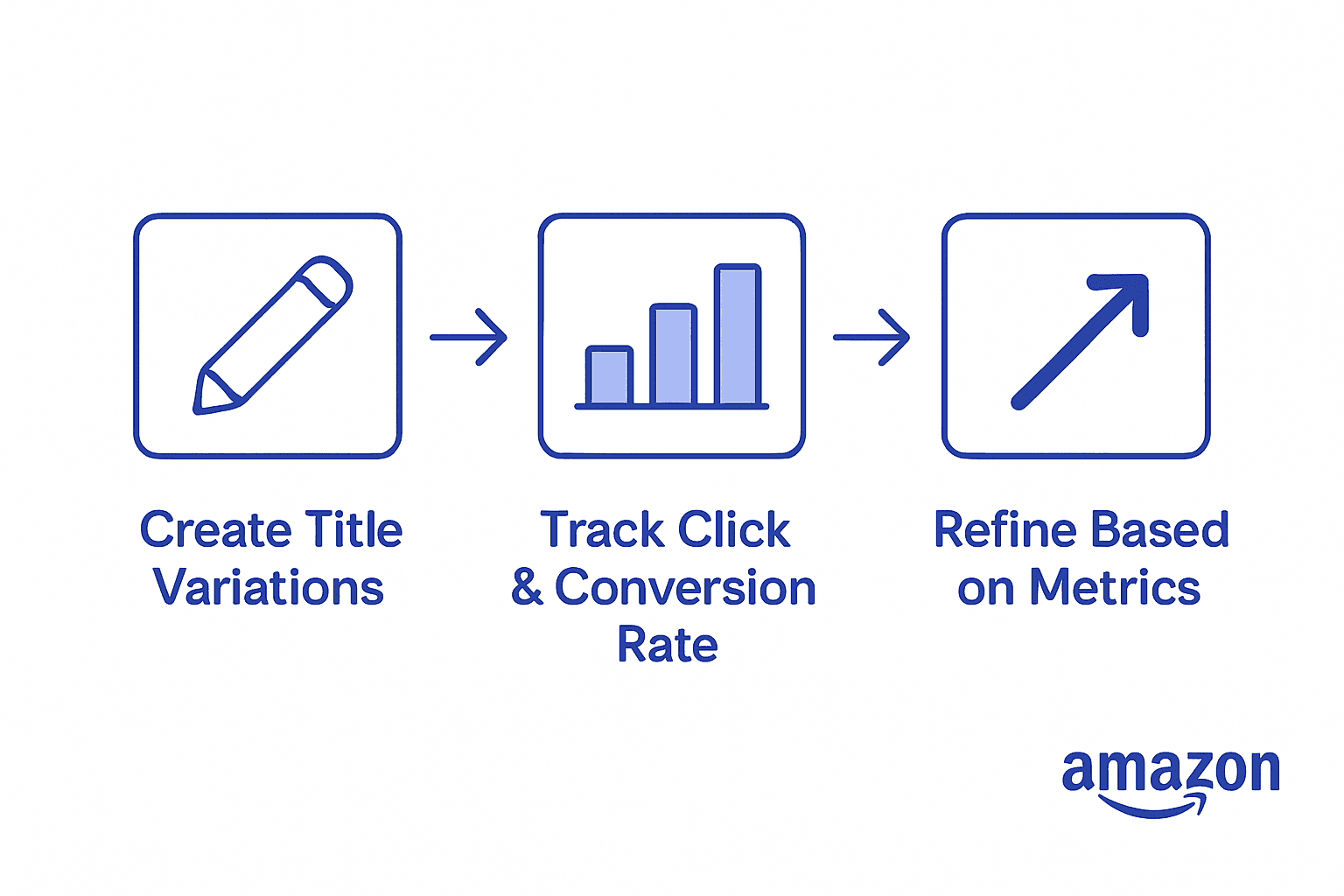
Utilize Amazon’s built in analytics and third party tracking tools to develop a comprehensive understanding of your title performance. Monitor how different title approaches resonate with your target audience by analyzing search impressions, click rates, and ultimate conversion metrics. Be prepared to make data driven adjustments quickly experiment with new keywords, rearrange feature descriptions, and refine your messaging based on real world performance data. Remember that successful Amazon optimization is about continuous incremental improvements rather than seeking a perfect one time solution.
Pro tip: Create a performance tracking spreadsheet that logs title variations, key metrics, and optimization experiments to maintain a systematic approach to title refinement.
Compare different methods for testing Amazon product title performance:
| Testing Method | Advantages | Limitations |
|---|---|---|
| A/B Title Testing | Measures real buyer response | Requires sufficient traffic |
| Analytics Review | Identifies long-term trends | Less real-time granularity |
| Conversion Tracking | Links changes to sales increases | May require external tools |
Elevate Your Amazon Listings with Expert Title Optimization
Struggling to make your Amazon product titles stand out in a crowded marketplace is a common challenge for sellers aiming to boost rankings and increase clicks. This article highlights crucial pain points such as strategic keyword placement, competitor title analysis, SEO integration, and continuous performance monitoring. If you want to overcome these obstacles and create titles that truly capture buyer attention and improve search visibility, you need specialized support tailored to these exact goals.
At Search Oneers, we specialize in Amazon Listing Optimization including enhanced titles, bullet points, descriptions, and backend keywords that guarantee superior visibility. Our smart, data-backed Amazon SEO & Analytics strategies evolve with the marketplace to keep your listings performing at their best. Discover more about proven tactics that grow your e-commerce presence in our E-commerce Tips & Strategies to Grow Your Online Business category.

Take control of your Amazon success now by partnering with experts who understand how to blend powerful keywords with compelling brand messaging. Visit Search Oneers today to start optimizing your titles for maximum impact and see the difference an expertly crafted listing can make.
Frequently Asked Questions
What are the best keywords for optimizing my Amazon product title?
To find the best keywords, brainstorm core product attributes, features, and benefits that customers might search for. Then, use Amazon’s search bar autocomplete suggestions and competitor listings to gather relevant keywords that accurately describe your product.
How can I analyze competitors for title optimization?
Conduct comprehensive research on the top-performing product titles in your category. Look for patterns in keyword placement, formatting techniques, and the inclusion of specific product attributes that help boost visibility and engagement.
What are Amazon’s guidelines for crafting product titles?
Amazon recommends including key product details like brand name, product type, and size within a character limit of 150–250 characters. Ensure you prioritize important keywords while maintaining readability and avoiding promotional phrases like “best” or “amazing”.
How can I track and test the performance of my optimized titles?
Implement A/B testing by creating multiple title variations and measuring their impact on click-through rates and conversion rates. Monitor performance metrics regularly to identify which title elements drive the most engagement and make adjustments accordingly.
How does incorporating SEO and branding affect my title optimization?
Integrating SEO keywords with your unique brand messaging enhances discoverability while establishing your brand’s identity. Aim to combine targeted keywords with distinctive product features to create a title that is both appealing and searchable.
What steps should I take to refine my product titles continuously?
Keep track of title performance over time by analyzing key metrics such as search impressions and click rates. Be prepared to make data-driven adjustments by experimenting with new keywords and rearranging title components every 30–60 days to improve visibility.
Recommended
- Amazon SEO – Outrank, Outsell, and Outshine Your Competition
- Amazon Search Optimization – Turn clicks into sales
- Optimize for Amazon Search: Boost Your Product Visibility
- How to Optimize Amazon Listings: Complete Guide
- Why Optimize Ecommerce Stores: Complete Guide – Shopify Experts: Grow Your eCommerce Revenue

Comments
2 responses to “Title Optimization Amazon: Boost Rankings and Clicks Fast”
[…] dramatically increase your product’s visibility and click-through rates. The key is creating a title optimization strategy that balances searchability with […]
[…] point of interaction between your Amazon listing and potential customers. Mastering the art of title optimization requires strategic thinking that balances searchability with customer […]