Choosing the right rank tracker is the first step for any American or Canadian Amazon seller aiming to boost visibility. With so many tools and platforms available, finding one that delivers accurate, real-time insights can feel overwhelming. Accurate product categorization and integration with Amazon’s system determine how well you can monitor and improve your Best Seller Rank. This guide helps you navigate tracking solutions, ensuring you make informed decisions that actually drive result.
Table of Contents
- Step 1: Set Up The Right Amazon Best Seller Rank Tracker
- Step 2: Integrate Key Product Listings For Accurate Tracking
- Step 3: Monitor Real-Time Rank Fluctuations Effectively
- Step 4: Analyze Historical Rank Data For Insights
- Step 5: Optimize Listings Based On Tracker Data
Quick Summary
| Key Insight | Explanation |
|---|---|
| 1. Choose the Right Tracker | Select a monitoring tool that integrates well with Amazon and offers real-time rank updates, historical data, and competitor comparisons. |
| 2. Integrate Listings Properly | Ensure all product listings are synchronized with unique identifiers and consistent metadata for accurate tracking across platforms. |
| 3. Monitor Real-Time Changes | Use systems that provide continuous rank tracking and instant notifications to respond to significant rank fluctuations immediately. |
| 4. Analyze Historical Data | Evaluate year-over-year rankings and seasonal trends to gain insights into long-term performance and future opportunities. |
| 5. Optimize Listings Regularly | Leverage tracking data to refine product titles, images, and descriptions to enhance visibility and engagement with potential buyers. |
Step 1: Set Up the Right Amazon Best Seller Rank Tracker
Tracking your Amazon Best Seller Rank requires selecting the right monitoring tool that provides accurate, real-time insights into your product’s performance. The goal is to understand how your listings move through Amazon’s complex ranking system and make data-driven optimization decisions.
To start, you’ll want to choose a tracking solution that integrates seamlessly with Amazon’s ecosystem. Carefully examine product categorization details to ensure your tracking tool can capture precise metrics. Look for trackers that offer:
- Hourly rank updates
- Historical performance graphs
- Competitor comparison features
- Category-specific tracking capabilities
- Alerts for significant rank changes
When evaluating tracking tools, pay close attention to their ability to capture nuanced performance metrics. The most effective trackers don’t just show your current rank but help you understand the underlying factors driving your placement.

Some top considerations include real-time feedback integration and comprehensive performance analytics. Recent seller performance factors play a critical role in determining your best seller potential.
Here’s a comparison of rank tracker features and their business impact:
| Tracker Feature | Business Value | Potential Risks |
|---|---|---|
| Real-time rank feedback | Enables quick market response | Data overload if unmanaged |
| Competitor comparison | Drives strategic positioning | Over-focus on rivals |
| Historical trend analysis | Informs future planning | Misinterpretation of patterns |
| Automated alerts | Prevents missed opportunities | Notification fatigue |
Not all rank trackers are created equal. Choose one that provides actionable insights, not just raw numbers.
Pro tip: Test multiple tracking tools with a free trial before committing to ensure the platform meets your specific Amazon selling needs.
Step 2: Integrate Key Product Listings for Accurate Tracking
Successfully tracking your Amazon Best Seller Rank requires a strategic approach to integrating your product listings with comprehensive monitoring tools. The key is creating a unified tracking system that captures every critical performance metric across your entire product portfolio.
Standardized product data integration enables sellers to develop a robust tracking strategy. Your integration process should focus on several crucial elements:
- Unique product identifiers (UPC, ASIN, SKU)
- Consistent product categorization
- Cross-platform listing synchronization
- Comprehensive performance metadata
- Real-time tracking capabilities
To maximize tracking accuracy, you’ll want to leverage advanced tracking platforms that can process complex product ranking signals. These sophisticated systems analyze multiple performance dimensions simultaneously, providing a holistic view of your product’s market positioning.
Effective listing integration transforms raw data into actionable strategic insights for your Amazon selling approach.
Successful integration means connecting all your product listings through a centralized tracking infrastructure. This approach allows you to monitor performance trends, identify optimization opportunities, and make data-driven decisions about your Amazon marketplace strategy.
Pro tip: Invest time in mapping out your entire product catalog and ensuring each listing has consistent, accurate metadata before implementing your tracking system.
Step 3: Monitor Real-Time Rank Fluctuations Effectively
Tracking Amazon Best Seller Rank requires sophisticated real-time monitoring strategies that help you understand and respond to rapid marketplace changes. Your goal is to develop a proactive approach that captures instantaneous rank movements and provides actionable insights.
Real-time data streaming platforms enable sellers to track rank changes with unprecedented precision. These advanced monitoring systems allow you to identify critical performance shifts instantly, giving you a competitive edge in the dynamic Amazon marketplace.
Your real-time monitoring strategy should incorporate several key components:
- Continuous rank tracking
- Instant notification systems
- Detailed performance analytics
- Comparative rank analysis
- Automated tracking across multiple product categories
To maximize your tracking effectiveness, leverage tools that provide neutral ranking data without personalization bias. These platforms help you understand exactly how your products perform across different user segments and search contexts.
Quick detection of rank fluctuations is the difference between reactive and proactive selling strategies.
Successful real-time monitoring means establishing a robust system that not only tracks changes but helps you understand the underlying factors driving those rank movements. By implementing sophisticated tracking mechanisms, you can make immediate, data-driven decisions to optimize your product listings.
Pro tip: Configure multiple alert triggers at different rank movement thresholds to ensure you never miss a significant performance shift.
Step 4: Analyze Historical Rank Data for Insights
Understanding your Amazon Best Seller Rank requires more than just tracking current performance. You need a strategic approach to analyzing historical data that reveals deeper insights into your product’s market trajectory and potential future performance.
Comprehensive historical ranking datasets provide sellers with powerful tools for understanding long-term performance trends. These rich historical records allow you to identify patterns, seasonality, and critical moments that have impacted your product’s ranking over time.
Your historical data analysis should focus on several key dimensions:
- Year-over-year rank progression
- Seasonal performance variations
- Impact of specific marketing interventions
- Comparative rank movements across product categories
- Long-term competitive positioning
To extract maximum value, leverage advanced ranking data analysis algorithms that can predict future performance based on past interactions. These sophisticated techniques help you understand the complex dynamics driving your product’s marketplace success.
Historical data is not just a record of past performance – it’s a roadmap for future strategic decisions.
Successful historical rank analysis means transforming raw data into actionable strategic insights. By understanding the nuanced patterns in your product’s ranking history, you can develop more targeted optimization strategies that anticipate market shifts and capitalize on emerging opportunities.
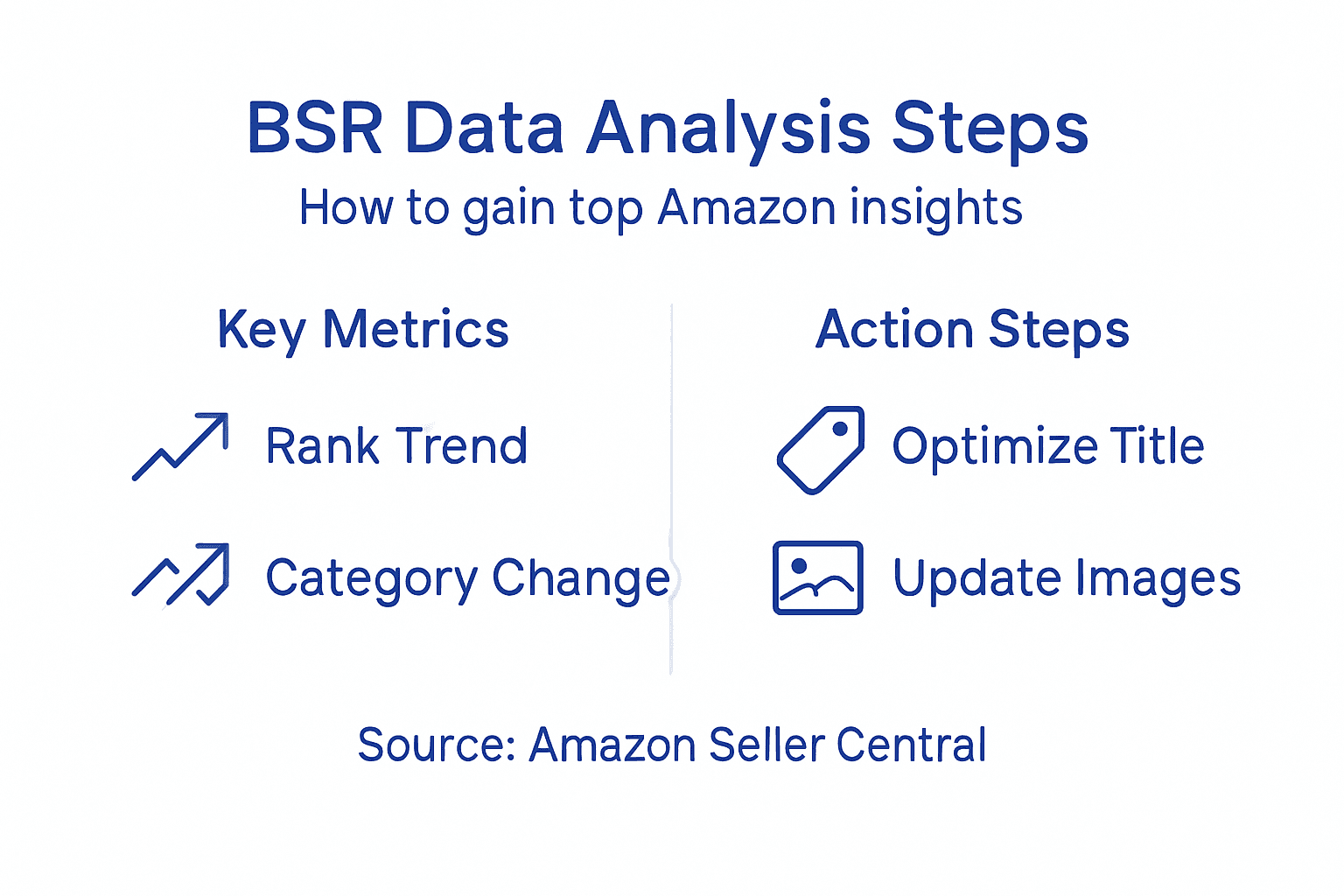
Below is a summary of historical Amazon rank analysis dimensions:
| Analysis Dimension | Strategic Insight | Example Use Case |
|---|---|---|
| Year-over-year rank change | Reveals long-term growth | Track product maturity |
| Seasonal trend detection | Uncovers market timing effects | Adjust holiday campaigns |
| Marketing action impacts | Measures campaign effectiveness | Evaluate ad performance |
| Competitive positioning | Identifies niche opportunities | Plan category expansion |
Pro tip: Create quarterly rank performance reports that highlight key trends, enabling you to develop proactive listing optimization strategies.
Step 5: Optimize Listings Based on Tracker Data
Transforming your Amazon Best Seller Rank tracking data into concrete listing improvements requires a strategic and methodical approach. Your goal is to leverage every insight from your tracking system to create more compelling, discoverable product listings that resonate with potential buyers.
Effective product listing optimization begins with a comprehensive analysis of your tracking metrics. This means diving deep into performance data to understand exactly how your product moves through Amazon’s complex ranking ecosystem.
Key optimization strategies based on tracker insights include:
- Refining product titles for search relevance
- Updating product images based on performance trends
- Adjusting pricing strategies
- Enhancing product descriptions with high-performing keywords
- Aligning listing attributes with customer search behaviors
Successful optimization requires a holistic view of your product’s performance. Tracking data reveals critical patterns that go beyond simple rank numbers – they expose the underlying dynamics of customer engagement and marketplace competitiveness.
Rank tracking is not just about monitoring – it’s about understanding the story behind the numbers.
Implementing data-driven changes means continuously experimenting and measuring the impact of each adjustment. Your tracking system becomes a real-time feedback loop that helps you incrementally improve your listing’s visibility and appeal.
Pro tip: Create a systematic optimization workflow where you review tracker data weekly and implement targeted improvements based on consistent performance trends.
Unlock Smarter Amazon Listing Success with Expert Guidance
Tracking your Amazon Best Seller Rank is a powerful way to gain real-time insights and make data-driven decisions that boost your product visibility and sales. If you struggle with understanding rank fluctuations or transforming rank data into actionable improvements like refining titles, optimizing descriptions, or adjusting pricing strategies this article highlights the exact challenges many sellers face.
Take control of your Amazon success by exploring proven strategies in E-commerce Tips & Strategies to Grow Your Online Business. At Search Oneers, we specialize in Amazon Listing Optimization and Amazon SEO & Analytics, delivering smart, data-backed solutions tailored to your marketplace needs. Start optimizing your listings today with expert support that turns ranking insights into higher conversions and lasting growth.
Frequently Asked Questions
How can I track my Amazon Best Seller Rank effectively?
To track your Amazon Best Seller Rank effectively, choose a robust tracking tool that provides real-time updates and comprehensive analytics. Look for features like hourly rank updates and competitor comparisons, then set up your product listings within the tool to monitor performance continuously.
What should I consider when selecting an Amazon Best Seller Rank tracker?
When selecting a tracker, prioritize tools that offer accurate historical data, real-time feedback, and category-specific tracking. Test multiple options during free trial periods to find the best fit for your Amazon selling needs, focusing on detailed performance metrics that matter to your products.
How can historical rank data improve my product listings?
Analyzing historical rank data can help you identify trends and patterns that inform your listing strategies. Use this information to adjust your marketing efforts according to seasonal variations or past performance, optimizing your listings more effectively over time.
What are the key factors to analyze for optimizing my listings based on rank data?
To optimize your listings based on rank data, focus on refining product titles, enhancing descriptions with high-performing keywords, and updating images according to performance trends. Implement changes systematically, reviewing tracker data weekly to monitor the impact of adjustments.
How often should I check my Amazon Best Seller Rank results?
You should check your Amazon Best Seller Rank at least weekly to stay updated on performance fluctuations. This regular monitoring allows you to quickly respond to significant changes, ensuring you make informed decisions that keep your products competitive in the marketplace.