More than two million american sellers compete fiercely on Amazon, but only a fraction achieve top visibility and consistent sales. When your product listing becomes buried or overlooked, it usually signals deeper problems with listing health that most sellers underestimate. Understanding what really drives a healthy Amazon listing helps you stand out, maximize your reach, and avoid costly setbacks in this high-stakes marketplace.
Table of Contents
- Defining Amazon Listing Health And Its Importance
- Core Metrics Influencing Listing Health
- Common Issues And Their Root Causes
- Amazon’s Policies And Compliance Standards
- Best Practices To Maintain Listing Health
Key Takeaways
| Point | Details |
|---|---|
| Listing Health Is Crucial | The overall performance and quality of your Amazon listing significantly impact visibility, conversion rates, and sales success. |
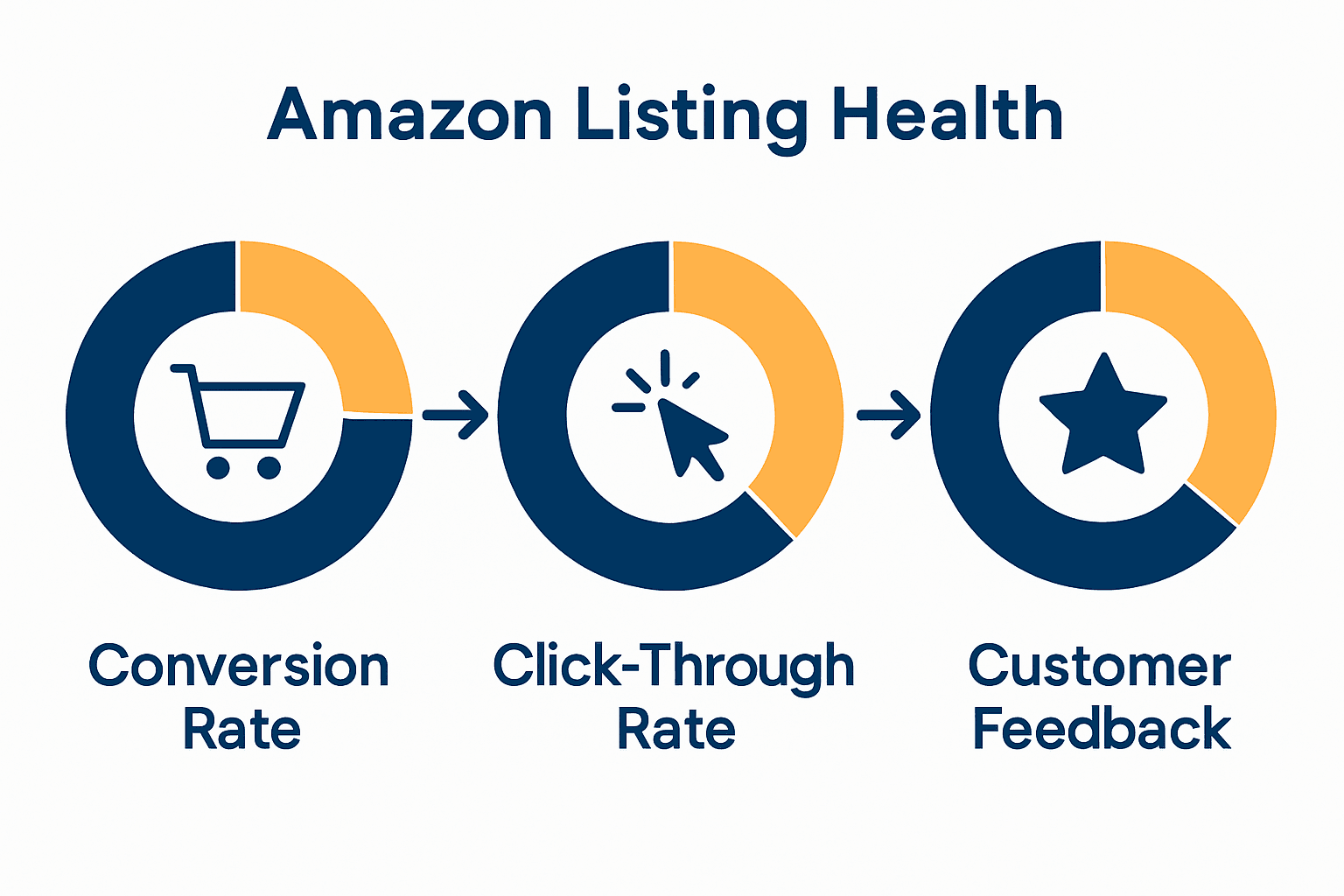
| Core Metrics Are Interconnected | Metrics such as conversion rate, click-through rate, and customer feedback are essential for evaluating listing health and should be optimized holistically. |
| Proactive Management Is Key | Successful sellers continuously monitor and refine their listings rather than treating them as static elements, addressing issues before they impact sales. |
| Compliance Is Critical | Adhering to Amazon’s policies and compliance standards is necessary to maintain account health and avoid penalties that could harm marketplace performance. |
Defining Amazon Listing Health and Its Importance
In the competitive world of Amazon selling, listing health represents the overall performance and quality of your product page, directly influencing your visibility, conversion rates, and ultimately, sales success. Think of your Amazon listing like a digital storefront window – its condition determines whether potential customers stop and browse or walk right past.
Listing health encompasses multiple critical metrics that Amazon uses to evaluate and rank your product. These metrics include search ranking, conversion rates, customer feedback, return rates, and overall product performance. A high-performing listing signals to Amazon’s algorithm that your product is relevant, valuable, and meets customer expectations. Sellers with robust listing health typically enjoy better search placements, increased organic traffic, and more consistent sales momentum.
The core components of Amazon listing health extend far beyond basic product information. They involve strategic optimization across multiple dimensions: comprehensive product listings guide can help sellers understand the intricate details. These dimensions include precise keyword targeting, high-quality product images, compelling product descriptions, competitive pricing, and maintaining low negative feedback rates. Poor listing health can result in decreased visibility, reduced buy box eligibility, and potentially even account suspension for consistent underperformance.
Successful Amazon sellers recognize that listing health is not a static metric but a dynamic, ongoing process. Regular monitoring, continuous optimization, and proactive management are essential strategies. By understanding and actively managing your listing’s health, you transform your product page from a passive sales channel into an dynamic, responsive marketing asset that consistently attracts and converts potential customers.
Core Metrics Influencing Listing Health
Amazon listing health is driven by a complex ecosystem of interconnected performance metrics that collectively determine a product’s visibility and sales potential. These core metrics serve as critical indicators of your listing’s overall effectiveness and appeal to both customers and Amazon’s algorithmic ranking systems.
The primary metrics that significantly impact listing health include:
- Conversion Rate: The percentage of visitors who complete a purchase after viewing your product page
- Click-Through Rate (CTR): How often shoppers click on your listing when it appears in search results
- Sales Velocity: The speed and consistency of your product sales
- Customer Feedback Score: Aggregate rating and quality of customer reviews
- Return Rate: Percentage of products returned by customers
- Session Percentage: Proportion of Amazon visitors who view your specific listing
Understanding these metrics requires a strategic approach. Amazon Ranking Factors List Guide provides deeper insights into how these elements interact and influence your product’s marketplace performance. Sellers must recognize that these metrics are dynamically interconnected – improvements in one area can cascade positively across others.
Successful Amazon sellers approach listing health as a holistic optimization challenge. This means continuously monitoring performance indicators, responding promptly to customer feedback, maintaining competitive pricing, and ensuring product quality. By treating listing health as an ongoing strategic process rather than a static metric, sellers can create resilient, high-performing product listings that consistently attract and convert potential buyers.

Common Issues and Their Root Causes
Amazon listing health problems often stem from interconnected challenges that can dramatically impact a seller’s marketplace performance. Listing degradation typically occurs through a combination of subtle yet significant factors that progressively erode a product’s visibility and sales potential.
The most prevalent issues sellers encounter include:
- Poor Keyword Optimization: Ineffective or outdated keyword strategies that prevent product discoverability
- Low-Quality Product Images: Unclear, unprofessional, or insufficient visual representations of products
- Inconsistent Product Descriptions: Vague, inaccurate, or misleading product information
- Negative Customer Feedback: Unaddressed customer complaints and low review ratings
- Pricing Misalignment: Prices that are not competitive within the current marketplace
- Inventory Management Problems: Frequent stockouts or inconsistent product availability
Amazon Listing Enhancement Guide highlights that root causes often trace back to sellers’ reactive rather than proactive approach to listing management. Many sellers fail to recognize that listing health is a dynamic ecosystem requiring constant attention and strategic refinement.
Successful sellers approach these challenges systematically. This means implementing robust monitoring systems, conducting regular listing audits, staying current with Amazon’s evolving algorithms, and maintaining a responsive approach to customer feedback. By understanding the intricate relationships between these various performance metrics, sellers can develop comprehensive strategies that address potential issues before they significantly impact their listing’s overall health and marketplace performance.
Amazon’s Policies and Compliance Standards
Amazon’s marketplace operates on a rigorous framework of compliance standards designed to maintain a high-quality, trustworthy shopping environment for both sellers and customers. These comprehensive policies serve as a critical mechanism for ensuring product quality, seller accountability, and overall platform integrity.
According to FBA Lead List, sellers must navigate a complex set of performance metrics that directly impact their marketplace standing. The most critical compliance benchmarks include:
- Order Defect Rate (ODR): Must remain below 1% to maintain account health
- Shipping Performance: Consistent and timely delivery of products
- Product Listing Accuracy: Ensuring descriptions, images, and specifications are precise and truthful
- Customer Feedback Management: Proactively addressing and resolving customer concerns
- Intellectual Property Compliance: Avoiding infringement and maintaining original product representations
- Pricing and Competitive Practices: Adhering to fair pricing and marketing guidelines
7 Essential Amazon Policies Guide emphasizes that non-compliance can result in severe consequences, ranging from listing suppression to complete account suspension. Successful sellers recognize that these standards are not merely bureaucratic hurdles but essential mechanisms for maintaining a transparent and reliable marketplace ecosystem.
Ultimately, Amazon’s policies and compliance standards represent a comprehensive approach to quality control. Sellers must adopt a proactive, detail-oriented strategy that involves continuous monitoring, quick adaptation to policy changes, and a commitment to maintaining the highest standards of product representation and customer service. By treating these guidelines as a roadmap to success rather than a set of restrictive rules, sellers can build sustainable, thriving businesses within Amazon’s competitive marketplace.
Best Practices to Maintain Listing Health
Maintaining optimal Amazon listing health requires a strategic, proactive approach that combines continuous monitoring, data-driven optimization, and responsive management. Successful sellers understand that listing performance is not a static achievement but an ongoing process of refinement and adaptation.
Key best practices for maintaining robust listing health include:
- Regular Performance Audits: Conduct comprehensive monthly reviews of listing metrics
- Keyword Optimization: Continuously update and refine search terms and product descriptions
- High-Quality Visual Content: Invest in professional, clear, and compelling product imagery
- Competitive Pricing Strategy: Monitor and adjust pricing to remain competitive
- Prompt Customer Service: Quickly address and resolve customer inquiries and feedback
- Inventory Management: Maintain consistent product availability and minimize stockouts
Why You Should Update Amazon Listings emphasizes the critical nature of consistent listing maintenance. Sellers who treat their product listings as dynamic marketing assets rather than static placeholders are more likely to achieve sustained marketplace success.
Ultimately, maintaining listing health is about creating a holistic ecosystem of performance. This means integrating data analysis, customer feedback, market trends, and proactive optimization strategies. By developing a systematic approach that treats listing management as a continuous improvement process, sellers can create resilient, high-performing product listings that consistently attract and convert potential customers in Amazon’s competitive marketplace.
Unlock the Full Potential of Your Amazon Listings Today
If you are struggling with listing health challenges like poor keyword optimization, low conversion rates, or negative customer feedback, you are not alone. These pain points directly impact your visibility and sales, making it harder to stand out in Amazon’s competitive marketplace. The good news is that addressing these issues with expert guidance and proven strategies is within your reach. Our focus on Amazon Listing Optimization and Amazon SEO & Analytics ensures your titles, bullet points, descriptions, and backend keywords work together to boost your product’s performance.

Take advantage of our tailored solutions now by exploring E-commerce Tips & Strategies to Grow Your Online Business. Learn how continuous optimization and data-driven insights can keep your listings in top shape. Don’t let poor listing health hold you back when you can partner with the experts at Search Oneers to transform your product pages into powerful sales drivers. Start optimizing your Amazon listings today and watch your marketplace success soar.
Frequently Asked Questions
What is Amazon listing health and why is it important?
Amazon listing health refers to the overall performance and quality of your product page on Amazon. It’s crucial because it influences your visibility, conversion rates, and overall sales success, acting like a digital storefront that attracts potential customers.
What are the core metrics that affect Amazon listing health?
The core metrics impacting Amazon listing health include conversion rate, click-through rate (CTR), sales velocity, customer feedback score, return rate, and session percentage. These metrics work together to determine a product’s visibility and appeal to customers and Amazon’s ranking algorithms.
How can poor listing health affect my sales on Amazon?
Poor listing health can lead to decreased visibility, reduced eligibility for the buy box, and potential account suspension. This typically results in lower sales and diminished organic traffic to your listings, affecting your overall revenue.
What are some best practices for maintaining my Amazon listing health?
Best practices for maintaining Amazon listing health include regularly conducting performance audits, optimizing keywords, using high-quality product images, staying competitive with pricing, promptly addressing customer feedback, and effectively managing inventory to minimize stockouts.