TL;DR:
- An Amazon vacation is an immersive trip into the world’s largest tropical rainforest, covering over 2.7 million square miles across nine countries. Choosing the right region, season, and accommodations is crucial for a memorable experience. Planning ahead and packing lightweight, moisture-wicking gear ensures a safe, enjoyable adventure.
An Amazon vacation is defined as an immersive trip into the world’s largest tropical rainforest, spanning nine countries and covering over 2.7 million square miles of unmatched biodiversity. The Amazon rainforest holds roughly 10% of all species on Earth, making it the single most biodiverse destination a traveler can visit. Planning this trip well separates a life-changing experience from a frustrating one. You need to choose the right region, pick the right season, pack correctly, and budget realistically. This guide covers every step, from gateway cities to gear deals, so you can walk into the jungle prepared.
What are the best Amazon rainforest destinations and regions to visit?
The Amazon spans Brazil, Peru, Ecuador, Colombia, Bolivia, and four other countries. Your destination choice shapes everything: wildlife density, accessibility, cost, and cultural depth.
The three most practical gateway cities are:
- Manaus, Brazil — The largest city in the Amazon basin, with direct international flights and access to the central Amazon reserve system. From Manaus, reaching jungle lodges requires a 2–3 hour boat or canoe ride into the forest.
- Coca and Tena, Ecuador — Smaller cities with easy access to Yasuní National Park and the Cuyabeno Wildlife Reserve. Tena suits short trips of 3–5 days, while Yasuní rewards travelers who stay longer.
- Iquitos, Peru — The largest city in the world unreachable by road. You fly in, then take a boat to lodges along the Marañón or Ucayali rivers.
Each gateway serves a different traveler. Manaus fits those who want a classic Brazilian Amazon experience with strong infrastructure. Iquitos delivers some of the most pristine wildlife corridors in South America. Coca and Tena in Ecuador offer accessible short trips for first-time rainforest travelers.
Remote parks like Yasuní provide deeper biodiversity but demand longer stays and more planning. Accessible hubs like Tena are better for travelers testing the Amazon for the first time. Match your destination to your trip goals, not just your budget.
Pro Tip: If wildlife photography is your priority, book a lodge inside or adjacent to a protected reserve. Buffer zones around cities see far less wildlife than core protected areas.
How long should you plan for an Amazon vacation, and what is the best time to visit?
Trip length and season are the two decisions that most travelers get wrong. Getting both right makes the difference between a trip you remember forever and one you wish you had planned differently.
Recommended trip length
Experts recommend a minimum of 3–5 days for any Amazon trip, with 5–7 days considered optimal. That range gives you enough time to experience wildlife, river travel, local communities, and forest walks without feeling rushed. Trips shorter than three days rarely get past the lodge and the nearest trail.
Seasonal trade-offs
The Amazon has two distinct seasons, and each rewards a different type of traveler:
- High-water season (december through june) — Rivers flood the forest floor, creating a phenomenon called várzea. Canoes glide through flooded trees, and canoe exploration through submerged forest becomes possible. Wildlife is harder to spot on land but easier to find from the water.
- Dry season (july through november) — Water levels drop, exposing beaches and trails. Hiking is easier, land mammals are more visible near water sources, and river beaches appear along the Amazon’s main channels. This is the most popular window for first-time visitors.
- Rain as a constant — Rain is a permanent feature of the rainforest regardless of season. Plan your activities around rain rather than trying to avoid it. A morning downpour often clears by noon.
- Booking timelines matter — Dry season tours from july through october require 3–6 months of advance booking. Wet season trips from december through may need 2–3 months of lead time to secure lodges and flights.
- Personal activity preference decides the season — Travelers who want hiking and land wildlife should target july through october. Travelers who want river-based exploration and fewer crowds should consider january through april.
Pro Tip: Book your internal flights at the same time you book your lodge. Domestic routes in Brazil and Peru fill up fast during peak dry season, and missing a connection can cost you an entire day of your trip.
How to budget for an Amazon vacation including accommodation and tours
A week-long mid-range Amazon trip typically costs $1,500–$3,000 per person, including international and domestic flights, lodging, guided tours, and meals. That range is wide because accommodation type drives the biggest cost variation.
Accommodation cost breakdown
| Accommodation type | Typical nightly rate | What’s usually included |
|---|---|---|
| Budget jungle camp | $80–$150/night | Basic meals, guided walks |
| Mid-range jungle lodge | $200–$400/night | All meals, guided excursions, transfers |
| Riverboat cruise | $150–$350/night | All meals, daily excursions, cabin |
These accommodation pricing ranges reflect early 2026 rates and vary by country and season. Brazil and Peru tend to run higher than Ecuador for comparable lodge quality.
Beyond lodging, budget for these additional costs:
- International flights — Typically $600–$1,200 round trip from major US cities to Manaus, Lima, or Quito, depending on season.
- Domestic flights and transfers — Budget $100–$300 for internal legs and boat transfers to your lodge.
- Travel insurance — Non-negotiable for remote jungle travel. Medical evacuation coverage is the most critical component.
- Vaccinations — Yellow fever vaccination is required for entry into many Amazon regions. Typhoid, hepatitis A, and malaria prophylaxis are strongly recommended.
- Excursions and tips — Many lodges include guided tours, but optional add-ons like night walks, fishing trips, or village visits add $20–$60 per activity.
The smartest budget move is choosing a lodge that includes meals and excursions in the nightly rate. All-inclusive packages eliminate surprise costs and simplify daily planning.
What to pack for an Amazon vacation and how to find great deals on gear
Packing for the Amazon is not about bringing more. It is about bringing the right things. The forest is hot, humid, and wet. Every item you pack should earn its place.
Core packing list
- Lightweight, moisture-wicking clothing — Avoid cotton entirely. It absorbs sweat and stays wet for hours. Choose synthetic or merino wool fabrics that dry fast.
- Long sleeves and pants — Even in heat, long layers protect against insects and sun. Lightweight nylon pants are the standard choice among experienced rainforest travelers.
- Rain jacket or poncho — A packable rain jacket weighing under 10 ounces is the single most used item in any Amazon pack.
- Insect repellent with DEET — 30–50% DEET concentration is the recommended standard for jungle environments. Apply to skin and clothing before every outdoor activity.
- Waterproof dry bags — Protect electronics, documents, and clothing from river spray and rain.
- Sturdy waterproof sandals or boots — Rubber boots are often provided by lodges, but waterproof trail shoes work for most day hikes.
- Headlamp with extra batteries — Night walks are one of the best Amazon experiences. A headlamp is not optional.
Finding deals on Amazon.com for your trip
Travelers can find vacation gear discounts up to 55–58% off on Amazon.com as of june 2026, with popular items starting as low as $10. That kind of savings on moisture-wicking shirts, packable rain jackets, and insect-repellent clothing adds up fast when you are outfitting a full trip.
The Amazon Subscribe & Save program can cut an additional 15% off recurring essentials like sunscreen, insect repellent, and water purification tablets. Stack that with seasonal sale events and you can outfit a full Amazon trip for significantly less than retail.
Pro Tip: Search Amazon.com for “UPF 50 hiking shirt” and “packable rain jacket” to find the best-reviewed options at current sale prices. Filter by “Climate Pledge Friendly” to prioritize sustainable gear.
How to plan and book your Amazon vacation: key steps and common pitfalls
Planning a trip to the Amazon requires more lead time than most international vacations. Remote logistics, limited lodge availability, and health requirements all add steps that travelers often underestimate.
Step-by-step booking process
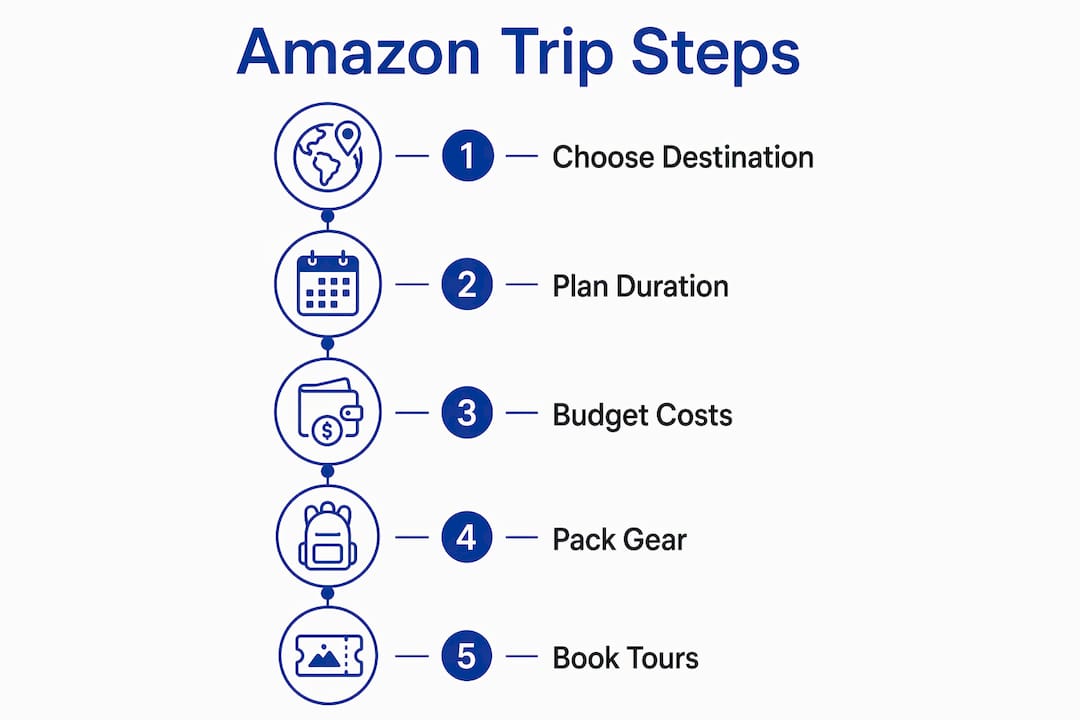
- Choose your destination and region — Decide between Brazil, Ecuador, and Peru based on your trip length, budget, and activity goals. This decision shapes every other booking.
- Book your lodge or riverboat first — Quality lodges in protected reserves fill months in advance. Lock in accommodation before you book flights.
- Book international and domestic flights — Once your lodge dates are confirmed, book flights. Build in a buffer day on each end for travel delays.
- Arrange transfers — Confirm boat or vehicle transfers between the gateway city and your lodge. Most reputable lodges handle this, but verify in writing.
- Complete health requirements — Get your yellow fever vaccination at least 10 days before departure. Consult a travel medicine clinic for malaria prophylaxis recommendations specific to your destination.
- Purchase travel insurance — Buy a policy that includes emergency medical evacuation. Standard travel insurance without evacuation coverage is insufficient for remote jungle travel.
“The most common planning mistake I see is travelers booking flights before they have confirmed lodge availability. They lock in cheap airfare, then discover their preferred lodge is full. Book the lodge first, always.”
Common pitfalls to avoid:
- Underestimating travel time — Getting from a gateway city to a remote lodge can take a full day. Factor this into your itinerary, not just your budget.
- Packing cotton clothing — Cotton in the Amazon is a miserable experience. Replace every cotton item before you leave home.
- Ignoring the shoulder season — The weeks between high-water and dry season (june and november) often offer excellent wildlife viewing with fewer crowds and lower prices.
For travelers who also sell travel gear or outdoor products on Amazon, listing optimization during peak travel planning seasons can significantly boost product visibility when demand is highest.
Key Takeaways
A successful Amazon vacation requires matching your destination, season, and budget to your specific activity goals before booking anything else.
| Point | Details |
|---|---|
| Choose destination by goal | Match gateway city and region to your priorities: wildlife, culture, or river exploration. |
| Plan for 5–7 days minimum | Shorter trips rarely allow enough time for meaningful wildlife and cultural experiences. |
| Book lodge before flights | Lodge availability drives your dates; flights should follow, not lead. |
| Budget $1,500–$3,000 per person | A week-long mid-range trip including flights, lodging, and tours falls in this range. |
| Pack synthetic, not cotton | Moisture-wicking fabrics and rain protection are the two non-negotiable packing rules. |
What I’ve learned after years of Amazon rainforest travel
The Amazon has a rhythm that most travelers fight instead of accepting. You wake before dawn because that is when the forest is loudest and most alive. You slow down by midday when the heat peaks. You go back out at dusk and after dark. Travelers who try to pack a full city-style itinerary into an Amazon trip miss the point entirely.
The single best piece of advice I can give you is this: choose your season based on what you actually want to do, not on what sounds most comfortable. If you want to hike and see land animals, go in the dry season. If you want to canoe through flooded forest and see the Amazon from the water, go in the high-water season. Both are extraordinary. Neither is wrong. But going in the wrong season for your goals will leave you frustrated.
Budget travelers often ask whether they can do the Amazon cheaply. The honest answer is: somewhat. Budget camps at $80–$150 per night exist and deliver a genuine experience. But cutting too far on accommodation usually means cutting on guide quality, and a great local guide is worth more than any lodge upgrade. Spend on the guide. Save on the lodge if you must.
The gear deals on Amazon.com right now are genuinely good. I have outfitted full rainforest trips using sale-priced synthetic layers and packable rain jackets bought online. You do not need to spend a fortune at a specialty outdoor retailer. You need the right materials, and those are available at a discount if you shop with intention.
One last thing: learn a few words of Portuguese or Spanish before you go. Local guides and community members respond warmly to even minimal effort. That small investment in cultural respect pays back in experiences you cannot buy on any tour itinerary.
— Goga
How Searchoneers helps you get more from Amazon
Whether you are buying gear for your next rainforest trip or selling travel products to thousands of other travelers, what shows up in Amazon search results matters. Searchoneers specializes in Amazon listing optimization and SEO strategy, helping products reach the right buyers at the right moment.

Travelers shopping for vacation essentials benefit when sellers optimize their listings with accurate titles, detailed bullet points, and strong backend keywords. That means better search results, clearer product information, and smarter buying decisions for you. If you sell travel gear, outdoor apparel, or any vacation-related product, the Amazon listing enhancement guide from Searchoneers gives you a clear path to higher visibility and more sales. The opportunity is there. The tools are ready.
FAQ
What is the best time to visit the Amazon rainforest?
The dry season from july through october is the most popular window for first-time visitors, offering easier hiking and better land wildlife visibility. Travelers who prefer river-based exploration and fewer crowds should consider the high-water season from december through april.
How much does an Amazon vacation cost per person?
A week-long mid-range trip typically costs $1,500–$3,000 per person, covering international and domestic flights, lodging, guided tours, and meals. Budget camps start around $80–$150 per night, while mid-range lodges run $200–$400 per night.
How far in advance should I book an Amazon trip?
Dry season tours from july through october require 3–6 months of advance booking. Wet season trips from december through may need 2–3 months of lead time to secure lodges and flights.
What are the main gateway cities for Amazon rainforest travel?
Manaus in Brazil, Iquitos in Peru, and Coca or Tena in Ecuador are the three primary gateways. Each offers commercial flight access, with boat or canoe transfers of 2–3 hours required to reach most jungle lodges.
Where can I find deals on Amazon vacation gear?
Amazon.com currently offers discounts of up to 55–58% on summer vacation essentials including moisture-wicking clothing and packable rain gear, with popular items starting as low as $10.