Competition on Amazon keeps getting sharper, and seasoned sellers know that relying on basic tactics is not enough. As an experienced seller in the American or Canadian markets, understanding your growth depends on reading performance data and applying advanced strategies. This guide breaks down actionable methods for tracking Amazon Key Performance Indicators and deploying techniques that help your listings stand out and convert more shoppers.
Table of Contents
- Step 1: Assess Listing Performance Metrics
- Step 2: Enhance Product Titles and Bullet Points
- Step 3: Integrate Advanced Backend Keywords
- Step 4: Apply Data-Driven SEO Tactics
- Step 5: Review Analytics and Refine Strategies
Quick Summary
| Key Message | Explanation |
|---|---|
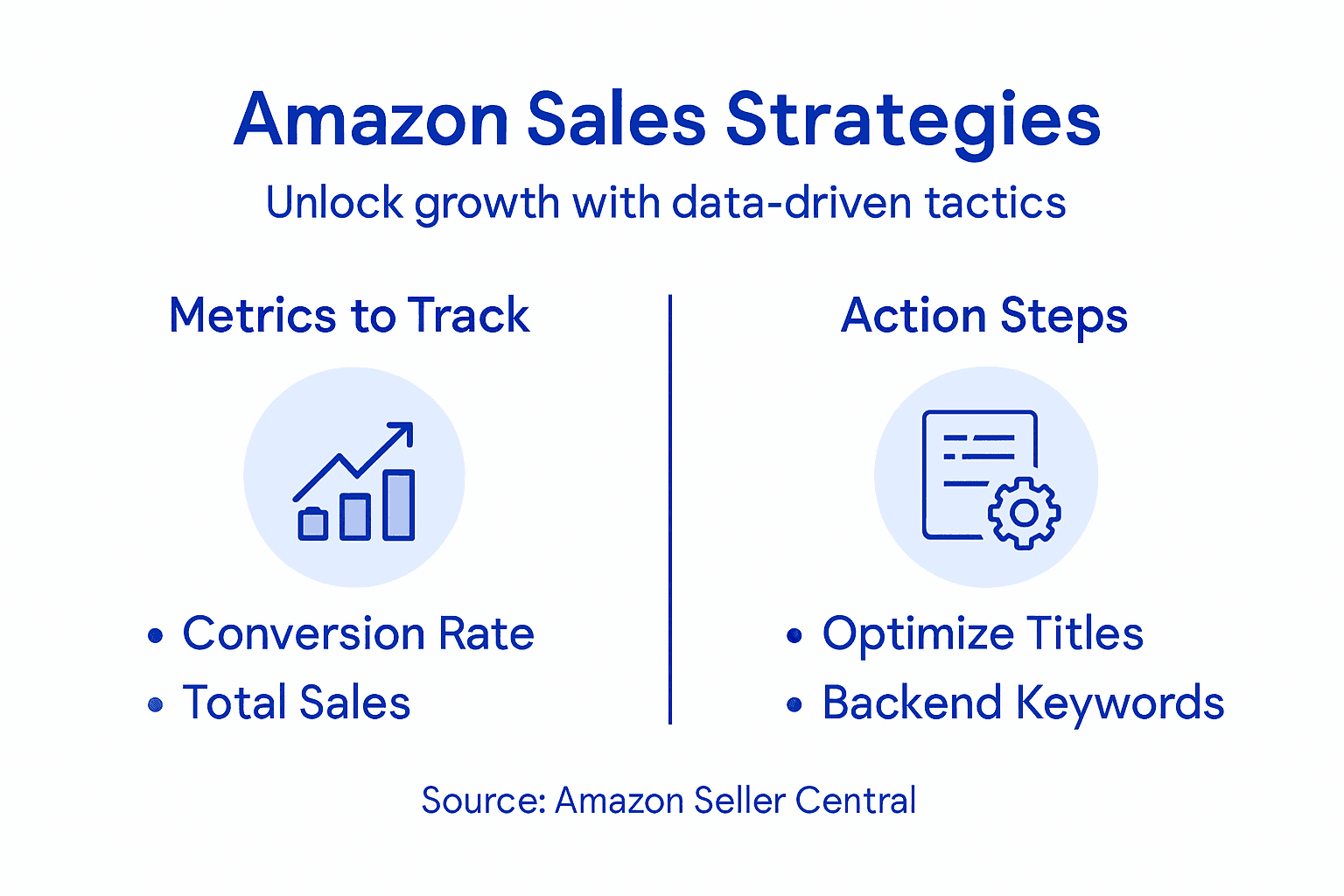
| 1. Track Key Performance Metrics | Monitor metrics like conversion rate and total sales to assess listing effectiveness. |
| 2. Optimize Product Titles | Create compelling titles with essential keywords to enhance visibility and attract buyers. |
| 3. Utilize Backend Keywords | Implement strategic backend keywords for improved search discovery without cluttering listings. |
| 4. Apply Data-Driven SEO Techniques | Use advanced analytics for continuous optimization of your product listings and strategies. |
| 5. Regularly Review Analytics | Establish frameworks to analyze performance metrics consistently for informed strategy adjustments. |
Step 1: Assess Listing Performance Metrics
Successful Amazon sellers know that tracking performance metrics is crucial for driving sales growth and understanding your product’s marketplace position. By systematically analyzing key indicators, you can make data-driven decisions that transform your selling strategy.
To effectively assess your Amazon listing performance, start by examining critical Amazon Key Performance Indicators. These metrics provide a comprehensive view of your listing’s health and sales potential:
- Conversion Rate: Measures the percentage of visitors who complete a purchase
- Advertising Cost of Sales (ACOS): Tracks the efficiency of your advertising spending
- Total Sales: Reflects overall revenue generated from the listing
- Inventory Performance Index (IPI): Indicates inventory management effectiveness
- Customer Feedback Scores: Represents product quality and customer satisfaction
Reviewing these metrics allows you to identify strengths, weaknesses, and opportunities for optimization. Pay close attention to trends over time, comparing current performance against previous periods to understand your listing’s trajectory.

Here’s a summary of how key Amazon listing metrics influence business outcomes:
| Metric Name | What It Measures | Business Impact | Example of Improvement |
|---|---|---|---|
| Conversion Rate | Purchases per visitor | Boosts profitability | Optimize product images |
| ACOS | Ad spend efficiency | Controls marketing costs | Refine ad targeting |
| Total Sales | Revenue from listings | Tracks growth and demand | Bundle related items |
| Inventory Performance | Efficiency of inventory management | Reduces storage costs | Remove slow-moving stock |
| Customer Feedback Scores | Product reviews and ratings | Influences ranking and trust | Respond to negative reviews |
Pro tip: Use Amazon’s built-in analytics dashboard to track these metrics consistently and set up automated alerts for significant changes in your listing’s performance.
Step 2: Enhance Product Titles and Bullet Points
Creating compelling Amazon product titles and bullet points is a critical strategy for capturing potential buyers’ attention and driving conversions. Your goal is to craft content that not only ranks well in search results but also convinces shoppers to click and purchase.
Start by developing powerful product titles that balance searchability and persuasiveness. Your title should include key optimization strategies for Amazon listings:
- Include primary keywords near the beginning
- Highlight unique product features
- Use clear, readable language
- Maximize the 200-character title limit
- Avoid unnecessary punctuation or marketing fluff
When crafting bullet points, focus on communicating value and solving customer problems. Compelling bullet points transform product features into customer benefits by:
- Leading with the most important features
- Using concise, scannable language
- Addressing potential customer questions
- Emphasizing unique selling propositions
- Incorporating relevant secondary keywords naturally
Effective Amazon listings turn product details into compelling narratives that speak directly to customer needs.
Pro tip: Regularly analyze top-performing competitor listings in your category to understand effective title and bullet point strategies, and continuously refine your approach based on performance data.
Step 3: Integrate Advanced Backend Keywords
Unlocking the full potential of your Amazon product listings requires a strategic approach to backend keywords – the hidden optimization engine that drives search visibility. Backend keyword strategies represent a powerful yet often overlooked opportunity to expand your product’s discoverability.
When implementing advanced backend keyword techniques, focus on these critical principles:
The following table compares front-end and backend keyword strategies for Amazon listings:
| Keyword Type | Visibility to Shoppers | Optimization Focus | Typical Usage Example |
|---|---|---|---|
| Front-End | Visible in listing | Readability and ranking | Main product title and bullets |
| Backend | Hidden from shoppers | Search discoverability | Misspelled or alternate keywords |
- Avoid duplicating front-end keywords
- Exclude brand names and trademarked terms
- Include relevant synonyms and alternative phrases
- Incorporate common misspellings
- Use all available character space strategically
- Focus on highly relevant search terms
Your backend keyword approach should be dynamic and data-driven. Amazon’s algorithm rewards sellers who continuously refine their keyword strategy by analyzing search term reports, monitoring competitor listings, and understanding customer search behaviors.
Effective backend keyword optimization is like creating an invisible map that guides potential customers directly to your product.
Pro tip: Leverage Amazon’s search term report to identify unexpected keywords that are already driving traffic to your listing, and strategically integrate these high-performing terms into your backend metadata.
Step 4: Apply Data-Driven SEO Tactics
Transforming your Amazon sales strategy requires embracing sophisticated, data-driven SEO approaches that leverage advanced analytics and machine learning technologies. Success in today’s competitive marketplace demands a precise, strategic approach to understanding and optimizing your product listings.
Implement these advanced data-driven optimization techniques:
- Utilize AI-powered dynamic pricing models
- Deploy precision inventory forecasting
- Integrate machine learning for keyword targeting
- Develop real-time bid adjustment strategies
- Combine multiple data source insights
- Track comprehensive advertising attribution
Your SEO approach should focus on continuous refinement. By systematically analyzing performance metrics, experimenting with different strategies, and quickly adapting to marketplace changes, you can create a dynamic optimization workflow that consistently improves your product’s visibility and conversion potential.
Data-driven strategies transform guesswork into a precise science of marketplace optimization.
Pro tip: Invest in robust analytics tools that provide granular insights into your listing’s performance, enabling you to make surgical adjustments that incrementally improve your Amazon sales strategy.
Step 5: Review Analytics and Refine Strategies
Successful Amazon sellers understand that continuous improvement hinges on systematic analytics review and strategic adaptation. Multi-touch attribution strategies enable sellers to make precise, data-informed decisions that drive sales performance.
Develop a comprehensive analytics review framework by focusing on these critical dimensions:
- Evaluate sales performance metrics
- Analyze advertising campaign effectiveness
- Monitor customer feedback and ratings
- Track conversion rate changes
- Assess inventory turnover rates
- Identify emerging market trends
Your analytics approach should be dynamic and responsive. By implementing real-time monitoring and creating agile adjustment protocols, you can quickly pivot your strategies to capitalize on emerging opportunities and mitigate potential performance challenges.
Analytics are not just numbers – they are the strategic compass guiding your Amazon business toward sustained growth.
Pro tip: Set up automated reporting dashboards that provide weekly snapshots of your key performance indicators, allowing you to detect trends and make informed decisions without manual data compilation.
Unlock Your Amazon Sales Potential with Proven Optimization Strategies
Struggling to turn analytic insights into tangible sales growth on Amazon The challenge of mastering advanced listing optimization including titles bullet points and backend keywords can feel overwhelming. This article highlights the crucial impact of data-driven SEO tactics and ongoing performance reviews to boost your visibility and conversion rates Our expertise at SearchOneers is tailored to solve these exact pain points by combining strategic Amazon Listing Optimization and smart SEO analytics that evolve with your marketplace.

Discover actionable solutions now in our comprehensive collection of E-commerce Tips & Strategies to Grow Your Online Business and take control of your Amazon sales trajectory. Visit us at SearchOneers and transform your product listings from invisible to irresistible today.
Frequently Asked Questions
How can I improve my Amazon listing’s conversion rate?
To improve your Amazon listing’s conversion rate, focus on optimizing product titles and bullet points. Include primary keywords early in the title and highlight unique features to attract potential buyers, aiming for a 10–15% increase in conversions within 30 days.
What are the key metrics to track for increasing Amazon sales?
Key metrics to track include Conversion Rate, Advertising Cost of Sales (ACOS), and Total Sales. Regularly review these indicators to identify areas for improvement, and set specific performance goals to enhance your overall sales strategy.
How do backend keywords impact my product visibility on Amazon?
Backend keywords enhance product visibility by improving search discoverability without being visible to customers. Optimize your backend keywords by including relevant synonyms and alternate phrases, aiming to utilize all available character space effectively.
What strategies can be used to enhance my advertising effectiveness on Amazon?
To enhance advertising effectiveness, analyze your Advertising Cost of Sales (ACOS) and refine ad targeting. Implement adjustments based on performance data to achieve a 15% reduction in ad spend while maintaining or increasing sales volume within two months.
How often should I review my analytics to optimize my Amazon sales strategy?
You should review your analytics at least weekly to effectively optimize your Amazon sales strategy. Set up automated dashboards that track your key performance indicators to promptly identify trends and make necessary adjustments quickly.
What data-driven tactics can help maximize my Amazon sales?
Data-driven tactics include utilizing AI models for dynamic pricing and keyword targeting. Apply these strategies systematically to continuously refine your approach and aim for a 10% increase in sales growth over the next quarter.