TL;DR:
- A vendor manager at Amazon oversees the wholesale relationship, including negotiations, performance, and promotions. Building a proactive, data-driven partnership with them enhances category growth and improves profitability. Preparing for long negotiation timelines and optimizing listings are key to long-term success.
A vendor manager at Amazon is the internal Amazon employee who owns the wholesale relationship between Amazon and your brand. This person controls category performance, purchase order negotiations, pricing decisions, and cross-functional coordination across marketing, finance, and operations. Understanding what your vendor manager does and how to work with them is the single most important factor in your Amazon wholesale success. Brands that treat this relationship as a passive one leave real money on the table. The strategies in this article will help you get more from every interaction.
What does a vendor manager handle on Amazon?
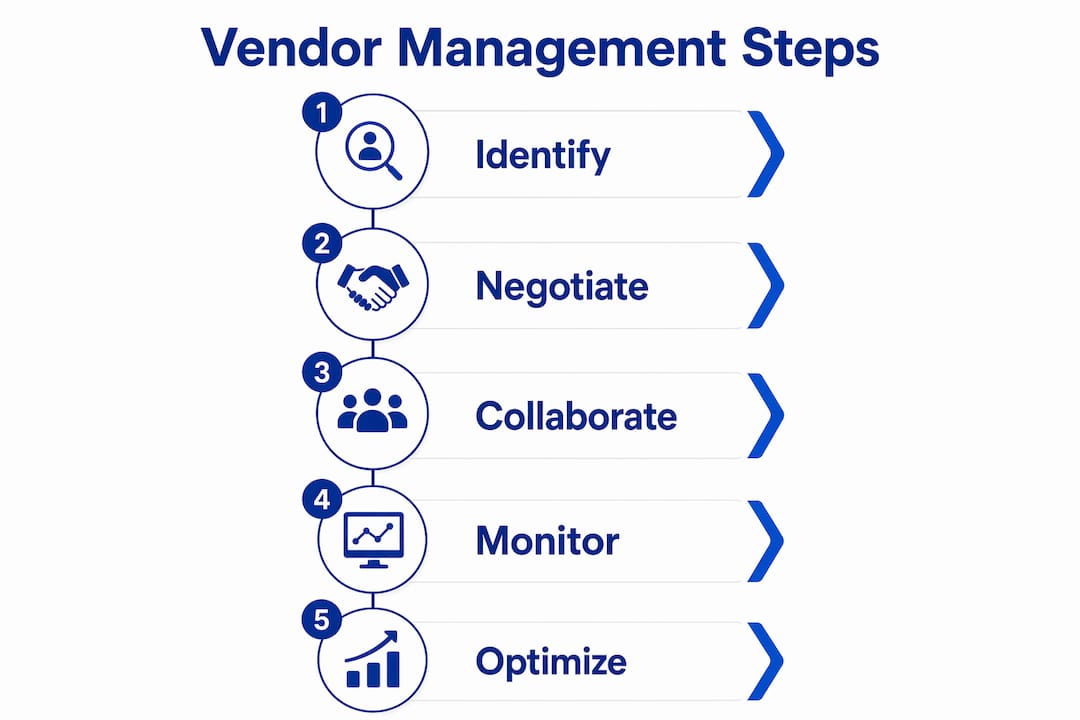
A vendor manager at Amazon carries a wide range of responsibilities that directly affect your business outcomes. Vendor managers coordinate cross-functional teams including marketing, finance, and operations to meet financial and operational goals for vendor categories. That means your vendor manager is not just a buyer. They are a category owner with influence across the entire Amazon retail machine.
Their core duties include:
- Performance tracking. Vendor managers analyze performance metrics weekly and monthly to meet and exceed revenue and profitability goals. This means your sell-through rate, in-stock rate, and glance views are all on their radar.
- Contract and purchase order management. They negotiate purchase order volumes, payment terms, and cost structures. Every line item in your vendor agreement passes through them.
- Promotional planning. Vendor managers coordinate Lightning Deals, Prime Day placements, and seasonal promotions. They decide which brands get featured placement.
- Assortment decisions. They determine which SKUs Amazon expands, reduces, or drops entirely based on category data and margin performance.
- Data-driven decision making. They use Amazon’s internal analytics tools to model profitability scenarios before making any major category move.
Pro Tip: Before your next vendor manager meeting, pull your own performance data from Vendor Central. Arrive with numbers, not just talking points. Vendor managers respond to vendors who speak their language.
Understanding this scope tells you something critical. Your vendor manager is not just processing orders. They are running a business within a business, and your brand is one of their portfolio assets.

How can you collaborate effectively with your vendor manager?
Effective collaboration with your Amazon vendor manager requires preparation, consistency, and a clear understanding of Amazon’s retail objectives. Vendors who treat their vendor manager as a reactive contact miss the real opportunity. The best vendor relationships are built on proactive, data-backed communication.
- Communicate on a regular schedule. Request a standing cadence, whether weekly or biweekly, to review performance and flag issues early. Ad hoc communication leads to missed opportunities and slower problem resolution.
- Understand Amazon’s goals first. Amazon prioritizes customer experience, competitive pricing, and in-stock availability. Frame every request you make in terms of how it benefits those three priorities.
- Back every request with data. If you want a price adjustment, bring a margin analysis. If you want a promotional slot, bring historical conversion data. Negotiation of vendor contracts includes pricing and promotional activities, and your vendor manager needs internal justification to approve anything.
- Plan inventory proactively. Stockouts damage your category metrics and frustrate your vendor manager. Share your demand forecasts and flag supply constraints at least 60 days in advance.
- Ask for marketing support. Vendor managers have access to Amazon Marketing Services budgets, A+ Content approvals, and promotional calendar slots. Ask directly what is available for your category in the next quarter.
- Treat them as a strategic partner. The vendors who grow fastest on Amazon are the ones who align their business goals with Amazon’s category objectives. Your vendor manager wants your category to win. Give them the tools to make that happen.
Learning how to manage vendors on Amazon at this level separates brands that plateau from brands that scale.
What are the payment terms and contract basics your vendor manager negotiates?
Payment terms are one of the most financially significant elements of your vendor agreement, and your vendor manager controls them. Payment terms typically follow a Net-60 or Net-90 structure, depending on your agreed contract. Amazon may also request additional payment discounts ranging from 1% to 2%. That discount sounds small, but on high-volume accounts it compounds into a meaningful margin reduction.
| Payment Term | What It Means | Vendor Impact |
|---|---|---|
| Net-60 | Amazon pays 60 days after invoice | Requires strong cash flow planning |
| Net-90 | Amazon pays 90 days after invoice | Higher cash flow pressure, common for larger brands |
| 1%–2% payment discount | Amazon deducts 1%–2% from invoice total | Reduces effective margin on every order |
| Cost adjustment | Renegotiation of product cost price | Can take 30 days to several months to finalize |
Cost adjustments and terms negotiations often take 30 days to several months, requiring vendors to model profitability well in advance. That timeline catches many brands off guard. If you wait until a negotiation is already underway to model your margins, you are already behind.
Pro Tip: Map your full margin waterfall before any contract negotiation. Include COGS, freight, chargebacks, co-op fees, and the potential payment discount. Know your floor before you walk into the conversation.
Understanding these contract basics is part of solid vendor relationship management on Amazon. Brands that go in unprepared often accept terms that erode profitability over time.
How does Amazon vendor management shape product assortment and category growth?
Vendor managers do not just manage existing product lines. They actively shape which products Amazon carries, promotes, and grows. Vendor managers influence pricing, promotions, and assortment decisions to support category sales growth and vendor profitability. That gives them significant power over your brand’s trajectory on the platform.
The key ways vendor management drives category growth include:
- SKU rationalization. Vendor managers regularly review which products earn their shelf space. Low-velocity SKUs get cut. High-margin, high-velocity SKUs get expanded. Knowing this pushes you to keep your catalog tight and your data clean.
- Promotional calendar access. Vendor managers allocate Prime Day, Black Friday, and seasonal deal slots. Brands with strong relationships and clean performance data get first consideration.
- Competitive trend analysis. Your vendor manager tracks competitor pricing and category trends inside Amazon’s data systems. They use that intelligence to guide your pricing strategy and product development roadmap.
- Marketing campaign collaboration. From Sponsored Brand campaigns to Amazon DSP placements, vendor managers can connect you with marketing resources that are not available to standard sellers.
- Category goal alignment. Amazon sets category-level revenue and growth targets. Your vendor manager’s job is to hit those numbers. Brands that help them hit targets get rewarded with better placement, more promotional support, and stronger purchase order volumes.
Amazon Vendor Central is the wholesale program where Amazon buys directly from brands and handles retail pricing and fulfillment. That structure means your vendor manager is also your retail buyer, your marketing partner, and your category analyst all at once.
What challenges and misunderstandings arise in vendor manager relationships?
The most common mistake vendors make is underestimating how long everything takes. Negotiation timelines can range from 30 days to several months, making early preparation critical. Vendors who submit cost change requests late in the fiscal year often find their adjustments do not take effect until the following contract cycle.
Margin misalignment is the second major pitfall. Vendors sometimes agree to Net-90 terms and a 2% payment discount without fully modeling the combined impact on their gross margin. By the time the numbers hit their P&L, the damage is already done.
Lack of proactive communication creates a third problem. Vendor managers manage dozens of vendor relationships simultaneously. If you are not bringing issues to their attention early, those issues will not get prioritized. Silence is not neutral. It signals low urgency.
Finally, many vendors misunderstand who owns inventory and fulfillment responsibility. Amazon buys inventory and handles fulfillment in the Vendor Central model, but vendors still carry responsibility for fill rates, lead times, and compliance with Amazon’s operational requirements. A failed purchase order confirmation or a late shipment creates chargebacks that compound quickly.
Pro Tip: Set a calendar reminder 90 days before your contract renewal date. Use that window to prepare your cost analysis, review your performance metrics, and schedule a dedicated negotiation meeting with your vendor manager. Preparation is your best negotiation tool.
Key Takeaways
Effective vendor relationship management on Amazon requires proactive communication, margin-aware contract preparation, and consistent performance data to build a partnership that drives category growth.
| Point | Details |
|---|---|
| Know your vendor manager’s role | They control pricing, assortment, promotions, and cross-functional coordination for your category. |
| Prepare data before every meeting | Bring performance metrics and margin analysis to every vendor manager conversation. |
| Plan for long negotiation timelines | Cost adjustments can take 30 days to several months; start preparation well in advance. |
| Understand payment term impact | Net-60 or Net-90 terms plus a 1%–2% discount can significantly reduce your effective margin. |
| Treat the relationship as a partnership | Vendors who align with Amazon’s category goals earn better placement and promotional support. |
What I’ve learned about vendor managers that most guides won’t tell you
Most articles about Amazon vendor management focus on tactics. What they miss is the psychology of the relationship. Your vendor manager is measured on category profitability and revenue growth. That means they are not your advocate by default. They are your advocate when your success aligns with their numbers.
The vendors I have seen succeed long-term are the ones who make their vendor manager’s job easier. They show up to meetings prepared. They flag problems before they become chargebacks. They bring promotional ideas with data attached. They do not ask for things without explaining the business case. That behavior builds trust, and trust translates into priority treatment when promotional slots open up or purchase order volumes get reviewed.
The uncomfortable truth is that many brands treat their vendor manager as a customer service contact. They call when something goes wrong and go quiet when things are running smoothly. That is exactly backwards. The relationship compounds when you invest in it consistently, not just when you need something.
One more thing worth saying: your listing quality directly affects your vendor manager’s category metrics. A poorly optimized product page drives down conversion rates, which hurts your sell-through, which makes your vendor manager’s numbers look worse. The brands that invest in listing optimization consistently outperform the ones that treat it as a one-time task. Your vendor manager notices, even if they never say it directly.
— Goga
How Searchoneers helps vendors perform at the highest level
Your vendor manager relationship is only as strong as the product performance behind it. Weak listings, poor conversion rates, and thin analytics undermine every negotiation you walk into.

Searchoneers specializes in Amazon listing optimization and data-backed SEO strategies that give vendors a measurable edge. From enhanced titles and bullet points to backend keyword architecture, every element of your listing gets built to convert. Strong listings drive the sales velocity that earns vendor invitations and keeps vendor managers engaged. If you are ready to strengthen the foundation your vendor relationship stands on, the listing optimization workflow at Searchoneers is the right place to start.
FAQ
What is a vendor manager at Amazon?
A vendor manager at Amazon is an internal Amazon employee who manages the wholesale relationship between Amazon and a brand, handling contract negotiations, category performance, and promotional planning.
How do I get assigned a vendor manager on Amazon?
Brands with high sales velocity and in-demand products are more likely to receive a Vendor Central invitation, which comes with a dedicated vendor manager.
What payment terms does Amazon typically offer vendors?
Amazon typically offers Net-60 or Net-90 payment terms and may request an additional payment discount of 1% to 2% depending on the contract.
How long does a vendor contract negotiation take?
Contract negotiations, especially cost adjustments, can take anywhere from 30 days to several months. Vendors should begin preparation well before their renewal window opens.
How can I improve my vendor manager relationship on Amazon?
Bring data to every meeting, communicate proactively, align your requests with Amazon’s category goals, and maintain strong listing quality to support the sell-through metrics your vendor manager tracks.