Over 60 percent of american consumers start their online shopping journey on Amazon, making its algorithm one of the most influential forces in e-commerce today. Sellers quickly realize that success on this massive platform depends on understanding how search rankings and product visibility actually work. Knowing what drives the Amazon algorithm allows brands and small businesses to reach more customers, outpace competitors, and unlock greater growth through smarter marketplace strategies.
Table of Contents
- Defining Amazon Algorithm And Its Core Purpose
- Key Components Of Amazon’s Search Algorithm
- Factors Influencing Rankings And Visibility
- Optimizing Listings To Satisfy The Algorithm
- Common Mistakes That Harm Seller Performance
Key Takeaways
| Point | Details |
|---|---|
| Understanding the Amazon Algorithm | It’s crucial for sellers to grasp how the algorithm matches search queries to product listings to enhance visibility and sales. |
| Optimizing Listings Effectively | Sellers should utilize keyword-rich titles, high-quality images, and comprehensive descriptions to signal show product relevance to the algorithm. |
| Key Ranking Factors | Performance metrics such as sales velocity, conversion rates, and customer satisfaction significantly influence product visibility. |
| Avoiding Common Mistakes | Sellers must prevent errors like low-quality images and incomplete descriptions to maintain strong performance and search rankings. |
Defining Amazon Algorithm And Its Core Purpose
The Amazon Algorithm is a sophisticated, data-driven system designed to match customer search queries with the most relevant product listings. At its core, this complex mechanism determines product visibility, search rankings, and ultimately, sales performance for millions of sellers on the platform.
According to research from arXiv, the algorithm’s primary purpose extends beyond simple keyword matching. It leverages advanced query reformulation techniques to improve search relevance and drive significant revenue for the marketplace. The system dynamically analyzes multiple factors to understand user intent, product attributes, and potential purchase likelihood.
The algorithm operates through several critical components that work in unison:
- Search Relevance: Matching customer queries with most appropriate products
- Ranking Mechanisms: Determining product placement in search results
- Performance Metrics: Evaluating seller performance and product quality
- Conversion Probability: Predicting likelihood of product purchase
Building upon insights from the Shopping Queries Dataset research, Amazon’s algorithm continuously refines its understanding of product search complexities. By processing vast amounts of data, including historical search patterns, customer interactions, and real-time purchasing behaviors, the system creates a dynamic, adaptive search environment that benefits both sellers and consumers.
For sellers, understanding this algorithm is not just beneficial—it’s essential. Mastering its intricacies can mean the difference between being buried on page 10 of search results or securing a prime position that drives substantial traffic and sales. Learn more about Amazon ranking factors in our comprehensive guide.
Key Components Of Amazon’s Search Algorithm
Amazon’s search algorithm is a sophisticated ecosystem comprising multiple interconnected components that work together to deliver precise, relevant search results. Keyword Matching serves as the foundational element, analyzing product titles, descriptions, and backend search terms to identify potential matches for user queries.
Sponsored content plays a critical role in the algorithm’s functionality. As research from arXiv reveals, sponsored results are strategically integrated within search engine result pages, significantly influencing product visibility and ranking. These sponsored placements create a dynamic environment where sellers can enhance their product exposure through targeted advertising strategies.
The algorithm’s recommendation system relies on advanced techniques like collaborative filtering. According to Wikipedia, Amazon pioneered item-item collaborative filtering, which recommends products by analyzing similarities between items based on user ratings and interactions. This approach allows the platform to:
- Generate personalized product recommendations
- Understand complex user preferences
- Predict potential purchase behaviors
- Enhance overall shopping experience
Key technical components of Amazon’s search algorithm include:
- Query Processing: Interpreting user search intent
- Relevance Ranking: Matching products to search queries
- Performance Scoring: Evaluating product and seller metrics
- Conversion Optimization: Prioritizing high-performing listings
Sellers seeking deeper insights into navigating this complex system can explore our comprehensive guide on Amazon ranking factors to develop more effective product positioning strategies.
Factors Influencing Rankings And Visibility
Amazon’s ranking algorithm is a complex system that evaluates multiple performance metrics to determine product visibility and search positioning. Sellers must understand that success goes far beyond simply listing a product and hoping for the best.
According to research from Dark Room Agency, several critical factors directly impact a product’s ranking and visibility. These key elements include:
- Sales Velocity: Total number of sales within a specific timeframe
- Conversion Rates: Percentage of visitors who complete a purchase
- Keyword Relevance: How closely product listings match search queries
- Seller Performance Metrics: Account health, shipping speed, and customer satisfaction
Pricing strategy plays a pivotal role in visibility. Competitive pricing can significantly influence a product’s ranking, with the algorithm favoring items that offer compelling value to customers. Fulfillment methods also carry substantial weight. Products enrolled in Amazon’s Fulfillment by Amazon (FBA) program often receive preferential treatment, as they guarantee faster shipping and more reliable customer service.
Customer interaction metrics provide another crucial ranking dimension.
Reviews, ratings, and overall customer engagement can dramatically boost or hinder a product’s visibility. High-quality product images, detailed descriptions, and responsive customer communication become essential strategies for sellers looking to improve their algorithmic standing.
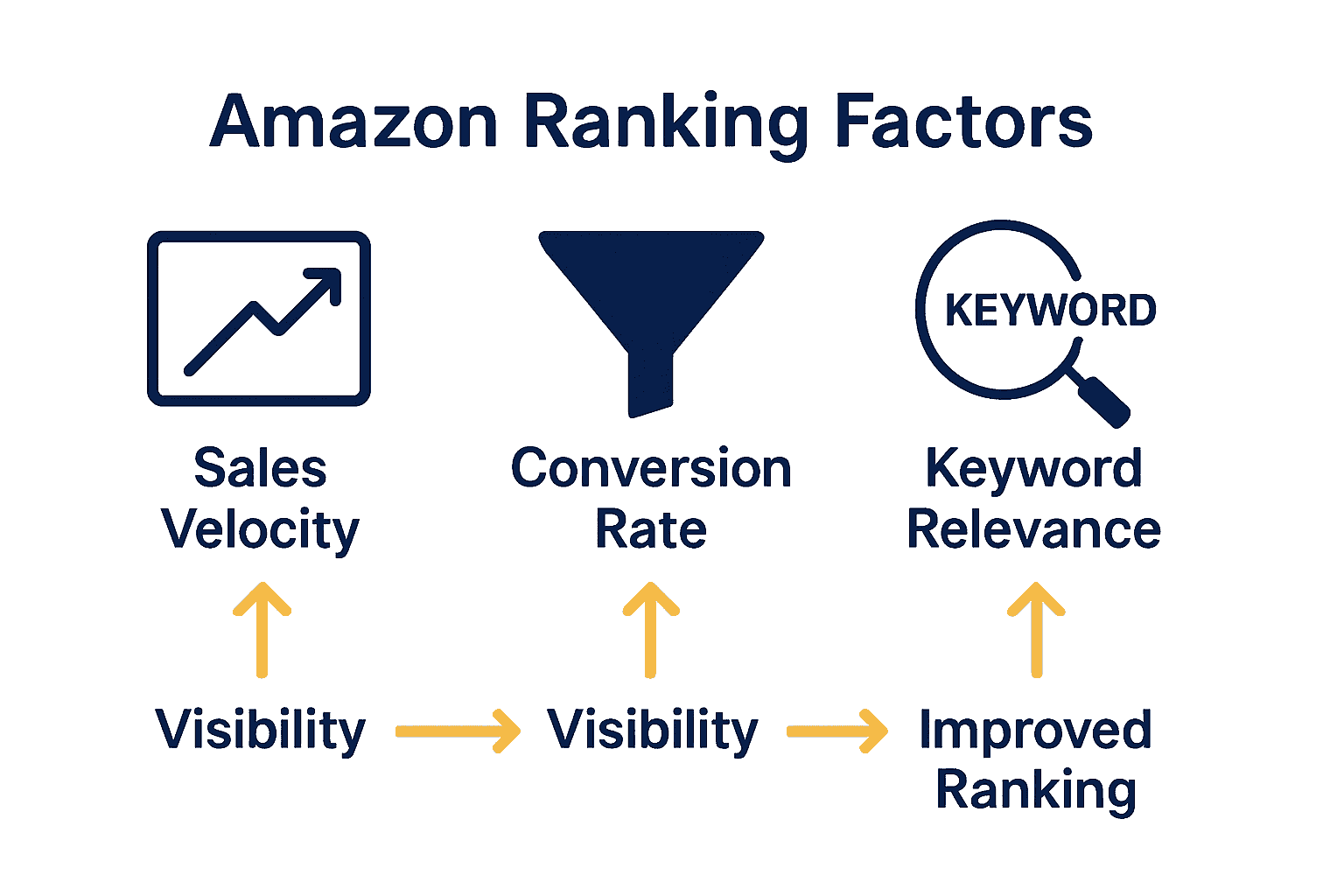
Discover advanced strategies to increase your Amazon visibility and transform your approach to marketplace optimization.
Optimizing Listings To Satisfy The Algorithm
Optimizing an Amazon product listing requires a strategic approach that goes beyond basic product descriptions. Sellers must craft a comprehensive listing that speaks directly to both the algorithm’s requirements and potential customer needs.
According to research from eDesk, successful listing optimization involves multiple critical components. Backend keywords play a crucial role in improving search rankings, allowing sellers to include strategic search terms that aren’t visible to customers but help the algorithm understand product relevance.
Key optimization strategies include:
- Crafting compelling and keyword-rich product titles
- Using high-resolution, professionally shot product images
- Writing detailed, benefit-focused product descriptions
- Strategically populating backend search term fields
- Highlighting unique product features and value propositions
As insights from ZonGuru reveal, pricing and product description quality are paramount. The algorithm favors listings with comprehensive, clear descriptions that provide customers with complete information. This means going beyond basic specifications and creating a narrative that demonstrates the product’s unique value.

Competitive pricing remains a critical factor in algorithmic ranking. Sellers must continuously monitor market prices and adjust their strategies accordingly. Detailed product descriptions, professional images, and transparent pricing work together to signal to Amazon’s algorithm that a listing is high-quality and likely to convert.
Learn more about advanced Amazon listing strategies in our comprehensive optimization guide.
Common Mistakes That Harm Seller Performance
Navigating Amazon’s complex marketplace requires sellers to avoid critical performance pitfalls that can devastate their business potential. Understanding and preventing these mistakes becomes paramount for long-term success and visibility within the platform’s competitive ecosystem.
Research from The Hoth reveals several fundamental errors that consistently undermine seller performance. These mistakes can significantly damage product visibility and ultimately reduce sales potential:
- Low-Quality Product Images: Blurry, unprofessional, or inadequate visual representations
- Incomplete Product Descriptions: Lack of detailed, compelling product information
- Keyword Deficiencies: Failing to utilize relevant, strategic search terms
- Inconsistent Pricing: Irregular or non-competitive pricing strategies
- Poor Customer Service: Slow response times and unresolved customer issues
Sellers frequently overlook the importance of comprehensive product listings. Vague descriptions, minimal details, and generic images create barriers that prevent potential customers from understanding a product’s unique value proposition. The algorithm penalizes listings that demonstrate low engagement and minimal informational depth.
Maintaining consistent performance metrics is crucial. Sellers must proactively monitor their account health, manage inventory effectively, and ensure timely shipping. Negative feedback, late shipments, and high return rates can trigger algorithmic penalties that dramatically reduce product visibility and search rankings.
Explore our essential guide to understanding Amazon seller policies to protect and optimize your marketplace strategy.
Master Amazon’s Algorithm and Boost Your Sales Today
Understanding the complexities of the Amazon algorithm is crucial if you want to increase your product visibility and outperform competitors. This article highlights key challenges sellers face like keyword relevance, conversion optimization, and leveraging backend search terms effectively. Struggling with these pain points can mean lost sales and missed opportunities to connect with your ideal customers.
Take control of your Amazon success by applying proven strategies in listing optimization, SEO, and analytics. Discover expert e-commerce tips & strategies to grow your online business that align perfectly with Amazon’s ranking factors.

Don’t let your products get lost in the sea of listings. Visit https://searchoneers.com today for tailored solutions that enhance titles, optimize descriptions, and boost your backend keywords. Start transforming your Amazon performance now with actionable insights and smart data-driven techniques.
Frequently Asked Questions
What is the purpose of the Amazon Algorithm?
The Amazon Algorithm is designed to match customer search queries with the most relevant product listings, determining product visibility, search rankings, and sales performance.
How does the Amazon Algorithm influence product rankings?
The algorithm evaluates factors such as sales velocity, conversion rates, keyword relevance, and seller performance metrics to influence product rankings and visibility in search results.
What strategies can sellers use to optimize their listings for the Amazon Algorithm?
Sellers can optimize listings by crafting keyword-rich titles, using high-quality images, providing detailed product descriptions, and effectively utilizing backend keywords to improve search relevance.
What are some common mistakes that can harm a seller’s performance on Amazon?
Common mistakes include using low-quality product images, providing incomplete descriptions, not utilizing relevant keywords, inconsistent pricing, and poor customer service, all of which can negatively impact visibility and sales.