

Every top American seller knows how swiftly the Amazon marketplace evolves, making advanced analytics tools more important than ever. Whether you are competing across multiple categories or fine-tuning seasonal campaigns, the ability to track sales rank, analyze competitors, and set precise UTM parameters transforms raw Amazon data into real strategies. This guide identifies the core features and methodologies that empower sellers to sharpen their marketplace edge and sustain strong product visibility.
Table of Contents
- Step 1: Select the Right Amazon Sales Rank Tracker
- Step 2: Set Up Tracking Parameters for Your Listings
- Step 3: Analyze Competitor Sales Rank Data
- Step 4: Integrate Insights Into Listing Optimization
- Step 5: Monitor Performance and Adjust Strategies
Quick Summary
| Key Point | Explanation |
|---|---|
| 1. Choose a robust tracker | Select an Amazon Sales Rank Tracker with real-time updates, historical trends, and competitor comparison tools for effective market analysis. |
| 2. Set accurate tracking parameters | Utilize standardized UTM tracking parameters to gain clearer insights into traffic sources and the effectiveness of your marketing campaigns. |
| 3. Analyze competitors strategically | Investigate competitor sales rank data to uncover patterns that reveal their successes, helping you fine-tune your own strategies. |
| 4. Optimize your product listings | Integrate insights from sales rank data to enhance listing elements like keywords and images for improved visibility and sales. |
| 5. Continuously monitor performance | Regularly review performance metrics and be ready to adapt your strategies based on real-time data for optimal marketplace positioning. |
Step 1: Select the Right Amazon Sales Rank Tracker
Selecting the perfect Amazon Sales Rank Tracker requires strategic evaluation of multiple critical features that directly impact your selling performance. The right tracking tool transforms raw data into actionable insights that can dramatically improve your marketplace strategy.
When searching for an ideal tracker, focus on key capabilities that deliver comprehensive market intelligence. Competitor analysis tools should provide real-time updates across multiple Amazon marketplaces, offering deep visibility into sales rank dynamics. Look for platforms that deliver instant alerts on rank changes, integrated sales data analysis, and robust category coverage. Critical features include tracking historical performance trends, comparing your product against competitors, and generating detailed reports that highlight opportunities for optimization.
Effective trackers go beyond simple number monitoring. They offer nuanced insights into market positioning, helping sellers understand complex ranking algorithms and potential strategic adjustments. Examine each tool’s reporting capabilities, update frequency, and integration options to ensure it matches your specific business needs.
Pro tip: Always request a free trial or demo before committing to any Amazon Sales Rank Tracker to verify its real world performance and compatibility with your specific product categories.
Here is a summary comparing different key features to look for in an Amazon Sales Rank Tracker:
| Feature | Business Benefit | Example Use Case |
|---|---|---|
| Real-Time Updates | React swiftly to changes | Launch day monitoring |
| Historical Trends | Track progress over time | Analyzing seasonal performance |
| Competitor Comparison | Identify strengths and weaknesses | Adjusting pricing strategy |
| Automated Alerts | Minimize missed opportunities | Sudden rank drops notification |
| Detailed Reporting | Make data-driven decisions | Monthly optimization reviews |
Step 2: Set Up Tracking Parameters for Your Listings
Establishing precise tracking parameters is crucial for understanding your Amazon product performance and marketing effectiveness. This step transforms raw data into strategic insights that can dramatically improve your selling strategy.

To create powerful tracking mechanisms, implement standardized UTM tracking parameters that capture detailed marketing attribution information. Focus on configuring key parameters like utm_source, utm_medium, utm_campaign, utm_term, and utm_content. These tags allow you to trace exactly where your traffic originates, which marketing channels drive the most sales, and how different campaigns impact your product rankings. By systematically tagging your Amazon listings and marketing links, you gain granular visibility into performance metrics that reveal hidden opportunities for optimization.
Start by developing a consistent naming convention for your tracking parameters. This ensures clean, comparable data across different marketing initiatives. Consider creating unique identifiers for each campaign, product variation, and marketing channel to maximize insights. Remember that precise tracking goes beyond simple number counting tracking provides a comprehensive view of your marketplace strategy.
Pro tip: Create a standardized tracking spreadsheet that documents each parameter configuration to maintain consistency and simplify future marketing analysis.
This table provides a quick reference for recommended UTM parameters when structuring Amazon campaign links:
| Parameter | Tracks | Sample Value |
|---|---|---|
| utm_source | Traffic origin | google_ads |
| utm_medium | Marketing channel | cpc |
| utm_campaign | Campaign name | spring_sale |
| utm_term | Paid keyword | red_shoes |
| utm_content | Creative variation | banner_v2 |
Step 3: Analyze Competitor Sales Rank Data
Successfully decoding competitor sales rank data transforms your Amazon selling strategy from guesswork to precision targeting. This critical step reveals the hidden marketplace dynamics that separate top performers from average sellers.
Understand marketplace positioning by leveraging comprehensive competitive analysis tools that dissect your rivals performance metrics. Examine key indicators like sales volumes, pricing strategies, market share, and product rankings to uncover actionable insights. Pay close attention to how competitors achieve their sales ranks tracking their keyword strategies, pricing adjustments, and marketing approaches. Advanced digital tools can provide granular reports showing trend lines, performance indicators, and market dynamics that illuminate opportunities for strategic improvement.
Develop a systematic approach to data interpretation that goes beyond surface level numbers. Look for patterns in seasonal variations, pricing elasticity, and customer engagement metrics. Track not just current rankings but historical performance trends that reveal long term competitive positioning. By transforming raw sales rank data into strategic intelligence, you can make informed decisions that incrementally improve your marketplace performance.
Pro tip: Create a dedicated competitor tracking dashboard that updates automatically and generates comparative reports weekly to maintain continuous strategic awareness.
Step 4: Integrate Insights Into Listing Optimization
Transforming sales rank data into actionable listing improvements requires a strategic approach that goes beyond surface level modifications. Your goal is to translate raw analytics into targeted enhancements that elevate your product visibility and conversion potential.
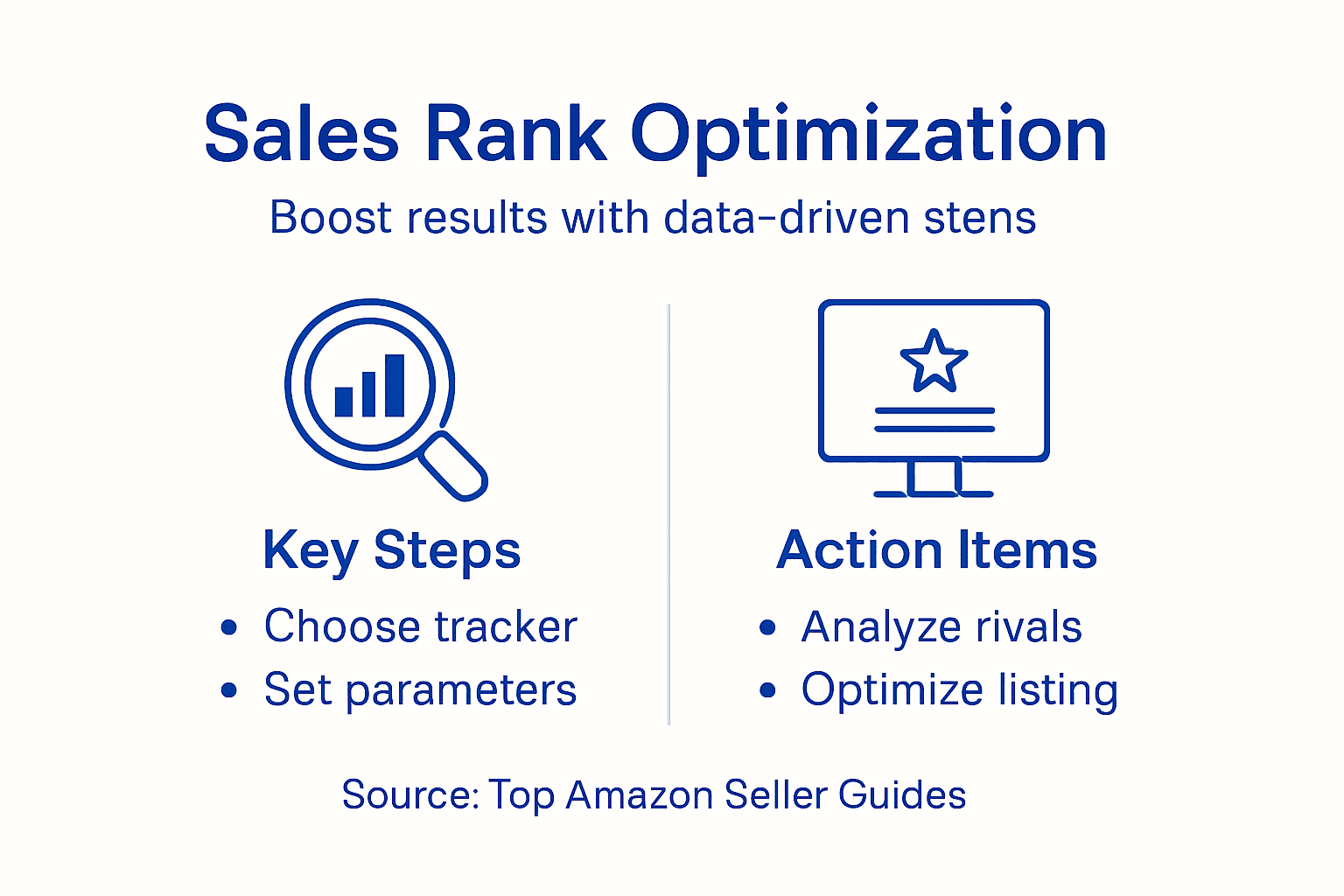
Apply your competitive research by optimizing Amazon listings with precision. Start by analyzing the top performing competitor listings in your category and identifying specific elements that contribute to their success. This might include keyword placement, image quality, bullet point structure, product description depth, and overall content clarity. Systematically update your listing elements to mirror the most effective strategies while maintaining your unique value proposition. Focus on incremental improvements that align with the insights gathered from your sales rank tracking and competitor analysis.
Implement a continuous improvement cycle where you regularly review and adjust your listing based on ongoing performance data. This means revisiting your titles, backend keywords, product images, and description text with a critical eye toward optimization. Track the impact of each modification through your sales rank tracking tools and be prepared to make quick pivotal changes when your data suggests an opportunity for enhancement.
Pro tip: Create a quarterly optimization checklist that cross references your sales rank tracker insights with actual listing performance to ensure systematic and data driven improvements.
Step 5: Monitor Performance and Adjust Strategies
Successful Amazon sellers understand that continuous performance monitoring is not a one time task but an ongoing strategic process. Your sales rank tracking journey transforms from data collection to dynamic marketplace navigation.
Implement effective progress monitoring strategies that enable rapid strategic adjustments. Develop a comprehensive dashboard that consolidates key performance indicators including sales volume, conversion rates, click through rates, and comparative rankings. Schedule weekly review sessions where you critically analyze these metrics looking for patterns trends and potential optimization opportunities. Pay special attention to seasonal variations product lifecycle stages and emerging competitive movements that could impact your sales performance.
Create a responsive adjustment framework that allows you to quickly pivot your marketing and listing strategies based on real time data insights. This might involve tweaking product descriptions updating keywords modifying pricing strategies or refreshing product images. Successful adaptation requires both disciplined data tracking and creative problem solving. Remember that marketplace dynamics shift quickly and your ability to interpret and act on performance data will be the key differentiator between stagnant and thriving Amazon businesses.
Pro tip: Establish automated performance alerts that notify you of significant ranking changes or metric shifts allowing for immediate strategic recalibration.
Unlock Your Amazon Potential with Expert Optimization Support
Struggling to turn detailed sales rank data into real growth on Amazon is a common challenge for sellers. This article highlights the crucial need for precise tracking and competitor analysis to optimize your listings. If you want to stop guessing and start winning, our tailored solutions focus on Amazon Listing Optimization and smart SEO strategies that evolve with marketplace shifts. Unlocking keyword placement, crafting compelling bullet points, and refining your backend keywords can dramatically boost your visibility and sales.
Ready to transform your Amazon strategy today Discover actionable E-commerce Tips & Strategies to Grow Your Online Business crafted for sellers who want data-backed results Explore our comprehensive services at SearchOneers and start optimizing your listings with confidence. Act now to gain the competitive edge that precise sales rank tracking and expert listing optimization delivers.
Frequently Asked Questions
How do I choose the right Amazon Sales Rank Tracker for my business?
Selecting the right Amazon Sales Rank Tracker involves evaluating features like real-time updates, historical trends, and competitor comparisons. Focus on tools that provide comprehensive insights and request a free trial to assess their effectiveness before committing.
What parameters should I use for tracking my Amazon listings?
Implement standardized UTM tracking parameters such as utm_source, utm_medium, and utm_campaign to capture detailed traffic data. Start by creating a consistent naming convention that applies to all your marketing initiatives, which will streamline future analysis.
How can I analyze competitor sales rank data effectively?
To effectively analyze competitor sales rank data, use competitive analysis tools to monitor key metrics like sales volumes and pricing strategies. Establish a dashboard that consolidates this information and review it regularly to identify trends and areas for improvement.
What steps should I take to optimize my Amazon listings based on sales rank data?
Analyze top-performing competitor listings to identify successful elements such as keyword usage and product descriptions. Systematically update your own listings by mirroring effective strategies while ensuring your unique value is maintained, aiming for continuous improvements.
How can I monitor my sales performance and adjust strategies accordingly?
Develop a dashboard that tracks key performance indicators such as sales volume and conversion rates. Regularly review this data, ideally on a weekly basis, to spot trends and make necessary adjustments to your marketing and listing strategies.

Comments
One response to “Master Amazon Sales Rank Tracker for Accurate Optimization”
[…] Master Amazon Sales Rank Tracker for Accurate Optimization – Searchoneers […]