Over 60 percent of Amazon shoppers never look past the first page of search results. Staying ahead in this crowded marketplace takes more than guesswork and luck. Whether you are launching your first product or trying to improve existing listings, the strategies you use for research, keywords, and listing optimization can make all the difference. This guide walks you through proven steps that help top sellers stand out and boost performance.
Table of Contents
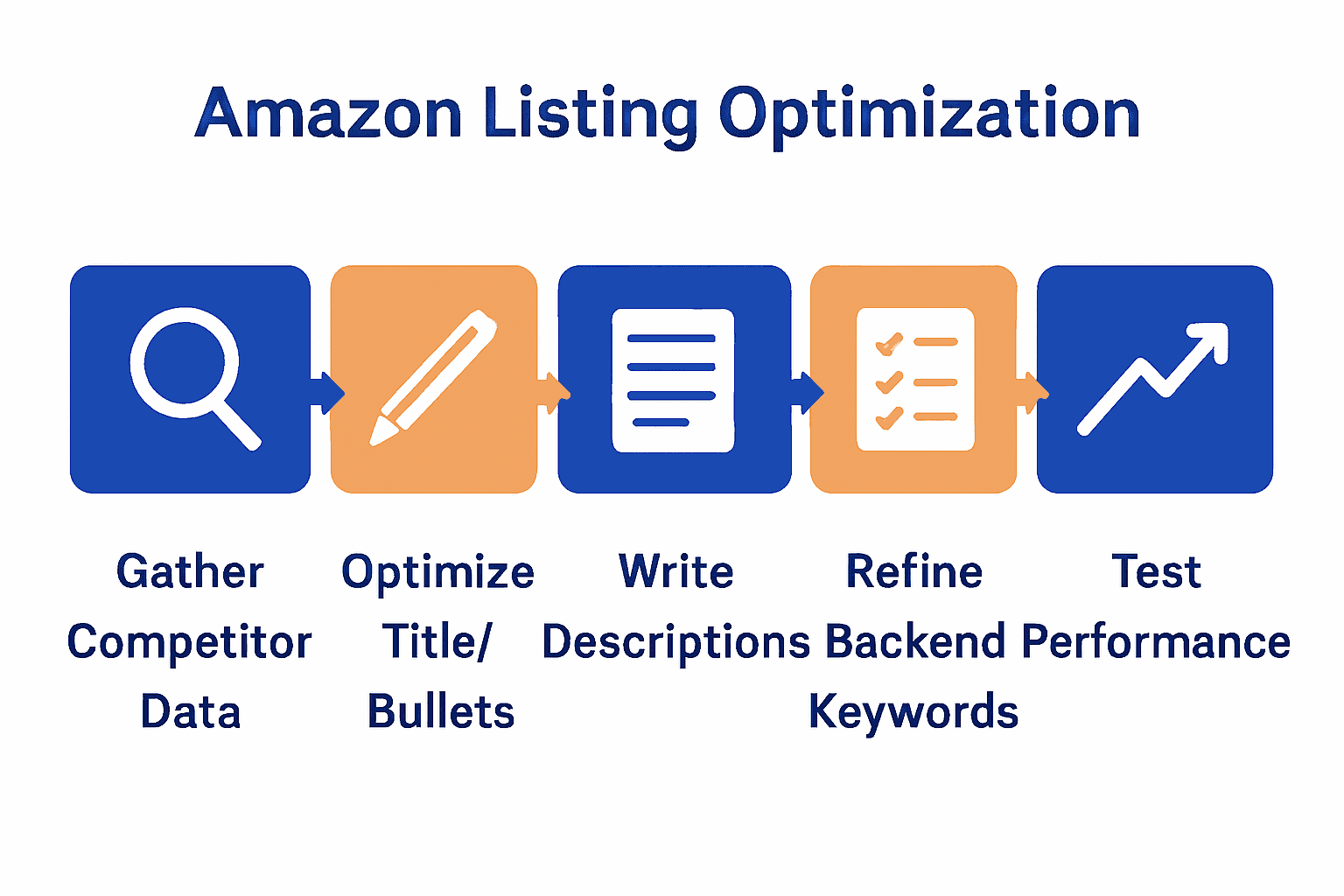
- Step 1: Gather Essential Product Data And Competitor Insights
- Step 2: Craft Compelling Titles And Keyword-Rich Bullet Points
- Step 3: Enhance Descriptions With Persuasive And Clear Copy
- Step 4: Refine Backend Keywords For Maximum Search Reach
- Step 5: Verify Listing Accuracy And Test Performance
Quick Summary
| Key Point | Explanation |
|---|---|
| 1. Identify Competitors Thoroughly | Research and analyze top competitors’ listings to find strategic insights and differentiation opportunities. |
| 2. Optimize Titles for Searchability | Create informative titles using key features and keywords to enhance visibility while remaining readable. |
| 3. Write Engaging Descriptions | Use clear, benefit-driven language in descriptions to connect with customers and highlight product advantages. |
| 4. Use Effective Backend Keywords | Select relevant backend keywords to improve search performance and broaden product discoverability without cluttering content. |
| 5. Monitor Listing Performance Regularly | Continuously check and test listings for accuracy and performance metrics to maintain credibility and sales effectiveness. |
Step 1: Gather Essential Product Data and Competitor Insights
Successful Amazon sellers understand the power of strategic research. According to Wikipedia, competitive intelligence involves systematically collecting and analyzing information about products, customers, competitors, and the business environment to support strategic decision-making.
To kickstart your product research, begin by identifying your top 5-10 direct competitors in your product category. Use Amazon search results, bestseller lists, and advanced search filters to locate these sellers. Analyze their product listings thoroughly tracking key elements like titles, bullet points, pricing, images, reviews, and overall positioning. Look for patterns in their approach and areas where you can differentiate your own listing.
As you compile competitor data, pay special attention to customer reviews and questions. These provide unfiltered insights into market needs, product expectations, and potential improvement areas. By understanding what customers praise or criticize in existing products, you can refine your own product strategy and listing optimization approach.
Learn more in our comprehensive guide on Amazon competitor analysis, which will help you develop a systematic approach to gathering actionable marketplace intelligence.
Step 2: Craft Compelling Titles and Keyword-Rich Bullet Points
Your Amazon product listing lives and dies by its title and bullet points. According to JOEBM, effective product titles and bullet points are crucial for optimizing Amazon listings, with recommendations to use descriptive titles and detailed bullet points to enhance product visibility and appeal.
Start by constructing your product title strategically. Include key details like brand name, product type, key features, size, color, and most important keywords. Aim for a title that is both informative and search friendly. Most Amazon categories allow 200 characters, so maximize this space without sacrificing readability. Place the most critical keywords at the beginning of your title to ensure maximum visibility.
For bullet points, focus on communicating value and solving customer problems. Each bullet should highlight a distinct product benefit or feature. Improve your approach with our guide on creating high-converting Amazon bullet points, which will help you transform basic descriptions into compelling customer motivators. Remember the goal is not just to describe but to demonstrate why your product stands out from competitors.

Step 3: Enhance Descriptions with Persuasive and Clear Copy
Crafting a compelling Amazon product description is an art that directly impacts your sales potential. According to JOEBM, detailed and persuasive product descriptions are essential for conveying product value and encouraging purchases.
Write your description using clear, benefit-driven language that speaks directly to your target customer. Start by addressing the primary pain points your product solves. Use active voice and create a narrative that helps customers visualize how your product improves their life. Highlight unique features, but focus more on the benefits those features provide. Avoid technical jargon and instead use straightforward language that resonates with your average buyer.
Learn more about optimizing your product descriptions with our comprehensive copywriting guide, which will help you transform bland text into compelling sales copy. Remember that your description is your final opportunity to convert a browser into a buyer. Make every word count by being specific, authentic, and customer focused.
Step 4: Refine Backend Keywords for Maximum Search Reach
Backend keywords are your secret weapon for improving Amazon product discoverability. According to Amazon Listings Optimization Guide, incorporating relevant backend keywords is a strategic approach to enhance product search performance on Amazon.
When selecting backend keywords, think like your potential customer. Include alternative spellings, synonyms, common misspellings, and related search terms that describe your product. Amazon allows approximately 250 bytes for backend keywords, so be strategic and concise. Avoid repeating words already used in your title or bullet points, and never include competitor brand names or irrelevant terms that could trigger inappropriate searches.
Discover advanced strategies for backend keyword optimization with our comprehensive Amazon keywords guide, which will help you unlock hidden search potential. Remember that backend keywords work behind the scenes to capture additional search traffic your visible listing might miss. Treat them as a precision tool for expanding your product’s discoverability without cluttering your customer facing content.
Step 5: Verify Listing Accuracy and Test Performance
Ensuring your Amazon listing performs at its peak requires continuous monitoring and strategic testing. According to ArXiv Research, ensuring the accuracy of product listings and monitoring performance metrics are vital for maintaining credibility and optimizing sales on Amazon.
Implement a systematic review process to validate every aspect of your listing. Carefully check product images, pricing, inventory status, and descriptive content for accuracy. Run periodic audits to identify any potential errors or outdated information. Consider using Amazon seller tools that provide performance analytics and help track key metrics like conversion rates, click through rates, and search ranking positions.
Understand the critical reasons for regularly updating your Amazon listings to maintain a competitive edge. Remember that an accurate and well maintained listing not only builds customer trust but also signals to Amazon’s algorithm that you are a reliable and professional seller committed to providing high quality product information.
Take Full Control of Your Amazon Listings Today
Struggling with complex listing details like crafting the perfect title or refining backend keywords can feel overwhelming. This article highlights crucial steps such as competitor analysis, compelling bullet points, and backend keyword optimization to elevate your Amazon product visibility. If you want to overcome these challenges and boost your sales by making your listings irresistible to buyers and Amazon’s algorithm, expert guidance is essential.

Discover proven strategies and hands-on solutions in E-commerce Tips & Strategies to Grow Your Online Business. At Searchoneers, we specialize in Amazon Listing Optimization and smart, data-backed SEO analytics designed specifically to enhance every element of your product listings. Don’t let your listing fall behind. Visit our site now and start transforming your Amazon presence with actionable tools and expert insights that bring real results.
Frequently Asked Questions
How can I gather essential product data for my Amazon listing optimization?
Start by identifying your top 5-10 direct competitors in your product category. Analyze their listings, paying close attention to elements like titles, bullet points, pricing, and customer reviews to refine your strategy.
What are the best practices for crafting titles and bullet points in Amazon listings?
Craft titles that include key details like brand name and product features while maximizing the 200-character limit. For bullet points, focus on distinct benefits that solve customer problems, ensuring they are both informative and persuasive.
How do I create effective product descriptions that drive sales?
Write clear, benefit-driven descriptions using straightforward language that addresses customer pain points. Highlight unique features and focus on how these features enhance customer experience to improve conversion rates.
What strategies should I follow for optimizing backend keywords on Amazon?
Include alternative spellings, synonyms, and common misspellings to enhance discoverability. Use the approximate 250-byte allowance wisely by avoiding redundancy and competitor names, ensuring you capture additional search traffic.
How can I verify the accuracy of my Amazon listing?
Implement a systematic review process to check product images, pricing, inventory, and descriptive content for accuracy. Conduct regular audits to identify errors or outdated information, aiming to maintain a reliable and professional listing.
What metrics should I monitor to test the performance of my listing?
Track key performance indicators like conversion rates, click-through rates, and search rankings regularly. Analyze these metrics to make informed adjustments, aiming for noticeable improvements within 30-60 days.
Recommended
- How to Optimize Amazon Listings: Complete Guide
- Copywriting for Amazon Listings: Tips & Best Practices
- Optimize for Amazon Search: Boost Your Product Visibility
- Complete Guide to Product Listing Strategies – Searchoneers
- Ecommerce SEO – Digital Marketing Agency – Market Link Solutions
- Content SEO: Rank Higher with High-Quality, Keyword-Rich Content – Digital Marketing Agency – Market Link Solutions