Missing a single day of keyword rank monitoring can quietly drain your Amazon FBA profits. When your product slips from page one to page three unnoticed, you lose sales velocity and visibility. Daily rank tracking using specialized Amazon tools prevents this silent profit erosion and keeps your listings competitive in 2026’s fast-moving marketplace.
Table of Contents
- Prerequisites: What You Need Before Starting With Amazon Rank Tracking
- Why Daily Rank Tracking Matters For Amazon Sellers
- Top Amazon Rank Tracker Tools For Sellers In 2026
- Core Steps To Track Amazon Rank Effectively
- Common Mistakes In Amazon Rank Tracking And Troubleshooting
- Expected Outcomes And Success Metrics
- Boost Your Amazon Sales With Expert Listing Optimization
- Frequently Asked Questions About Amazon Rank Trackers
Key Takeaways
| Point | Details |
|---|---|
| Profit Protection | Daily rank tracking prevents 20-35% profit margin losses from unnoticed keyword drops. |
| Essential Tools | Amazon-specific trackers like Helium 10 and Jungle Scout deliver advanced features and competitor insights. |
| Setup Requirements | Configure daily alerts and track device/location variations to capture complete ranking data. |
| Common Pitfalls | Ignoring mobile rankings and competitor movements creates blind spots that cost sales. |
| Timeline to Results | Ranking improvements typically appear within 2-4 weeks after optimization actions. |
Prerequisites: What You Need Before Starting with Amazon Rank Tracking
Before diving into rank tracking, gather your essential resources and accounts. You need an active Amazon Seller Central account with product ASINs ready to monitor. Without these basics, no tracking tool can deliver actionable insights.
Select an Amazon-specific rank tracker designed for the platform’s unique algorithm. Generic SEO tools miss critical features like Buy Box tracking and ASIN-level monitoring. Amazon rank trackers simulate real buyer searches and log ASIN positions on Amazon SERPs, factoring device and geo-specific data for precise rank tracking.
Develop basic knowledge of Amazon SEO principles and keyword research fundamentals. Understanding how customers search helps you select the right keywords to track. Review our Amazon keyword rank tracker guide to build this foundation quickly.
Prepare to review rank data daily with configured alerts for immediate action. Sporadic checking defeats the purpose of tracking tools. Set aside 10-15 minutes each morning to analyze overnight changes and respond to drops.
Ensure your chosen tool captures accurate geo and device-specific rank data. Amazon displays different results for mobile versus desktop users and varies rankings by location. Missing these variations means incomplete performance visibility.
Essential preparation checklist:
- Active Seller Central account with product ASINs
- Subscription to Amazon-specific rank tracker tools for 2026
- Basic Amazon SEO and keyword research knowledge
- Daily schedule for reviewing alerts and trends
- Tool configured for geo and device-specific tracking
Why Daily Rank Tracking Matters for Amazon Sellers
Amazon’s A10 algorithm updates continuously, rewarding optimized listings and penalizing stale content. Your product can rank position 3 today and drop to position 47 tomorrow if competitors optimize faster or your conversion rate dips. Missing keyword rank drops without daily tracking can cause 20-35% erosion in Amazon FBA seller profit margins due to lost sales velocity.
Daily monitoring protects your Buy Box ownership and unit session share metrics. Maintaining 95%+ Buy Box ownership requires constant vigilance over pricing, inventory, and ranking positions. When your Amazon sales rank deteriorates, competitors capture your traffic and conversions.
Ignoring daily alerts creates a cascading failure pattern. A small rank drop reduces visibility, which lowers click-through rates, which signals poor relevance to Amazon’s algorithm, which triggers further ranking declines. This downward spiral accelerates faster than most sellers realize.
Rank fluctuations directly impact organic visibility and sales velocity every single day. The sellers who respond within 24 hours to ranking changes outperform those who check weekly or monthly.
Pro Tip: Establish a fixed daily time, preferably 8-9 AM, to review alerts and rank trends. This routine creates accountability and ensures rapid response to negative changes.
Avoid common Amazon SEO mistakes by treating rank tracking as a daily operational requirement, not an occasional check-in. The data guides listing updates, PPC bid adjustments, and inventory decisions that protect your profit margins.
Critical daily tracking benefits:
- Early detection of algorithm changes affecting your listings
- Immediate alerts when competitors outrank your products
- Data-driven decisions for PPC budget allocation
- Quick identification of winning versus declining keywords
Top Amazon Rank Tracker Tools for Sellers in 2026
Choosing the right tracking tool determines your data quality and response speed. The market offers several robust options, each with distinct strengths for different seller profiles.
Helium 10 is the most popular all-in-one Amazon SEO tracker, offering keyword rank tracking, competitor monitoring, and listing optimization integrations. It lacks a free plan but delivers comprehensive data starting around $99 monthly. Best for sellers managing multiple products who need deep competitor insights.

Jungle Scout combines product research with historical keyword rank tracking at mid-level subscription costs starting near $49 monthly. Top Amazon rank trackers offer competitor keyword tracking and detailed historical ranking data to inform optimization strategies. Ideal for newer sellers building their first catalogs.
AMZ Tracker focuses specifically on keyword ranking and on-page optimization with a simpler interface than enterprise tools. Pricing starts around $50 monthly, making it accessible for solo sellers prioritizing ease of use over advanced features.
Sellics provides enterprise-level features with multi-account support and advertising integrations. Higher complexity and pricing (starting $67+ monthly) suit agencies and brands managing extensive Amazon operations.
| Tool | Best For | Starting Price | Key Feature |
|---|---|---|---|
| Helium 10 | Multi-product sellers | ~$99/month | All-in-one SEO suite |
| Jungle Scout | New sellers | ~$49/month | Historical rank data |
| AMZ Tracker | Solo sellers | ~$50/month | Simple interface |
| Sellics | Enterprise/agencies | ~$67/month | Multi-account support |
Free tools typically offer limited trials rather than ongoing free tiers. They miss critical features like automated alerts and competitor tracking. Investing in paid plans delivers ROI through faster problem detection and optimization opportunities.
Explore our comparisons of best Amazon sales rank trackers and Amazon Best Sellers Rank Tracker guide for deeper feature breakdowns. For setup guidance, review accurate Amazon sales rank tracker tips to maximize your tool’s effectiveness.
Consult leading Amazon rank tracker tools and top Amazon keyword rank trackers for current feature comparisons and pricing updates in 2026.
Core Steps to Track Amazon Rank Effectively
Implementing rank tracking follows a clear sequence from keyword selection through daily monitoring and optimization actions. Each step builds on the previous to create a complete tracking system.
Step 1: Identify High-Impact Keywords
List the 10-20 keywords driving most of your sales and traffic. Focus tracking resources on terms with commercial intent and sufficient search volume. Include branded terms, category keywords, and competitor product names where relevant.
Step 2: Subscribe to Amazon-Specific Tool
Choose a platform offering automated daily tracking and real-time rank change alerts to quickly respond to ranking fluctuations. Verify it includes geo and device filters matching your target customers.
Step 3: Configure Tracking Parameters
Set up your product ASINs with selected keywords in the tool. Amazon rank trackers simulate real buyer searches and log ASIN positions on Amazon SERPs, factoring device and geo-specific data for precise rank tracking. Enable separate tracking for mobile and desktop if your tool supports it.
Step 4: Establish Alert Thresholds
Configure alerts to notify you when rankings drop more than 5 positions or fall below page one. Set alerts for competitor rank improvements on your core keywords.
Step 5: Analyze Trends and Competitor Movements
Review daily reports comparing your ranks against previous days and weeks. Watch for patterns like weekend dips or promotional spikes. Track how competitor optimizations affect your positions.
Step 6: Act on Data Within 24-48 Hours
Using rank trackers accelerates identification of lost rankings, enabling listing updates within days rather than weeks, significantly improving recovery speed. Update titles, bullets, or backend keywords when ranks drop. Adjust PPC bids to recapture lost visibility.
Pro Tip: Group keywords by campaigns in your tool for clearer reporting and faster action. Create separate groups for branded terms, category keywords, and long-tail phrases to streamline optimization decisions.
| Metric | Target | Action if Below |
|---|---|---|
| Buy Box % | 95%+ | Review pricing and fulfillment |
| Page 1 Keywords | 70%+ | Optimize underperforming listings |
| Rank Check Frequency | Daily | Set automated alerts |
| Response Time | <48 hours | Update listing immediately |
Follow our Amazon rank tracker implementation guide for detailed setup walkthroughs. Reference Amazon sales rank explained to understand how rankings connect to sales performance.
Consult Amazon rank tracking setup tips and real-time rank tracking and alerts for advanced configuration strategies.
Common Mistakes in Amazon Rank Tracking and Troubleshooting
Even experienced sellers make tracking errors that undermine their data quality and response effectiveness. Recognizing these pitfalls helps you avoid wasted effort and missed opportunities.
Not monitoring ranks daily leads to delayed detection of problems. By the time you notice a significant drop checking weekly, you’ve already lost days of sales and algorithmic momentum. Daily checks take minutes but prevent major profit erosion.
Ignoring mobile vs desktop ranking variations leads to blind spots. Amazon displays different results across devices, and over 60% of purchases start on mobile. Missing mobile rankings means you don’t know how most customers see your products.
Neglecting competitor rank tracking creates strategic vulnerabilities. When competitors optimize and leapfrog your rankings, you need immediate visibility to respond. Tracking only your own ranks leaves you reactive instead of proactive.
Using free or limited tools often provides inaccurate or partial data. Basic trackers miss geo variations, device differences, and historical trends needed for informed decisions. The savings on tool costs get erased by lost sales from bad data.
Failing to set up daily alerts and competitor tracking wastes data potential and delays responses to rank drops. Manual checking introduces human error and inconsistency. Automated alerts ensure nothing slips through unnoticed.
Delaying optimizations after rank drops reduces recovery speed. Amazon’s algorithm rewards quick responses with faster rank restoration. Waiting days or weeks to update listings extends your visibility loss and compounds sales damage.
Pro Tip: Always configure alerts for immediate rank drop notifications. Set thresholds at 5 position drops or page one exits to catch problems before they become crises.
Critical mistakes to avoid:
- Checking ranks weekly instead of daily
- Tracking only desktop rankings
- Monitoring your products without competitor context
- Relying on free tools with limited features
- Delaying listing updates after detecting drops
Avoid Amazon SEO mistakes by treating rank tracking as a complete system, not just occasional monitoring. Review rank tracking common mistakes to benchmark your setup against best practices.
Expected Outcomes and Success Metrics
Setting realistic expectations helps you measure rank tracking ROI and stay committed to daily monitoring. Most sellers see measurable improvements within specific timeframes when they act on tracking data consistently.
Listing ranking improvements typically seen within 2-4 weeks after using rank tracker data. This timeline assumes you update listings promptly when drops occur and optimize based on competitor movements. Faster results come from more aggressive optimization and PPC support.
Maintaining 95%+ Buy Box ownership protects sales volume. Track this metric alongside keyword ranks since Buy Box loss often precedes or accompanies ranking declines. The two metrics create a complete visibility picture.
Achieve 10-15% unit session share indicating good conversion rates. When your rank tracking shows strong positions but low session share, your listing content needs optimization beyond keyword placement. Track both metrics together for complete performance insight.
Preventing 20-35% margin loss through early keyword drop detection is critical. This benefit alone justifies tracking tool costs and daily monitoring time. Calculate your average daily profit and multiply by 0.25 to see potential monthly savings from rank tracking.
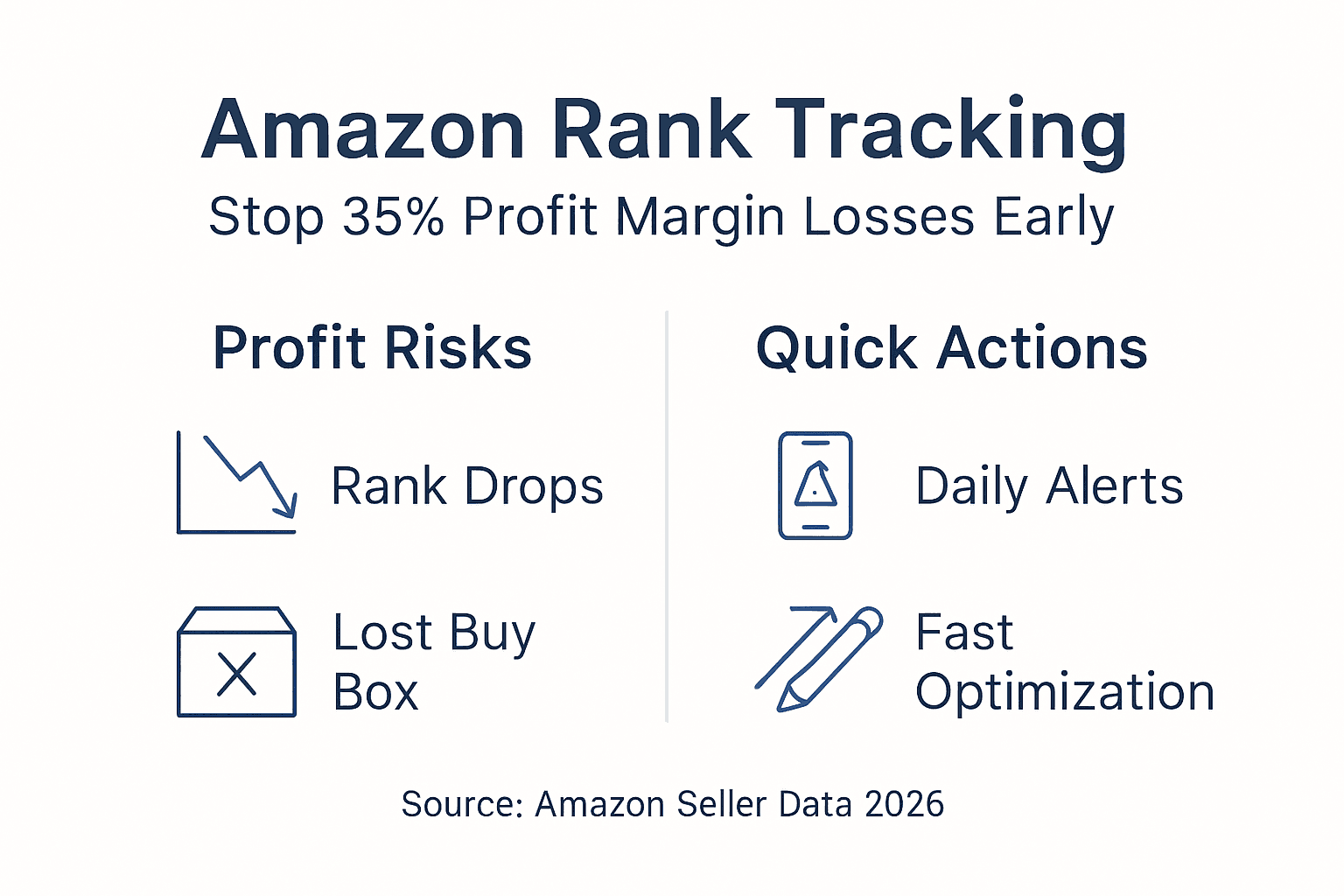
Recover quickly by acting on alerts within 24-48 hours. Sellers who respond same-day to ranking drops restore positions 3-5 days faster than those who wait a week. Speed directly correlates with reduced profit impact.
Key performance metrics:
- Ranking improvement timeline: 2-4 weeks
- Buy Box ownership target: 95%+
- Unit session share goal: 10-15%
- Profit protection potential: 20-35% margin preservation
- Optimal response time: <48 hours
Consult expected rank tracking outcomes for detailed benchmarks by product category and competitive intensity.
Boost Your Amazon Sales with Expert Listing Optimization
Rank tracking delivers insights, but optimization creates results. You’ve learned how to monitor keyword positions and detect problems early. Now apply proven strategies to convert that data into higher rankings and increased sales.
Our Amazon listing enhancement guide shows you exactly how to transform rank tracking insights into optimized titles, bullets, and descriptions. Follow our listing optimization workflow to systematically improve every element of your product pages.
Dive into our Amazon SEO step-by-step guide to master keyword placement, backend search terms, and conversion optimization. These resources work together with your rank tracking data to accelerate your path to page one positions and sustained sales growth in 2026.
Frequently Asked Questions About Amazon Rank Trackers
What is an Amazon rank tracker and why do I need it?
An Amazon rank tracker monitors your product’s keyword positions on search results to help maintain visibility and sales. It’s essential for timely detection of ranking drops that directly affect your revenue and profit margins. Without tracking, you discover problems only after significant sales losses occur.
How often should I monitor my Amazon keyword rankings?
Daily monitoring is recommended to catch rank fluctuations early and respond quickly before sales velocity drops. This helps maintain sales momentum and protects profit margins under Amazon’s constantly updating algorithms. Set alerts to automate notifications rather than manual checking.
Can I use free tools for Amazon rank tracking effectively?
Free tools often provide limited or partial tracking data, risking blind spots in mobile rankings, geo variations, and competitor movements. For reliable insights and complete visibility, investing in paid Amazon-specific rank trackers is strongly advised. The ROI from prevented profit loss justifies the monthly subscription cost.
What are the signs that my rank tracker is not working correctly?
Inconsistent rank reports, missing mobile or geo data, or absent alerts indicate your tracker has issues. Verify tool settings match your target customer locations and devices. Consider switching tools if critical tracking features are missing or data accuracy seems questionable.
How long does it take to see improvements after using rank tracking data?
Expect to see ranking improvements within 2-4 weeks after implementing optimization actions based on tracking insights. Consistent monitoring and quick response to drops accelerate results and sales growth. Delayed responses extend the recovery timeline and increase lost revenue during the improvement period.
Recommended
- Best 6 Best Amazon Sales Rank Trackers – Expert Comparison 2025 – Searchoneers
- Master Amazon Sales Rank Tracker for Accurate Optimization – Searchoneers
- Amazon Best Sellers Rank Tracker: Accurate Tracking Guide – Searchoneers
- Amazon Keyword Rank Tracker Guide for Better Visibility – Searchoneers
- Top 10 Strategies to Know Your Profit Margin in 2021 – AICloudIT
- Ways to Reduce Fulfilment Costs: Cut Up to 40% in 2026 | ParcelPlanet