Over 80 percent of American shoppers rely on Amazon search results to guide purchasing decisions. If you want your products to stand out in crowded marketplaces, mastering listing optimization is no longer optional. Sellers with a few years of experience know that strategic keyword research, compelling titles, and impactful images give a major advantage. This guide uncovers actionable steps to help you outpace competitors and attract more buyers worldwide.
Table of Contents
- Step 1: Assess Keyword Opportunities For Amazon SEO
- Step 2: Optimize Titles, Bullet Points, And Descriptions
- Step 3: Enhance Backend Search Terms For Maximum Reach
- Step 4: Refine Images And A+ Content To Drive Engagement
- Step 5: Test And Verify Improved Listing Performance
Quick Summary
| Key Point | Explanation |
|---|---|
| 1. Identify Effective Keywords | Use Amazon keyword research to find precise terms and long tail keywords that customers actually search for. |
| 2. Optimize Product Listings | Create compelling titles and descriptions that incorporate primary and secondary keywords to attract buyers and improve visibility. |
| 3. Leverage Backend Keywords | Use hidden backend search terms to enhance discoverability while avoiding duplication of visible content. |
| 4. Enhance Visual Content | Use high-quality images and A+ Content to create engaging narratives about your product, boosting customer trust and conversion rates. |
| 5. Monitor Performance Metrics | Regularly track key metrics like click through rates and conversion rates to assess the impact of your optimization efforts. |
Step 1: Assess keyword opportunities for Amazon SEO
Successful Amazon SEO starts with understanding how shoppers search and discover products. Your mission in this first step is uncovering the right keywords that connect potential buyers with your product listing.
Begin by diving into Amazon keyword research strategies that reveal what customers actually type into the search bar. Look beyond obvious terms and explore long tail keywords specific to your product category. Amazon shoppers often use precise search phrases like “organic cotton baby blanket with animal print” instead of generic terms like “baby blanket.”
Analyze your competitors carefully by reviewing their top ranking product listings. Check their titles, bullet points, and backend keywords to understand which search terms they target. Use Amazon’s autocomplete suggestions and third party research tools to expand your keyword universe. Pay special attention to search volume, relevance, and competition level for each potential keyword.
Pro tip: Create a master spreadsheet tracking keyword metrics including search volume, relevance score, and competitive difficulty to streamline your research process.
Step 2: Optimize titles, bullet points, and descriptions
Transforming your Amazon product listing into a powerful sales engine requires strategic optimization of your titles, bullet points, and descriptions. Your goal is crafting compelling content that attracts both Amazon search algorithms and potential customers.
Start by developing Amazon listing optimization techniques that maximize your visibility. Your product title should lead with primary keywords while clearly communicating the product’s core benefits. Place the most important information first consider the 70 character mobile view limit. Structure bullet points to highlight unique product features, addressing specific customer pain points and incorporating secondary keywords naturally.

Craft descriptions that tell a story beyond technical specifications. Expand on the key benefits demonstrated in your bullet points, using persuasive language that connects emotionally with your target audience. Include specific details about material quality, dimensions, use cases, and potential applications. Remember that Amazon search algorithms prioritize listings with comprehensive, keyword rich content that demonstrates clear value to potential buyers.
Pro tip: Periodically review and update your product listing optimization strategy every 60 to 90 days to maintain competitive search rankings and align with evolving customer search behaviors.
Step 3: Enhance backend search terms for maximum reach
Backend search terms represent your secret weapon in Amazon SEO strategy. These hidden keywords allow you to expand your product’s discoverability without cluttering your visible listing content.
Explore Amazon search term strategies that help you maximize your listing’s potential. Focus on including relevant variations like misspellings, synonyms, and alternative product descriptions that shoppers might use. Avoid repeating words already present in your title or bullet points. Amazon provides limited character space typically around 250 characters for backend keywords so prioritize the most impactful search terms strategically.
Think like your potential customer when selecting backend keywords. Consider alternate product names, common misspellings, related product uses, and technical specifications that might help someone find your product. Use singular and plural versions of keywords when appropriate. Eliminate unnecessary words like articles and prepositions to conserve valuable character space. Remember that backend keywords should complement your visible listing content without redundancy.
Pro tip: Regularly audit and refresh your backend keywords every 90 days to maintain alignment with current search trends and emerging customer search behaviors.
Here’s a quick comparison of visible and backend keywords for Amazon SEO:
| Keyword Type | Visibility | Best Use Case | Impact on Ranking |
|---|---|---|---|
| Title/Bullet Points | Shopper sees | Main product attributes, primary terms | High impact, boosts relevance |
| Backend Search Terms | Hidden | Variations, misspellings, synonyms | Expands reach, supports search |
Step 4: Refine images and A+ content to drive engagement
Your product images and A+ Content are powerful visual storytelling tools that can transform casual browsers into committed buyers. These visual elements are your opportunity to showcase your product’s unique value and create an immersive shopping experience.
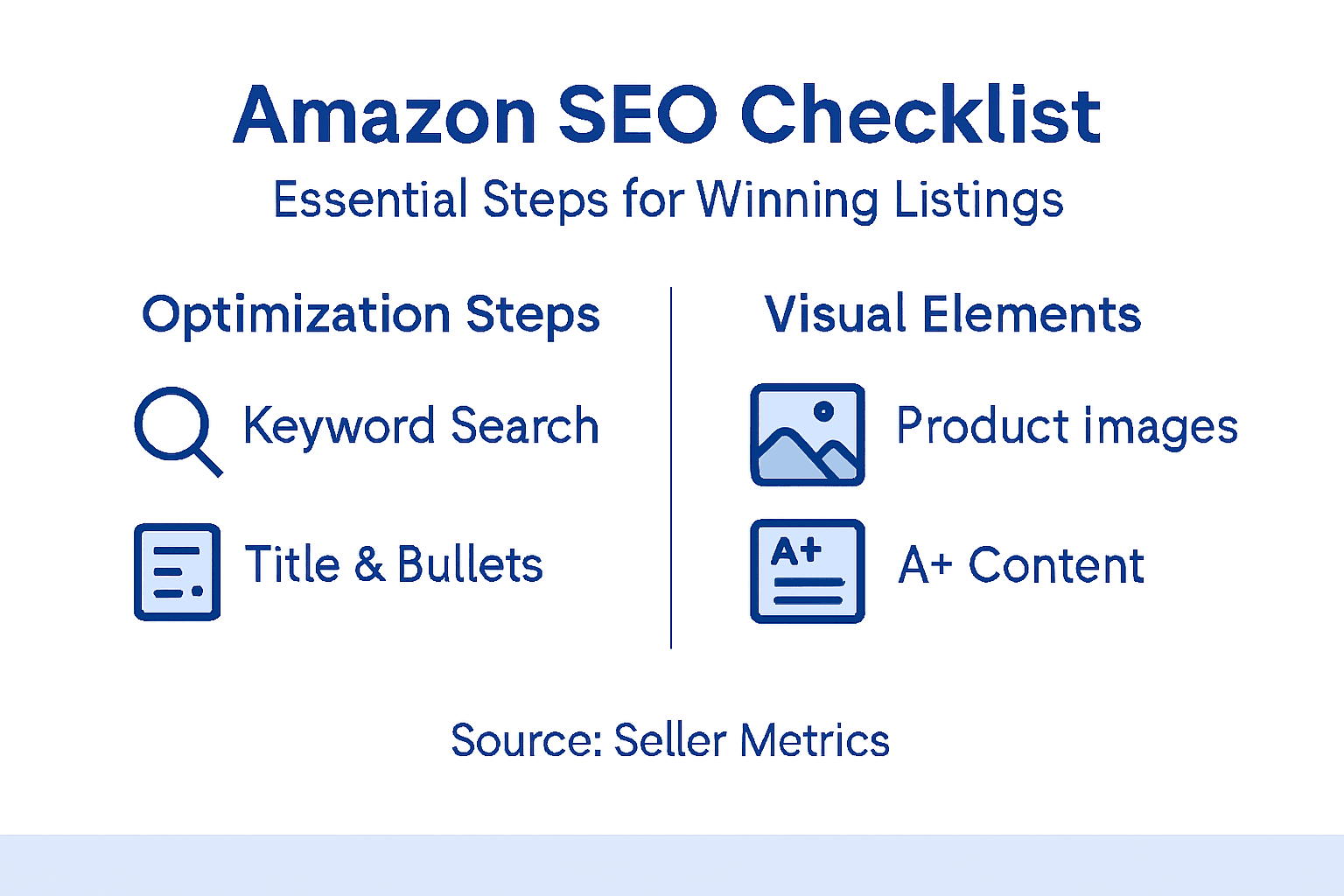
Start by optimizing Amazon product images that highlight your product from multiple angles. Include high resolution images that demonstrate scale, functionality, and specific features. Aim for professional quality shots with clean backgrounds that allow potential customers to zoom in and examine details. Your first image should be a pure white background product shot that meets Amazon’s strict requirements.
Leverage A+ Content to create a compelling narrative around your product. Use comparison charts, detailed lifestyle images, and infographics that explain key benefits. Focus on visual storytelling that goes beyond basic specifications. Include images that show your product in use, solving customer problems or enhancing their daily life. Remember that while A+ Content does not directly impact keyword rankings, it significantly improves conversion rates by building customer trust and providing deeper product insights.
Pro tip: Rotate your product images every 60 to 90 days and track which visual layouts generate the highest engagement and conversion rates.
Step 5: Test and verify improved listing performance
Validating your Amazon listing optimization requires a systematic approach to tracking performance metrics and making data driven adjustments. Your goal is transforming strategic improvements into measurable sales growth.
Implement real-time Amazon product data testing to quickly identify and address potential listing issues. Monitor key performance indicators like click through rates, conversion rates, and search ranking positions. Use Amazon seller analytics tools to track changes in visibility and customer engagement after each optimization update. Pay close attention to metrics such as impressions, average session duration, and bounce rates to understand how customers interact with your listing.
Create a structured testing framework that allows you to isolate and evaluate specific optimization changes. Run controlled experiments by modifying one element at a time such as titles, images, or backend keywords. Track performance before and after each modification to understand its direct impact. Utilize Amazon’s built in reporting tools and consider third party analytics platforms that provide deeper insights into listing performance trends.
Pro tip: Maintain a detailed optimization log documenting each change, its rationale, and corresponding performance metrics to build a comprehensive understanding of what drives your listing’s success.
Below is a summary of key listing optimization metrics Amazon sellers should track:
| Metric | What it Measures | Why It’s Important |
|---|---|---|
| Click Through Rate | Listing clicks per view | Reveals listing attractiveness |
| Conversion Rate | Purchases per visit | Indicates persuasive effectiveness |
| Impressions | Number of listing views | Tracks visibility improvements |
| Average Session Duration | Time spent on page | Signals shopper engagement |
Boost Your Amazon Listings with Expert SEO Strategies
Facing the challenge of mastering Amazon SEO and transforming your product listings into high-converting sales tools requires more than guesswork. This article highlights the importance of finely tuned titles, bullet points, backend keywords, and visuals to win in Amazon’s competitive marketplace. If you want to move beyond basic optimization and capture precise search terms and customer intent, understanding these Amazon SEO tactics is crucial.
Discover how you can leverage data-driven insights and proven optimization techniques with our specialized services at Search Oneers. Dive deeper into strategies that elevate your product visibility and conversion through our resourceful E-commerce Tips & Strategies to Grow Your Online Business. Don’t wait to enhance your listings with the confidence that comes from professional support. Visit our main site now and start turning your listings into undeniable success stories.
Frequently Asked Questions
What are the first steps in the SEO Optimization Checklist for Winning Amazon Listings?
Successful optimization begins with assessing keyword opportunities. Start by conducting thorough Amazon keyword research to uncover relevant long-tail keywords tailored to your product category.
How can I effectively structure my product titles for better visibility?
To optimize your product titles, include primary keywords up front while communicating core benefits. Aim to keep titles within 70 characters to ensure they display properly on mobile devices and engage potential shoppers.
What rolling timeline should I follow for optimizing backend search terms?
Regularly audit your backend search terms every 90 days to keep your listing relevant. Update these hidden keywords to reflect current shopping trends, including common misspellings and synonyms that potential customers might use.
How can I use images and A+ content to improve my Amazon listings?
Enhance your listings by optimizing product images that showcase your product from various angles and in high quality. Use A+ Content to create visually compelling narratives, incorporating charts and lifestyle images to connect emotionally with customers.
What metrics should I monitor to validate my listing performance?
Focus on key performance indicators like click-through rates and conversion rates to gauge your listing’s effectiveness. Regularly track these metrics after implementing changes to determine what strategies yield the best results.