TL;DR:
- Securing authorized suppliers is essential for Amazon sellers to avoid listing issues and account suspensions.
- Purchasing from brand-approved distributors with proper documentation ensures smoother approvals and better margins.
- Focusing on reputable sourcing channels and verifying authorization saves time and builds a scalable, compliant business.
Finding reliable places to buy products to sell on Amazon is the single most consequential decision you will make as a new seller. Get it wrong and you face listing rejections, account suspensions, and money locked up in inventory you cannot move. Get it right and you have a repeatable, scalable business. The problem is that the internet is full of advice pointing to random wholesale sites with no mention of the one thing Amazon actually cares about: whether your supplier is authorized. This guide breaks down every major sourcing channel, what each one costs you in risk and effort, and exactly how to vet them before spending a dollar.
Table of Contents
- Key takeaways
- 1. Where to buy products to sell on Amazon: start with this framework
- 2. Buying direct from manufacturers and authorized distributors
- 3. Using online wholesale marketplaces and B2B directories
- 4. Sourcing from liquidation and clearance platforms
- 5. Comparison of sourcing channels at a glance
- My honest take on sourcing products for Amazon resale
- Turn your sourced inventory into real sales with Searchoneers
- FAQ
Key takeaways
| Point | Details |
|---|---|
| Authorization is non-negotiable | Buy only from brand-approved sources to avoid listing rejections and account issues. |
| Documentation wins approvals | You need both invoices and Letters of Authorization from the brand owner, not just any supplier. |
| Multiple sourcing channels exist | From manufacturer-direct to liquidation platforms, each channel fits a different budget and risk profile. |
| Directories cut vetting time | Free verified distributor directories reduce the guesswork of finding legitimate U.S. wholesale suppliers. |
| Sourcing and listing work together | Great inventory means nothing if your listing is not optimized to convert the traffic Amazon sends you. |
1. Where to buy products to sell on Amazon: start with this framework
Before you open a single wholesale site, you need a mental framework for evaluating any supplier you consider. This is where most beginners go wrong. They search for cheap suppliers for Amazon, find someone willing to sell them 50 units at a low price, and assume that is enough. It is not.
Amazon’s brand approval process requires specific documentation, and that documentation must originate from the right source. Restricted brand approvals require both a valid invoice from an authorized source AND an official Letter of Authorization (LOA) from the brand owner itself. A supplier can hand you an invoice all day long. If that supplier is not authorized, Amazon will reject your application.
Here is what to check before committing to any supplier:
- Brand authorization status. Does the brand’s official website list this supplier as an authorized distributor or reseller?
- LOA availability. Can the brand owner or their direct distributor provide a Letter of Authorization with your business name on it?
- Invoice format. Does the invoice include your business name, address, supplier details, product name, ASIN or UPC, and a quantity of at least 10 units?
- Category gating. Is the product in a gated category on Amazon? Gated categories like Toys, Grocery, and Health require pre-approval before you can list at all.
- Supplier location and shipping capabilities. A domestic U.S. supplier typically means faster shipping, easier returns, and cleaner documentation.
Pro Tip: Go to the brand’s official website first and look for a “Wholesale,” “Become a Retailer,” or “Authorized Distributors” page. This is the fastest path to sourcing that Amazon will actually accept.
Experienced wholesale sellers follow a four-step process: pick a brand or category, verify authorized distributors through the brand site, cross-reference with trusted directories, then confirm all documentation before placing a bulk order. Follow that workflow and you eliminate most of the risk before it costs you anything.
2. Buying direct from manufacturers and authorized distributors
This is the gold standard for buying inventory for Amazon. When you buy directly from the brand or from a distributor the brand has officially approved, you get the cleanest documentation, the best unit economics, and the least friction during Amazon’s approval process.
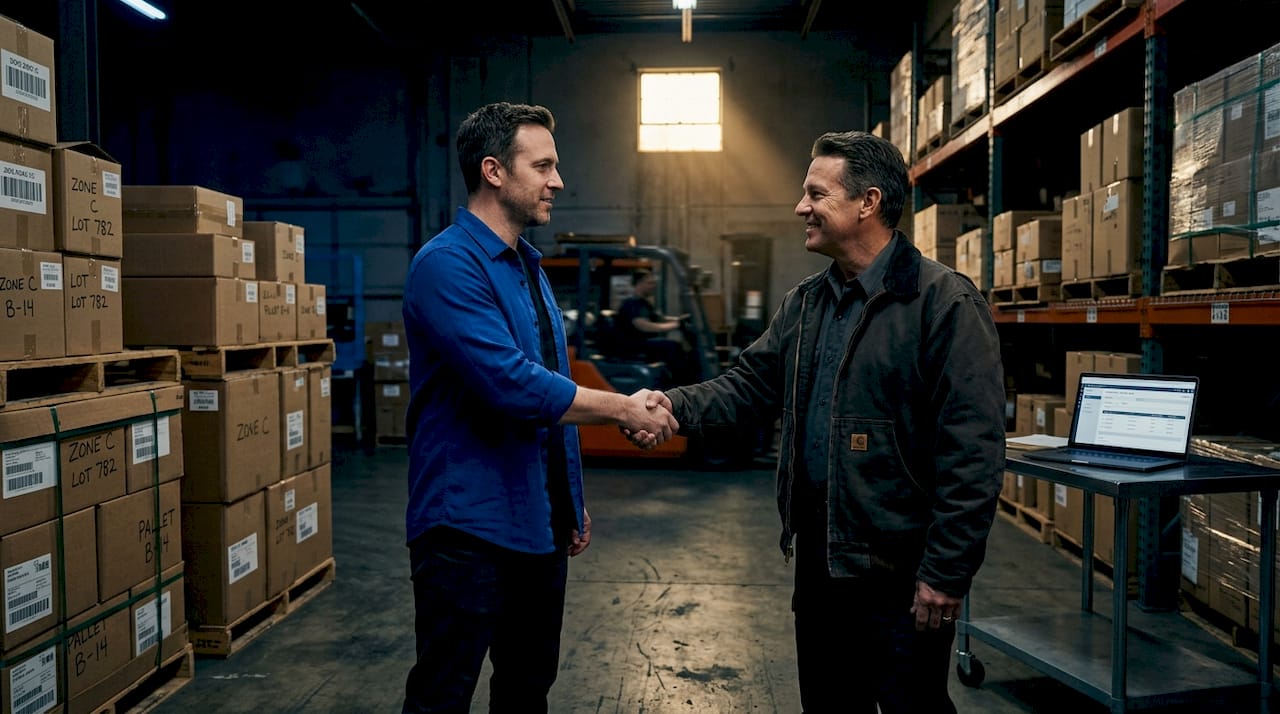
The most reliable approach is to source from the brand itself or its authorized distributors, because these are the only parties Amazon recognizes when reviewing brand approval applications.
Here is what to expect from this sourcing channel:
- Minimum order quantities (MOQs). Brands and authorized distributors typically require anywhere from $500 to $5,000 in initial purchase orders. Some premium brands set minimums much higher.
- Pricing advantages. You receive wholesale pricing, usually 40% to 60% below retail, which gives you healthy margins even after Amazon fees.
- Documentation is included. Authorized distributors can provide proper invoices and often help facilitate LOA requests directly with the brand.
- Account approval process. Most brands require a business license, resale certificate, and a brief application before opening a wholesale account. This takes one to seven business days on average.
- Whitelist considerations. Some brands run closed distribution networks and only add new sellers by invitation. If you hit a wall, reach out to the brand’s sales team directly and explain your Amazon sales volume and credentials.
The downside is that this channel takes time to set up. You will not be ordering your first batch tomorrow. But the compliance peace of mind and margin quality make it worth the patience, especially when you are learning how to succeed as an Amazon wholesale seller.
3. Using online wholesale marketplaces and B2B directories
Once you understand what authorized sourcing looks like, you can use online platforms to speed up the discovery process. Major B2B marketplaces include Alibaba, Global Sources, DHgate, Faire, and Handshake, and each platform serves a different type of buyer.
- Alibaba connects you with international manufacturers, mostly based in China. It is best for private label sourcing or finding factories for custom products. Authorization documentation for established U.S. brands is harder to obtain here.
- DHgate allows smaller MOQs than Alibaba, which makes it attractive for testing products. The tradeoff is higher per-unit cost and more variable quality control.
- Faire and Handshake focus on U.S. independent brands and boutique suppliers. These platforms are better suited for unique gift, home, and lifestyle products rather than mainstream name brands.
- Global Sources sits between Alibaba and Faire in terms of supplier profile. It skews toward electronics and consumer goods manufacturers.
For where to find wholesale items from verified U.S. distributors, directories are your best tool. Verified distributor directories like Clever Wholesale list suppliers across 50 or more product categories with no registration fees, saving you hours of cold outreach and reducing the risk of landing on an unauthorized source.
Pro Tip: When vetting any supplier on a B2B marketplace, request a sample order and ask specifically whether they can provide an Amazon-acceptable LOA from the brand owner. Their answer tells you everything about whether they are truly authorized.
The counterfeit risk on open B2B platforms is real. Always request product authentication documents, check for brand trademark registration, and never assume that a high review count on a platform equals Amazon authorization.
4. Sourcing from liquidation and clearance platforms
Liquidation is one of the most misunderstood sourcing channels in the Amazon seller world. Done right, it offers access to significant discounts. Done carelessly, it leads to account warnings and gated brand violations.
Liquidation platforms like 888 Lots offer inventory at up to 90% off MSRP, with lot sizes ranging from individual items to full truckloads. That flexibility makes liquidation attractive for sellers who want to move fast or test categories without committing to large wholesale orders.
Here is where the risk lives:
- Brand gating. Many products in liquidation lots come from gated brands. Without proper authorization documentation, you cannot list them on Amazon even if you legally own the inventory.
- Condition unpredictability. Liquidation merchandise often includes customer returns, shelf pulls, and overstock. Condition varies widely, and Amazon’s condition guidelines are strict.
- Documentation gaps. Liquidation sellers typically cannot provide brand-issued LOAs. This matters enormously for any brand that requires approval before listing.
Liquidation makes the most sense when you are sourcing unbranded goods, open-category products, or categories where you already have approval and documentation from a prior authorized purchase. Think of it as a supplement to your main sourcing strategy, not a replacement for authorized wholesale relationships.
Liquidation inventory for gated brands requires separate risk management because missing brand authorization creates real account exposure. Start with low-risk categories before testing liquidation on restricted products.
5. Comparison of sourcing channels at a glance
Use this table to quickly match your situation to the right sourcing channel.
| Sourcing channel | Authorization level | Typical price | MOQ | Documentation quality | Best for |
|---|---|---|---|---|---|
| Brand direct | Highest | Best margins | High ($1,000+) | Full LOA and invoices | Experienced sellers scaling one brand |
| Authorized distributor | High | Good margins | Moderate ($500) | Full LOA and invoices | Most wholesale sellers |
| B2B marketplace (U.S.) | Moderate | Moderate | Low to moderate | Varies, ask for LOA | Sellers testing new categories |
| International B2B (Alibaba) | Low for name brands | Low per unit | Variable | Limited for brand approval | Private label or unbranded products |
| Liquidation platforms | Low to none | Deepest discounts | Flexible | Rarely LOA-compliant | Open categories, experienced sellers |
Pro Tip: If you are just starting out, begin with one authorized distributor in a single category. Get your documentation right, learn the approval process, then expand. Trying to operate five sourcing channels at once before you understand the documentation requirements is how new sellers get suspended.
Scaling your sourcing strategy over time means increasing your supplier roster while maintaining the same documentation discipline. Understanding your vendor status on Amazon also helps you decide which sourcing model fits your long-term growth plan.
My honest take on sourcing products for Amazon resale
I have seen sellers make every sourcing mistake in the book, and the pattern is almost always the same. They find what looks like a great deal, skip the documentation check, place a large order, and then discover the hard way that Amazon will not let them list the product at all.
In my experience, the paperwork is not a formality. It is the product. Documentation from unauthorized suppliers causes listing rejections even when the physical product is completely legitimate. I have watched sellers sit on thousands of dollars of inventory they could not move because they skipped the LOA verification step.
What I tell every new seller is this: your supplier relationship is more valuable than any single deal. A distributor who responds quickly, provides clean paperwork, and helps you navigate brand approvals is worth paying a slightly higher unit cost for. The time you save on rejections and appeals pays for the premium many times over.
Start with one brand. Learn that brand’s distributor network. Get approved. Then repeat the process. That is not glamorous advice, but it is the advice that actually builds a business instead of just an inventory problem.
— Goga
Turn your sourced inventory into real sales with Searchoneers
You have done the work to find the right products and get them authorized. Now comes the part that separates sellers who break even from sellers who scale. Getting inventory into Amazon is step one. Making that inventory visible and converting shoppers into buyers is where the real work begins.
At Searchoneers, we specialize in turning well-sourced products into high-performing listings. From listing enhancement strategies that capture more clicks to an optimization workflow for sellers that systematically improves titles, bullet points, and backend keywords, we give your inventory the visibility it deserves. Use our Amazon listing checklist to audit every listing before launch and make sure your hard-won sourcing work actually translates to sales.
FAQ
What is the best place to source products for Amazon?
Buying directly from the brand or an authorized distributor is the most reliable approach. These sources provide the documentation Amazon requires for brand approval, including valid invoices and Letters of Authorization.
Do I need a Letter of Authorization to sell on Amazon?
For gated or restricted brands, yes. Amazon requires both an invoice from an authorized source and an official LOA from the brand owner. An invoice alone is not enough to get approved.
Can I use Alibaba to buy inventory for Amazon?
Alibaba works well for private label products and unbranded goods, but it is not a reliable source for name-brand products that require Amazon brand approval. Suppliers on international B2B platforms rarely provide brand-issued LOAs.
Is liquidation a good sourcing strategy for new sellers?
Liquidation can offer deep discounts, but liquidation inventory risks include missing brand authorization and variable product condition. New sellers should start with authorized wholesale before testing liquidation channels.
How do I find verified wholesale distributors for Amazon?
Check the brand’s official website for an authorized distributor list, then cross-reference with free directories that list verified U.S. suppliers. This approach gives you access to verified distributors across dozens of product categories without registration fees.