TL;DR:
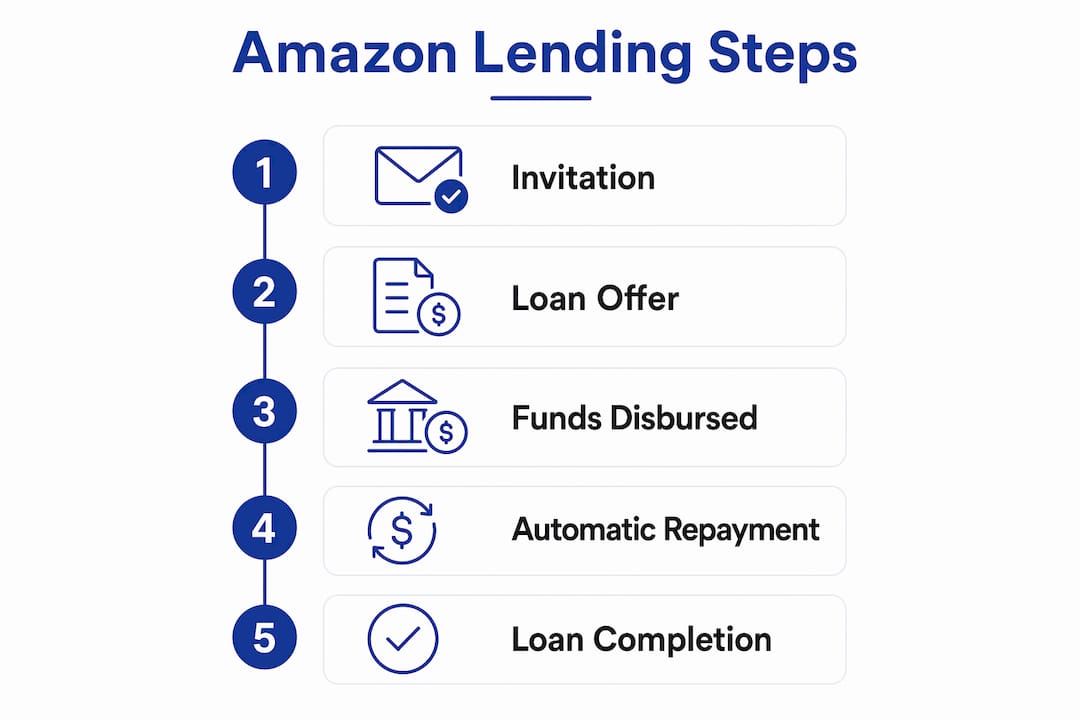
- Amazon Lending is an invitation-only program that provides short-term loans based on sellers’ marketplace metrics. It offers fast disbursement, mainly for inventory, with automatic repayments deducted from sales, which can pose cash flow risks during slow periods. Diversifying funding options and maintaining strong seller performance are key to maximizing benefits and managing repayment challenges effectively.
Amazon Lending is defined as an invitation-only financing program that provides eligible Amazon sellers with short-term loans funded directly through Amazon’s marketplace platform. Since 2011, the program has loaned over $3 billion to more than 20,000 businesses worldwide. That scale makes it one of the largest seller-focused financing programs in e-commerce. Unlike traditional bank loans, Amazon Lending uses your own sales data to pre-approve you, which means no credit bureau pulls and no lengthy applications. For sellers managing cash flow and scaling inventory, understanding how this program works is the first step toward using it well.
What is Amazon Lending and who qualifies?
Amazon Lending is a data-driven loan program, and qualification is invitation-only. You cannot apply directly. Amazon reviews your Seller Central performance and decides whether to extend an offer. That single fact changes how you should think about this program. You do not chase the loan. You build the metrics that make Amazon come to you.
The general eligibility benchmarks are well established. Sellers typically need:
- A professional selling account (not an individual plan)
- At least 12 months of active selling history on Amazon
- A minimum of $10,000 in monthly sales revenue
- Strong account health with low defect rates and minimal policy violations
- Consistent inventory turnover and positive customer feedback
What makes Amazon Lending different from a bank loan is the underwriting model. Amazon does not check your FICO score. Instead, it evaluates internal marketplace metrics like sales velocity, inventory turnover, buy box share, refund rates, and shipping speeds. That means a seller with a thin credit file but strong Amazon performance can qualify, while a seller with excellent personal credit but poor metrics will not.
The practical implication is clear. Your Seller Central dashboard is your loan application. Every metric you improve raises your chances of receiving an invitation.
Pro Tip: Focus on winning the buy box consistently. Buy box share is one of the internal signals Amazon uses in its lending decisions, and improving it also directly increases your sales velocity, creating a compounding effect on your eligibility.
To build toward an invitation, prioritize these areas in your Amazon business strategy:
- Maintain an order defect rate below 1%
- Keep your late shipment rate under 4%
- Respond to customer messages within 24 hours
- Avoid inventory stockouts that break your sales history
Amazon Lending loan terms, amounts, and repayment
Amazon Lending offers loans ranging from $1,000 to $750,000, with funds typically disbursed within two business days after you accept the agreement. That speed is one of the program’s strongest advantages over traditional small business loans, which can take weeks to process. The loan amount Amazon offers you is based on your sales history and performance data, not on what you request.

Here is a breakdown of the key loan characteristics:
| Feature | Details |
|---|---|
| Loan range | $1,000 to $750,000 |
| Disbursement time | Approximately 2 business days |
| Repayment method | Fixed monthly installments, auto-deducted from sales payouts |
| Fund use restriction | Primarily inventory purchases |
| Credit check | None. Based on Amazon performance metrics |
The repayment structure is where sellers need to pay close attention. Repayments are automatically deducted from your Amazon sales disbursements before the money ever reaches your bank account. This makes repayment frictionless during strong sales periods. During slow periods, it creates a real cash flow risk.
Imagine your sales drop 40% in a slow month. Amazon still deducts the fixed installment from whatever disbursement is available. If your disbursement is smaller than the installment, you may receive nothing that cycle. That is not a hypothetical. It is a pattern sellers experience during post-holiday slowdowns or when a product loses its buy box.
Pro Tip: Build a cash reserve equal to at least two months of loan installments before you accept an Amazon Lending offer. This buffer protects your operating cash flow if sales dip unexpectedly.
The fund use restriction is another constraint worth understanding. Amazon Lending funds are intended for inventory purchases. You cannot use them for advertising spend, warehouse upgrades, or hiring. This limits the program’s flexibility compared to a general business line of credit. If your growth bottleneck is marketing rather than stock, a different financing tool will serve you better.
How does Amazon Lending compare to other financing options?
Amazon Lending is not the only financing tool available to sellers in 2026. Amazon has expanded its credit offerings, and third-party lenders have built products specifically for e-commerce businesses.
Amazon launched new business credit cards powered by U.S. Bank and Mastercard, offering 0% APR installment plans for up to 12 months on eligible Amazon purchases. This is a meaningful alternative for sellers who are not yet invited to the lending program or who need financing flexibility beyond inventory. The card rewards structure also benefits sellers who make frequent Amazon-related purchases.
Beyond Amazon’s own products, sellers have several external options:
- Revenue-based financing: Platforms that advance capital against your future sales, repaid as a percentage of daily revenue rather than fixed installments. This structure adjusts automatically with your sales volume.
- Traditional SBA loans: Lower interest rates but require full credit checks, collateral, and months-long approval timelines. Best suited for established businesses with strong financials.
- Business lines of credit: Flexible draw-and-repay structures from banks or fintech lenders. No use restrictions, making them ideal for advertising, staffing, or operational costs.
- Inventory financing from third-party lenders: Specialized lenders who underwrite against your Amazon sales data, similar to Amazon Lending but without the invitation requirement.
The speed and no-credit-check advantage of Amazon Lending is real, but its restricted fund use limits business agility. Sellers who need capital for marketing, product development, or operational costs will find external options more practical.
Sellers focused on improving sales on Amazon should treat financing as one part of a broader growth plan, not a standalone solution. Diversifying your funding sources gives you options when Amazon’s invitation does not arrive on your timeline.
Best practices for managing Amazon Lending loans
Getting the loan is only half the work. Managing it well determines whether it accelerates your growth or creates financial stress.
The most important practice is maintaining the seller metrics that earned you the invitation in the first place. Amazon can adjust future loan offers based on performance changes. A decline in account health, a spike in refund rates, or a drop in sales velocity can reduce your next offer or remove you from the program entirely.
Cash flow planning around automatic repayments is non-negotiable. Monthly deductions from sales disbursements require you to maintain sufficient sales velocity at all times. Map out your seasonal sales patterns before accepting a loan. If you know your category slows in February and march, factor that into your repayment capacity before you commit.
Use the funds for high-turnover inventory, not slow-moving stock. The goal is to convert the loan into sales fast enough that repayments come from new revenue, not from your existing cash reserves. A product with a 30-day inventory cycle is a much better use of Amazon Lending funds than one with a 90-day cycle.
Keeping alternative lender relationships active is also sound practice. Amazon Lending’s invitation timing is unpredictable. You may need capital in october and not receive an offer until january. Sellers who maintain relationships with revenue-based lenders or hold a business line of credit never find themselves waiting on Amazon’s schedule. For sellers scaling across multiple product lines, tools that help you scale inventory efficiently reduce the risk of over-borrowing.
Finally, track the loan’s impact on your profit margins. Loan interest reduces net margin on every unit sold during the repayment period. If the inventory you purchased with the loan does not generate enough margin to cover both the cost of goods and the interest, the loan worked against you. Run the numbers before you accept, not after.
Key Takeaways
Amazon Lending is most effective when used as part of a diversified funding mix, with strong seller metrics as the foundation for both qualifying and managing repayments.
| Point | Details |
|---|---|
| Invitation-only access | You cannot apply directly. Build Seller Central metrics to attract an offer. |
| Loan range and speed | Loans from $1,000 to $750,000 are disbursed in approximately 2 business days. |
| Automatic repayment risk | Fixed installments are deducted from sales payouts, creating cash flow risk in slow periods. |
| Fund use restriction | Funds are intended for inventory purchases, not advertising or operations. |
| Diversify funding sources | Combine Amazon Lending with credit cards, revenue-based financing, or credit lines for full flexibility. |
My honest read on Amazon Lending in 2026
I have watched sellers treat Amazon Lending as a guaranteed growth lever, and I have watched that assumption backfire. The program is genuinely useful, but it rewards sellers who already have strong fundamentals. If your metrics are shaky, the loan will not fix the underlying problem. It will just add a repayment obligation on top of it.
The automatic repayment structure is the detail most sellers underestimate. When sales are strong, it feels invisible. When sales slow, it feels like a trap. The sellers who manage it best are the ones who treat the loan installment as a fixed operating cost from day one, not as something that will “work itself out.”
What I find genuinely interesting about 2026 is the expansion of Amazon’s own credit card products. The 0% APR installment option through U.S. Bank gives sellers outside the invitation program a real financing tool with fewer restrictions. For sellers who need capital for advertising or product launches rather than pure inventory, that card is worth serious consideration.
The deeper issue is that relying solely on Amazon Lending is risky because it evaluates you only within the Amazon ecosystem. Your total business revenue, your external assets, your growth trajectory outside Amazon. None of that factors in. A seller doing $500,000 a year on their own website gets no credit for it. Build your funding stack with that blind spot in mind.
The sellers who grow sustainably are the ones who use Amazon Lending as one tool among several, not as their entire capital strategy. Pair it with a credit line, keep a cash reserve, and never let a single platform control your access to growth capital.
— Goga
How Searchoneers helps you qualify for better financing
Your Amazon sales performance is the direct input into Amazon’s lending decisions. Sellers who rank higher, convert more visitors, and maintain strong account health receive better loan offers. That is where Searchoneers comes in.

Searchoneers specializes in Amazon listing enhancement that drives measurable sales growth. Better titles, sharper bullet points, optimized backend keywords, and data-backed SEO strategies all push your monthly revenue higher. Higher revenue clears the $10,000 monthly threshold faster and strengthens the sales velocity metrics Amazon uses in its lending decisions. When your listings perform, your financing options expand. Searchoneers also offers a complete listing optimization workflow built for sellers who want consistent, repeatable results across their entire catalog.
FAQ
What is Amazon Lending?
Amazon Lending is an invitation-only loan program that provides eligible Amazon sellers with short-term financing, primarily for inventory purchases, using Amazon’s internal performance data for underwriting.
How do I get invited to Amazon Lending?
Amazon reviews your Seller Central metrics, including sales velocity, account health, and inventory turnover, and sends invitations to qualifying sellers. You cannot apply directly.
What are the loan requirements for Amazon Lending?
Sellers generally need a professional account, at least 12 months of selling history, and a minimum of $10,000 in monthly sales revenue to be considered for an invitation.
How does Amazon Lending repayment work?
Repayments are fixed monthly installments automatically deducted from your Amazon sales disbursements before funds reach your bank account, which can create cash flow pressure during slow sales periods.
What are the alternatives to Amazon Lending?
Alternatives include Amazon business credit cards with 0% APR installment plans, revenue-based financing from third-party lenders, traditional SBA loans, and business lines of credit, each offering different flexibility and use-case advantages.