

Many Amazon sellers underestimate the power of well-researched keywords, assuming product quality alone will drive sales. In reality, keywords connect product listings with shopper searches, directly affecting visibility and sales. Without strategic keyword optimization, even exceptional products remain invisible to potential buyers. This guide reveals why keywords matter for Amazon success and how to leverage them effectively to boost product visibility, attract qualified traffic, and increase conversions through proven optimization strategies.
Table of Contents
- Key takeaways
- How keywords influence Amazon product visibility and sales
- The power of long-tail keywords for targeted traffic and conversions
- Why keyword stuffing is outdated and what drives Amazon title optimization
- Applying keyword strategies to optimize your Amazon listings effectively
- Boost your Amazon sales with expert listing optimization
- Frequently asked questions
Key Takeaways
| Point | Details |
|---|---|
| Keywords drive visibility | Keywords connect product listings to shopper searches and directly affect visibility and sales. |
| Long tail advantage | Long tail keywords reduce competition and boost conversions, often with three to five or more words that express specific buyer intent. |
| Align with buyer intent | Use keywords that reflect actual shopper behavior and avoid industry jargon to improve click through and conversions. |
| PPC boosts rankings | PPC driven sales can lift organic rankings through velocity and impressions, even when not tied to specific keywords. |
| Strategic placement | Place relevant keywords in titles, bullets, descriptions, and backend terms to improve visibility and click through. |
How keywords influence Amazon product visibility and sales
Amazon’s A9 algorithm operates as a matching engine between shopper queries and product listings. When customers search for items, the algorithm scans millions of listings to identify those containing relevant keywords in titles, bullet points, descriptions, and backend search terms. Your product’s visibility depends entirely on this keyword matching process.
Including relevant keywords in strategic listing locations increases your chances of appearing in search results. Products that rank higher receive more impressions, which translates to more potential buyers viewing your offer. This visibility advantage compounds over time as better rankings generate more clicks and sales.
Well-chosen keywords do more than improve search rank. They directly impact buyer decision-making by clearly communicating what your product offers. When shoppers see their search terms reflected in your title and bullets, they immediately recognize your product as relevant to their needs. This recognition increases click-through rates significantly.
The relationship between keywords and conversions extends beyond initial visibility. Strategic Amazon SEO optimization ensures your listing attracts qualified traffic rather than casual browsers. Qualified visitors who find exactly what they searched for convert at much higher rates than those who clicked on vague or misleading listings.
Pro Tip: Focus on keywords that reflect actual buyer search behavior rather than industry jargon. Customers rarely search using technical terms, so prioritize natural language phrases that match how real people shop.
Consider these keyword impact factors:
- Search algorithm matching determines initial product visibility
- Keyword relevance affects click-through rates from search results
- Strategic placement influences both organic and sponsored ranking
- Conversion rates improve when keywords align with buyer intent
The visibility and sales cycle creates a powerful feedback loop. Higher keyword relevance leads to better rankings, which generate more impressions and clicks. Increased traffic produces more sales, which signals to Amazon that your product deserves even higher placement. This virtuous cycle rewards sellers who invest time in proper keyword research and implementation.
The power of long-tail keywords for targeted traffic and conversions
Long-tail keywords offer up to a 60% reduction in competition and 15-30% conversion boosts, making them essential for sellers seeking sustainable growth. These phrases contain three to five or more words, reflecting specific buyer intent that broad keywords cannot capture. While generic terms like “water bottle” attract massive competition, long-tail variations like “insulated water bottle for hiking 32 oz” target shoppers ready to purchase.
The competitive advantage becomes clear when comparing keyword types:
| Keyword Type | Search Volume | Competition Level | Conversion Rate | Strategic Value |
|---|---|---|---|---|
| Broad keywords | Very high | Extremely high | Low to moderate | Limited for new sellers |
| Medium-tail keywords | Moderate | High | Moderate | Good for established products |
| Long-tail keywords | Lower | Low to moderate | High | Excellent for targeted growth |
Long-tail keywords face dramatically less competition because fewer sellers optimize for these specific phrases. This reduced competition means your product has a realistic chance of ranking on the first page, even without extensive sales history or reviews. New sellers particularly benefit from this accessibility.

These keywords attract more qualified traffic because they reflect detailed purchase intent. A shopper searching for “organic baby food pouches stage 2” knows exactly what they need and is much closer to buying than someone searching just “baby food.” This specificity translates directly into higher conversion rates and better return on your optimization efforts.
Targeting purchase intent over raw search volume delivers stronger sales impact. While broad keywords might generate more impressions, long-tail phrases produce more revenue per click. The math favors quality over quantity when evaluating keyword performance.
Pro Tip: Use customer reviews and questions to identify long-tail keyword opportunities. Shoppers often describe products using the exact phrases they searched for, giving you direct insight into effective keyword variations.
Implementing long-tail strategy requires understanding these principles:
- Specific phrases indicate higher purchase readiness
- Lower competition allows faster ranking improvements
- Better conversion rates offset lower search volumes
- Multiple long-tail keywords compound to significant traffic
Successful sellers build comprehensive keyword optimization strategies around long-tail phrases rather than chasing impossible broad terms. This approach creates sustainable visibility that grows steadily as you add more targeted keywords to your listing. The cumulative effect of ranking for dozens of long-tail phrases often exceeds the traffic from a single competitive broad keyword.
Consider the essential roles of keywords when planning your optimization approach. Each keyword type serves distinct purposes in attracting and converting shoppers throughout their buying journey.
Why keyword stuffing is outdated and what drives Amazon title optimization
Top Amazon sellers use shorter, clearer titles prioritizing clarity over keyword density, marking a significant shift in optimization best practices. Keyword stuffing creates cluttered, unreadable titles that confuse shoppers and damage conversion rates. Modern buyers expect clear, professional product presentations that communicate value immediately.
Clarity and relevance in titles improve buyer trust and click-through rates far more effectively than cramming every possible keyword variation. When shoppers see a clean, informative title, they perceive your product as legitimate and professionally managed. Messy, keyword-stuffed titles trigger skepticism and reduce the likelihood of clicks even when your product appears in search results.
Amazon’s algorithm has evolved to favor sales performance and velocity over pure keyword density. The system recognizes that conversion rates matter more than keyword count. A listing with fewer keywords but higher sales will outrank a keyword-stuffed listing with poor performance. This algorithmic shift rewards sellers who prioritize buyer experience.
PPC efforts can boost organic sales velocity, but they do not directly improve keyword ranking through some hidden connection. Instead, advertising generates sales that signal product quality to the algorithm. This performance boost elevates your organic ranking across all relevant keywords, not just the ones you advertise. The relationship operates through sales velocity rather than keyword targeting.
Pro Tip: Test title variations using PPC campaigns to identify which phrasing generates the highest conversion rates, then apply those insights to your organic title optimization.
Modern title optimization follows these principles:
- Lead with your primary keyword and key product features
- Include only the most relevant secondary keywords naturally
- Prioritize readability and professional presentation
- Avoid repetitive keyword variations that add no value
- Focus on conversion-driving information over algorithm manipulation
The misconception that more keywords equal better ranking has cost sellers significant revenue. Cluttered titles reduce click-through rates, which Amazon interprets as low relevance. Lower clicks mean fewer sales, which triggers ranking declines. This downward spiral demonstrates why effective title optimization balances keyword inclusion with buyer appeal.
Understanding what makes a good Amazon title requires recognizing that human readers matter more than algorithms. Your title must convince shoppers to click while containing enough keywords for discoverability. This balance separates successful listings from those that struggle despite extensive optimization efforts.
The evidence against keyword stuffing continues mounting as Amazon refines its algorithm to reward genuine quality signals. Sellers who adapt to this reality by creating clear, benefit-focused titles position themselves for sustainable success in an increasingly competitive marketplace.
Applying keyword strategies to optimize your Amazon listings effectively
Strategic keyword placement across titles, bullets, backend terms boosts visibility and conversion when implemented with clear purpose. Each listing section serves distinct functions in your overall keyword strategy, requiring tailored approaches for maximum impact.
Place primary keywords in your product title and subtitle for maximum algorithmic and buyer impact. These positions carry the most weight in search ranking and receive the most attention from shoppers. Your title should feature your most important keyword naturally integrated with key product attributes that drive purchase decisions.
Use bullet points for secondary and supporting keywords that expand on product benefits and features. Bullets allow you to incorporate additional search terms while providing valuable information that helps shoppers understand why they should buy. This dual purpose makes bullets essential for both SEO and conversion optimization.
Backend search terms capture missed relevant keywords without cluttering your visible listing. These hidden fields let you include spelling variations, synonyms, and related terms that shoppers might use but do not fit naturally into your customer-facing content. Maximize this space to cover all relevant search possibilities.
| Listing Section | Primary Purpose | Keyword Strategy | Character Limit |
|---|---|---|---|
| Product Title | Search ranking and first impression | Primary keyword plus key features | 200 characters |
| Bullet Points | Feature communication and secondary keywords | Natural integration with benefits | 500 per bullet |
| Backend Search Terms | Coverage of variations and synonyms | Comprehensive keyword capture | 250 bytes |
| Product Description | Detailed information and tertiary keywords | Supporting terms with storytelling | 2000 characters |
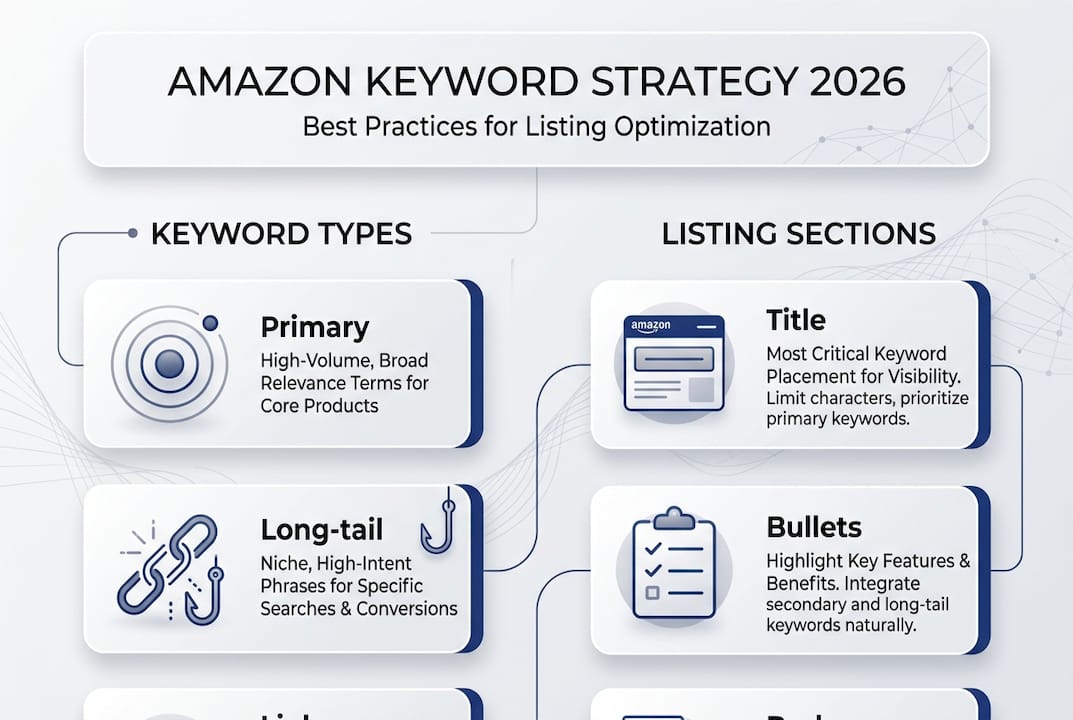
Avoid keyword duplication across listing sections, but ensure you cover all relevant search phrases shoppers might use. Repeating the same keyword multiple times provides no additional ranking benefit and wastes valuable space. Instead, use that space for additional unique keywords that expand your visibility.
Regularly update your keyword strategy based on performance data and competitive changes. Search trends evolve as new products enter the market and customer language shifts. Quarterly keyword audits help you identify new opportunities and eliminate underperforming terms.
Pro Tip: Use Amazon’s Search Query Performance report to identify which keywords actually drive impressions and sales, then prioritize those terms in your listing optimization.
Follow this optimization sequence:
- Research keywords using tools and competitor analysis
- Prioritize terms based on relevance, volume, and competition
- Place primary keywords in title and subtitle positions
- Distribute secondary keywords across bullet points naturally
- Fill backend search terms with variations and synonyms
- Monitor performance and adjust based on data
- Test variations to continuously improve results
Implementing comprehensive listing optimization strategies requires systematic attention to each listing element. Use a detailed checklist to ensure you optimize every component consistently across your catalog.
Understanding the distinct roles keywords play in different listing sections prevents wasted effort and focuses your optimization on high-impact activities. Each keyword serves specific purposes in attracting, informing, and converting shoppers throughout their buying journey.
Successful optimization balances algorithmic requirements with human readability. Your listing must satisfy Amazon’s search algorithm to gain visibility while persuading actual shoppers to choose your product over competitors. This dual focus separates amateur optimization from professional-grade listing enhancement.
Boost your Amazon sales with expert listing optimization
Mastering keyword strategy represents just the beginning of comprehensive Amazon success. Implementing these proven optimization techniques requires systematic workflows and ongoing refinement to maintain competitive advantages in dynamic marketplace conditions.
Transform your product visibility and sales performance through expert-backed strategies designed specifically for Amazon sellers. Our comprehensive guides provide step-by-step frameworks that remove guesswork from the optimization process.

Access detailed listing enhancement workflows that walk you through every optimization decision from keyword research to performance monitoring. These resources compile years of marketplace expertise into actionable processes you can implement immediately.
Follow proven optimization workflows tailored for sellers at every experience level. Whether you manage five products or five hundred, systematic approaches ensure consistent quality across your entire catalog.
Discover complete Amazon SEO strategies that integrate keyword optimization with broader visibility tactics. Comprehensive approaches address every ranking factor to maximize your marketplace presence and drive sustainable sales growth.
Frequently asked questions
Why are keywords important for Amazon sellers?
Keywords help Amazon match your product listing to shopper searches, determining whether potential buyers ever see your offer. Without relevant keywords in titles, bullets, and backend terms, your product remains invisible regardless of quality or price. Strategic keyword use directly improves visibility, click-through rates, and ultimately sales by connecting your products with customers actively searching for what you sell. Learn more about optimizing keywords effectively and understanding their essential roles.
How do long-tail keywords improve my Amazon sales?
Long-tail keywords focus on specific buyer intent with less competition, leading to better conversions and more qualified traffic. These detailed phrases attract shoppers who know exactly what they want and are ready to purchase. While broad keywords generate more searches, long-tail variations produce higher conversion rates because they match precise customer needs. Targeting multiple long-tail keywords compounds into significant traffic that converts reliably. Discover advanced keyword optimization techniques to maximize this advantage.
Is keyword stuffing still effective on Amazon?
Keyword stuffing is ineffective and can reduce clarity and buyer trust, making it a counterproductive strategy in modern Amazon optimization. Cluttered titles confuse shoppers and lower conversion rates, which signals poor relevance to Amazon’s algorithm. Focus on relevant keywords naturally integrated into clear, benefit-focused content that persuades buyers while satisfying search requirements. Modern ranking prioritizes sales performance over keyword density. Explore effective title optimization strategies that balance discoverability with conversion.
Where should I place keywords in my Amazon listing?
Strategic placement in titles, bullet points, and backend terms maximizes keyword benefit by serving each section’s distinct purpose. Include your primary keyword in the product title and subtitle for maximum search weight and buyer attention. Use bullet points to incorporate secondary keywords while communicating product benefits and features. Fill backend search terms with variations, synonyms, and related phrases that do not fit naturally in visible content. This comprehensive approach ensures maximum visibility across all relevant searches.

Comments
2 responses to “Why Keywords Are Important for Amazon Sellers in 2026”
[…] why keywords matter is the first step, because the right keyword research can significantly increase the visibility of […]
[…] strategic keyword mix is critical for discoverability, because the algorithm weighs relevance signals from multiple […]