

TL;DR:
- Amazon’s core strategy relies on three interconnected flywheels—Marketplace, AWS, and Advertising—that reinforce each other to create a sustainable competitive moat. Its extensive logistics network uses AI-driven demand forecasting and micro-fulfillment centers to speed delivery while reducing costs, supporting aggressive retail expansion. The company’s future growth hinges on massive investments in AI, cloud infrastructure, rural delivery, and innovative delivery methods to maintain and expand its ecosystem dominance.
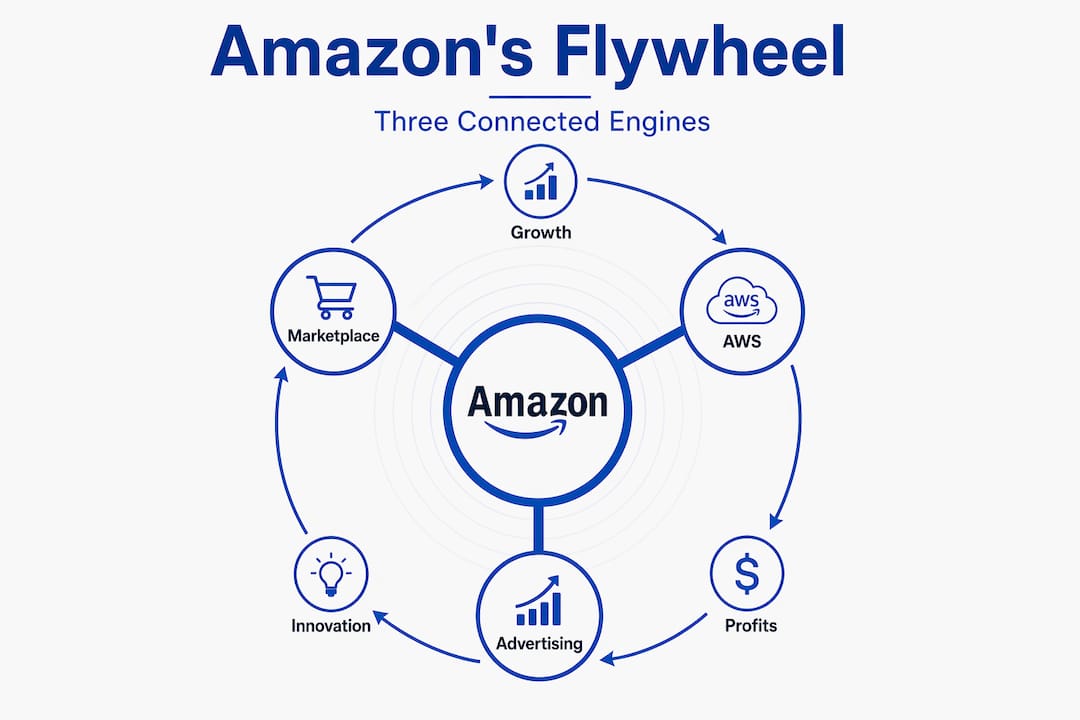
Most people credit Amazon’s dominance to cheap prices and a massive product catalog. That explanation misses almost everything. The real business strategy of Amazon is an interlocked system of three self-reinforcing engines — Marketplace, AWS, and Advertising — supported by one of the most sophisticated logistics networks ever built. Understanding how these elements compound on each other is not just interesting. It is a masterclass in strategic design that every business professional should study closely.
Table of Contents
- Key takeaways
- Amazon’s business strategy: three flywheels working as one
- Amazon’s logistics machine
- Strategic initiatives shaping Amazon’s next decade
- Amazon’s competitive advantage in the e-commerce ecosystem
- My take on what Amazon’s strategy actually teaches us
- Turn Amazon’s strategy into your competitive edge
- FAQ
Key takeaways
| Point | Details |
|---|---|
| Three synergistic flywheels | Marketplace, AWS, and Advertising reinforce each other, creating a competitive moat no single-segment rival can match. |
| Logistics as a strategic weapon | Amazon’s 847 micro-fulfillment centers and AI-driven predictive stocking cut delivery times by 52% and shipping costs by 34%. |
| Cross-subsidization at scale | High-margin AWS and Advertising profits fund aggressive retail pricing and infrastructure investment. |
| $200B capital commitment | Amazon’s 2026 capex targets AI, cloud, and fulfillment expansion based on signed customer demand. |
| Independent sellers drive volume | Over 60% of units sold on Amazon come from third-party sellers, amplifying selection without proportional cost. |
Amazon’s business strategy: three flywheels working as one
Most companies operate one business model. Amazon operates three, and each one makes the others stronger. That structural design is the foundation of the Amazon business model and the reason competitors consistently struggle to close the gap.
The Marketplace flywheel is the most visible. More sellers bring more selection, which attracts more customers, which attracts more sellers. But the revenue it generates is only part of the story. Marketplace data flows into Amazon’s demand forecasting, pricing algorithms, and advertising products. Every transaction teaches the system something.
AWS is the engine most outsiders underestimate. Amazon built world-class cloud infrastructure for its own retail operations, then opened that infrastructure to the world. AWS now funds significant portions of Amazon’s retail ambitions. It is not a side project. It is the financial backbone that allows Amazon to absorb losses in new markets while competitors cannot.
Advertising is the flywheel most people forget. Amazon’s advertising platform has grown into the third largest in the world, generating over $50 billion in revenue at approximately 60% margins. Those profits directly subsidize lower retail prices and infrastructure investments. A consumer goods company pays Amazon to advertise. Amazon uses that money to make its delivery faster and its prices lower. That is cross-subsidization working at industrial scale.
The strategic power here is in the combination. As Amazon’s flywheels analysis notes, no competitor operates across e-commerce, cloud, and advertising simultaneously. Walmart has retail scale. Google has advertising scale. Microsoft has cloud scale. None of them have all three feeding each other on shared infrastructure.
- Shared data centers serve both AWS customers and Amazon’s retail operations, spreading fixed costs
- Advertising insights from Marketplace behavior make AWS customer targeting more precise
- AWS profits give Amazon the financial patience to invest in retail at near-zero margins for years
- Each flywheel’s growth accelerates the others, compounding the advantage over time
Pro Tip: When analyzing any competitor’s response to Amazon, ask which of the three flywheels they are attacking. A retailer cutting prices only addresses one flywheel. That is why most price wars with Amazon end poorly for the challenger.
Amazon’s logistics machine
Amazon’s fulfillment capability is not just fast. It is architecturally different from anything traditional retailers have built. The investment required to replicate it is measured in decades and hundreds of billions of dollars.
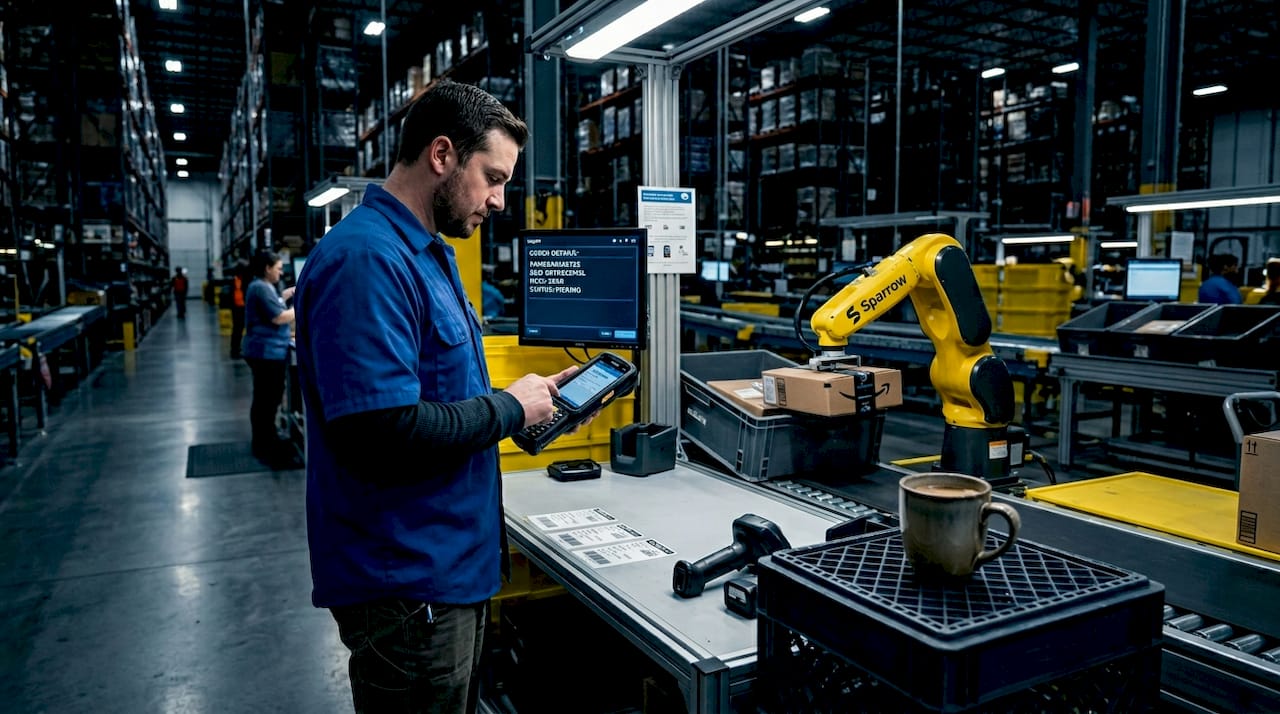
The numbers tell a clear story. Amazon’s regional strategy uses 847 micro-fulfillment centers within 15 miles of major metropolitan areas, reducing delivery times by 52% and cutting shipping costs by 34%. Those are not incremental improvements. They represent a structural cost and speed advantage that compounds with every new fulfillment center added.
The deeper innovation is predictive. Amazon’s AI-driven logistics forecast demand two to four weeks in advance, allowing inventory to be pre-positioned before customers even search for a product. In practice, this means a customer ordering a product in Chicago may already have that item warehoused two miles from their home. The order confirmation and the delivery truck leave almost simultaneously.
| Logistics capability | Operational impact |
|---|---|
| 847 micro-fulfillment centers | 52% reduction in delivery times near major metros |
| AI predictive demand forecasting | Inventory pre-positioned 2 to 4 weeks ahead of demand |
| Delivery Service Partner (DSP) program | Last-mile delivery at lower cost than traditional carriers |
| Amazon Air cargo network | Overnight delivery for Prime members across major routes |
| Robotics (Sparrow, Sequoia systems) | 200 to 400 basis point improvement in retail operating margins projected |
Amazon’s robotics investments deserve particular attention. Systems like the Sparrow robotic arm and Sequoia flow management are not about replacing workers. They are about permanent margin improvement of 200 to 400 basis points in retail operating margins over five years. That means a business that currently runs thin retail margins gets measurably more profitable every year without raising prices.
The last-mile strategy is equally deliberate. Amazon’s Delivery Service Partner program routes packages through independent local carriers that Amazon trains, equips, and monitors. This creates a flexible, scalable last-mile network that traditional logistics companies cannot easily match on cost or speed.
Pro Tip: Amazon is increasingly positioning its logistics network as a logistics-as-a-service platform for third-party enterprise customers. Watch Amazon Supply Chain Services. It turns a cost center into a profit center while deepening competitive moats.
Strategic initiatives shaping Amazon’s next decade
If the three flywheels explain where Amazon is today, the strategic initiatives of Amazon explain where it is going. The scale of investment is staggering. Amazon is committing approximately $200 billion in 2026 capital expenditures focused on AI, cloud infrastructure, and fulfillment expansion. This is not speculative spending. It is backed by signed customer contracts and demonstrated demand.
Here is where that capital is flowing and why each bet matters strategically:
- Rural delivery dominance. Amazon’s rural logistics expansion targets surpassing USPS package volume by 2028. This is not just about reaching more customers. It is about becoming a major parcel carrier that can offer shipping services to any business, not just its own marketplace.
- Ultra-fast grocery and consumables. Amazon’s grocery business has reached $150 billion in gross sales, with perishables in Same-Day Delivery growing over 40 times since early 2025. The speed of that growth signals a serious structural push into daily essentials, not just durables.
- Amazon Now and drone logistics. Sub-one-hour delivery programs are in active expansion. Drone delivery pilots are moving from experiment to operational deployment in select markets. These are not publicity stunts. They are infrastructure building blocks for the next competitive threshold in delivery speed.
- Satellite connectivity via Project Kuiper. Amazon’s satellite internet network, built on AWS edge computing, extends Amazon’s addressable market to regions where broadband infrastructure is weak. It also creates a new revenue stream and a new surface for AWS expansion.
- Full-stack AI ownership. AWS positions itself as a neutral AI platform through Bedrock, offering multiple AI models to avoid vendor lock-in concerns among enterprise customers. This is a deliberate counter to the perception that using AWS means depending on a single AI provider.
Amazon CEO Andy Jassy has been explicit about the philosophy driving these bets. His approach is to reinvent experiences from first principles using new technology rather than incrementally improving what exists. That mindset explains why Amazon does not just make its delivery slightly faster. It rebuilds the delivery architecture entirely.
Amazon’s competitive advantage in the e-commerce ecosystem
Amazon’s operational excellence is not a collection of independent best practices. It is a system where technology, data, culture, and scale each amplify the others. Understanding this as a whole explains how Amazon drives growth consistently across economic cycles.
Machine learning is embedded at every decision layer. Demand forecasting, pricing adjustments, search ranking, advertising placement, and fulfillment routing all run on models trained on years of behavioral data. A seller on the platform benefits from this infrastructure even if they do not know it exists. A competitor trying to match it starts with none of that training data.
The seller ecosystem deserves focused attention. Over 60% of units sold on Amazon come from independent third-party sellers. This means Amazon captures significant revenue through fees and advertising without bearing the inventory risk. The more sellers compete on the platform, the better the selection for customers, the more customers arrive, the more sellers want access. That cycle has no natural ceiling.
Amazon’s culture also functions as a strategic asset. The leadership principles are not wall decorations. They operationalize long-term thinking, frugality, and customer obsession in ways that directly counter short-term profit pressures that slow most large organizations. When AWS was losing money, Amazon funded it anyway. When same-day delivery required years of infrastructure before turning profitable, Amazon built it anyway. Few public companies sustain that patience.
The financial architecture that makes all of this possible circles back to the flywheel structure. AWS and advertising profits cross-subsidize the retail cost structure, allowing Amazon to price competitively in categories where a pure-play retailer would need higher margins to survive. You can explore ecommerce marketing strategies that align with this ecosystem to see how sellers can position themselves within it effectively.
My take on what Amazon’s strategy actually teaches us
I’ve spent years studying how businesses build durable advantages, and Amazon’s integrated flywheel approach is one of the clearest examples I’ve encountered of a strategy that is genuinely hard to reverse-engineer.
What strikes me most is not the technology or the logistics. It’s the patience. Amazon has accepted years of near-zero retail margins because leadership understood that building infrastructure at scale creates advantages that compound indefinitely. Most businesses optimize for the next quarter. Amazon optimizes for the next decade.
I do think there are real risks that strategists tend to underweight. Regulatory scrutiny is accelerating across the EU and the US, particularly around Marketplace practices and AWS dominance. If Amazon is forced to structurally separate its business units, the cross-subsidization that powers the whole system could be constrained. That is not a remote scenario. It’s an active conversation in multiple jurisdictions.
The lesson I keep returning to for business strategists is this: the business tactics of Amazon work because they are connected. Cutting prices is a tactic. Building three interlocked flywheels that each fund the others is a strategy. The difference between those two things is the difference between a temporary advantage and a structural one. If you study Amazon’s competitive strategy carefully, you stop asking “how do they afford this?” and start asking “how do we build something that finances itself the same way?”
— Goga
Turn Amazon’s strategy into your competitive edge
Understanding the business strategy of Amazon is one thing. Positioning your products to win within that system is another challenge entirely.

At Searchoneers, we help sellers capture the opportunity that Amazon’s ecosystem creates. Your listing is your first impression inside one of the most competitive retail environments on the planet, and a weak listing leaves money on the table every single day. Our listing enhancement guide walks you through exactly how to optimize titles, bullet points, descriptions, and backend keywords to align with how Amazon’s algorithm actually ranks and rewards products. If you want a proven process, our optimization workflow for sellers gives you a step-by-step system built for real results. Now is the time to act.
FAQ
What is the core business strategy of Amazon?
Amazon’s business strategy is built on three synergistic flywheels: Marketplace, AWS, and Advertising. These segments share infrastructure and cross-subsidize each other, creating competitive advantages that no single-segment rival can easily replicate.
How does Amazon use AWS to fund retail growth?
AWS generates high-margin cloud computing profits that Amazon redirects toward retail pricing and fulfillment infrastructure investment. This cross-subsidization allows Amazon to price aggressively in retail without sacrificing overall profitability.
What makes Amazon’s logistics network different?
Amazon operates 847 micro-fulfillment centers near major metros, uses AI to forecast demand two to four weeks in advance, and pre-positions inventory before orders are placed. This reduces delivery times by 52% and cuts shipping costs by 34% compared to traditional fulfillment models.
How do independent sellers fit into the Amazon business model?
Third-party sellers account for over 60% of units sold on Amazon. They expand selection without Amazon bearing inventory risk, while generating fee and advertising revenue that funds further platform investment.
What are Amazon’s biggest strategic bets for the future?
Amazon is investing approximately $200 billion in 2026 on AI, cloud infrastructure, rural delivery expansion, ultra-fast grocery delivery, drone logistics, and its Project Kuiper satellite network, all designed to extend its lead across e-commerce, cloud, and logistics simultaneously.

Comments
2 responses to “Business Strategy of Amazon: What Sets It Apart”
[…] Business Strategy of Amazon: What Sets It Apart – Searchoneers […]
[…] Business Strategy of Amazon: What Sets It Apart – Searchoneers […]