

Standing out among over 600 million products on Amazon is the defining challenge for sellers in 2026. The difference between a listing that converts and one that gets buried comes down to strategic optimization aligned with Amazon’s evolving A10 algorithm. This guide walks you through preparation, proven techniques, common pitfalls, and measurable results to transform your product visibility and sales performance through data-driven listing enhancement.
Table of Contents
- Understanding Amazon’s A10 Algorithm And Marketplace Landscape
- Preparing Your Amazon Listing For Optimization Success
- Step-By-Step Optimization Techniques For Higher Visibility And Conversion
- Common Mistakes To Avoid And How To Test Optimization Results
- Optimize Your Amazon Listings With Searchoneers
- Frequently Asked Questions
Key takeaways
| Point | Details |
|---|---|
| A10 prioritizes engagement | Amazon’s algorithm values customer satisfaction and fulfillment quality over paid advertising spend. |
| AI assistant Rufus drives sales | Shoppers using Rufus are 60% more likely to purchase, making voice optimization critical. |
| Systematic optimization works | Strategic title, keyword, image, and backend refinements boost search visibility measurably. |
| Testing validates improvements | A/B testing and analytics confirm which changes actually increase conversion rates. |
| Common errors hurt rankings | Keyword stuffing, poor images, and ignoring mobile experience damage visibility and sales. |
Understanding Amazon’s A10 algorithm and marketplace landscape
Amazon’s A10 algorithm prioritizes customer engagement, seller authority, and fulfillment quality over paid signals alone. This shift fundamentally changes how sellers should approach optimization in 2026. Unlike previous iterations that heavily weighted advertising spend, A10 surfaces products most likely to satisfy customer needs based on authentic engagement metrics.
The algorithm evaluates several key factors simultaneously. Customer satisfaction signals like click-through rates, time spent on listing pages, and purchase completion carry substantial weight. Seller authority builds through consistent positive reviews, low return rates, and reliable fulfillment. Product listing quality matters through completeness of information, relevance to search queries, and alignment with shopper intent.
Competing in this environment requires understanding the scale of the challenge. The marketplace contains hundreds of millions of active listings, creating intense competition for visibility in search results. Your product must not only meet technical requirements but genuinely serve customer needs better than alternatives to rank consistently.
Three core principles guide effective optimization:
- Align every listing element with specific customer search intent and questions
- Prioritize engagement metrics over advertising budget allocation
- Build seller authority through fulfillment excellence and customer satisfaction
Pro Tip: Focus optimization efforts on the factors A10 weighs most heavily. Customer engagement signals from your listing page predict ranking success better than any other metric. When shoppers spend time reading your content, click images, and complete purchases, Amazon interprets these as quality signals worth rewarding with higher placement.
Understanding this foundation helps you optimize for Amazon search product visibility strategically rather than guessing at tactics. The algorithm rewards sellers who demonstrate genuine value to customers through every aspect of their listings. This knowledge directly informs the preparation and execution steps that follow, ensuring your efforts target the factors that actually move rankings and sales. Ready to build on this foundation? The next section covers essential preparation before implementing optimization tactics, following the proven approach outlined in our Amazon listing enhancement guide sales framework.
Preparing your Amazon listing for optimization success
Effective optimization starts with thorough preparation, not random changes to your listing. You need specific data and insights before making strategic decisions that impact visibility and conversion rates. This preparation phase separates successful sellers from those who waste time on ineffective tactics.
Start by collecting comprehensive product information. Gather high-resolution images from multiple angles, detailed specifications, customer questions from previous sales channels, and any existing feedback or reviews. Document your product’s unique value proposition and the specific problems it solves for customers. This foundational content becomes raw material for optimization.

Keyword research forms the backbone of Amazon optimization. Identify terms your target customers actually use when searching for products like yours. Look beyond obvious keywords to discover long-tail phrases that indicate purchase intent. Tools like Amazon’s search suggestion feature reveal what shoppers type, while competitor analysis shows which terms drive traffic to successful listings in your category.
Competitor analysis provides strategic intelligence you cannot get elsewhere. Examine the top 10 listings for your primary keywords and document:
- Title structures and keyword placement patterns
- Bullet point formatting and benefit emphasis
- Image quality, variety, and lifestyle context
- Review themes highlighting strengths and weaknesses
- Pricing strategies and promotional approaches
Create a comprehensive optimization checklist covering every listing element. Your checklist should include product title optimization, bullet point enhancement, description refinement, backend keyword population, image quality verification, and A+ content planning if eligible. This systematic approach, detailed in our listing optimization workflow amazon sellers guide, ensures nothing gets overlooked.
Organize your research findings in a structured format for easy reference during optimization. A simple spreadsheet works well:
| Element | Current State | Target Keywords | Competitor Insights | Priority |
|---|---|---|---|---|
| Title | Basic product name | 5-7 high-volume terms | Top sellers use benefit-focused titles | High |
| Bullets | Feature list only | Secondary keywords | Competitors emphasize outcomes | High |
| Images | 3 basic photos | N/A | Leaders use 7+ lifestyle images | Medium |
| Backend | Partially filled | Long-tail variations | Hidden opportunity | Medium |
This preparation phase typically takes 3 to 5 hours but dramatically improves optimization results. You are building a strategic foundation rather than making reactive changes. The data you gather directly informs every decision in the execution phase, ensuring your efforts target the highest-impact opportunities. Our amazon competitor analysis workflow provides additional frameworks for extracting actionable insights from competitor research.
With preparation complete, you are ready to implement specific optimization techniques that leverage Amazon’s ranking factors and emerging shopper behaviors. The next section translates your research into concrete listing improvements.
Step-by-step optimization techniques for higher visibility and conversion
Transforming research into optimized listings requires systematic execution across every customer touchpoint. Each element serves a specific purpose in Amazon’s ranking algorithm and shopper decision-making process. Follow these proven techniques to maximize both visibility and conversion.
Craft a strategic product title that balances keywords with readability. Include your primary keyword within the first 80 characters, add 2 to 3 secondary keywords naturally, and incorporate a key benefit or specification. Avoid keyword stuffing that makes titles unreadable. Amazon allows up to 200 characters, but shoppers only see the first 80 in search results, making that space premium real estate.
Optimize bullet points to address customer questions and objections directly. Start each bullet with a benefit statement, then support it with a specific feature or specification. Incorporate secondary keywords naturally while maintaining conversational flow. Focus on outcomes customers care about rather than technical jargon. Most effective listings use all five available bullet points to maximize information density.
Upload high-quality images that meet Amazon’s technical requirements and showcase your product comprehensively. Include a main image with pure white background, lifestyle images showing the product in use, comparison images highlighting size or scale, detail shots of key features, and infographic images explaining benefits. Customers who interact with Rufus are 60 percent more likely to complete a purchase, and quality images help Rufus understand and recommend your product accurately.
Populate backend search terms with relevant keywords not already in your visible content. Use all available character space with synonyms, alternate spellings, and long-tail variations. Avoid repeating keywords from your title or bullets, as Amazon only indexes each term once. Focus on terms customers might use but that do not fit naturally in customer-facing content.
Optimize for AI shopping assistants like Rufus by structuring content for voice and chat queries. Amazon’s AI shopping assistant Rufus handles over 274 million daily queries and drives $10 billion in incremental sales, making it a critical visibility channel. Use natural language patterns, answer common questions directly in your description, and structure information hierarchically so AI can extract relevant details easily.
Write a compelling product description that expands on bullet points with storytelling and context. Address use cases, compare your product to alternatives, and overcome common objections. Structure content with short paragraphs and clear headings so shoppers can scan quickly. This section also feeds Rufus and other AI systems with context about your product.
Pro Tip: Optimize your listing for mobile shoppers who represent the majority of Amazon traffic in 2026. Test how your title displays on small screens, verify images are clear at thumbnail size, and ensure bullet points communicate value in the first few words. Mobile optimization directly impacts both organic rankings and conversion rates across all devices.
These techniques work together as a system rather than isolated tactics. Your title drives initial visibility, images capture attention, bullets communicate value quickly, and descriptions provide depth for serious buyers. Backend keywords expand your reach to additional search queries. Each element reinforces the others to create a cohesive, high-converting listing.
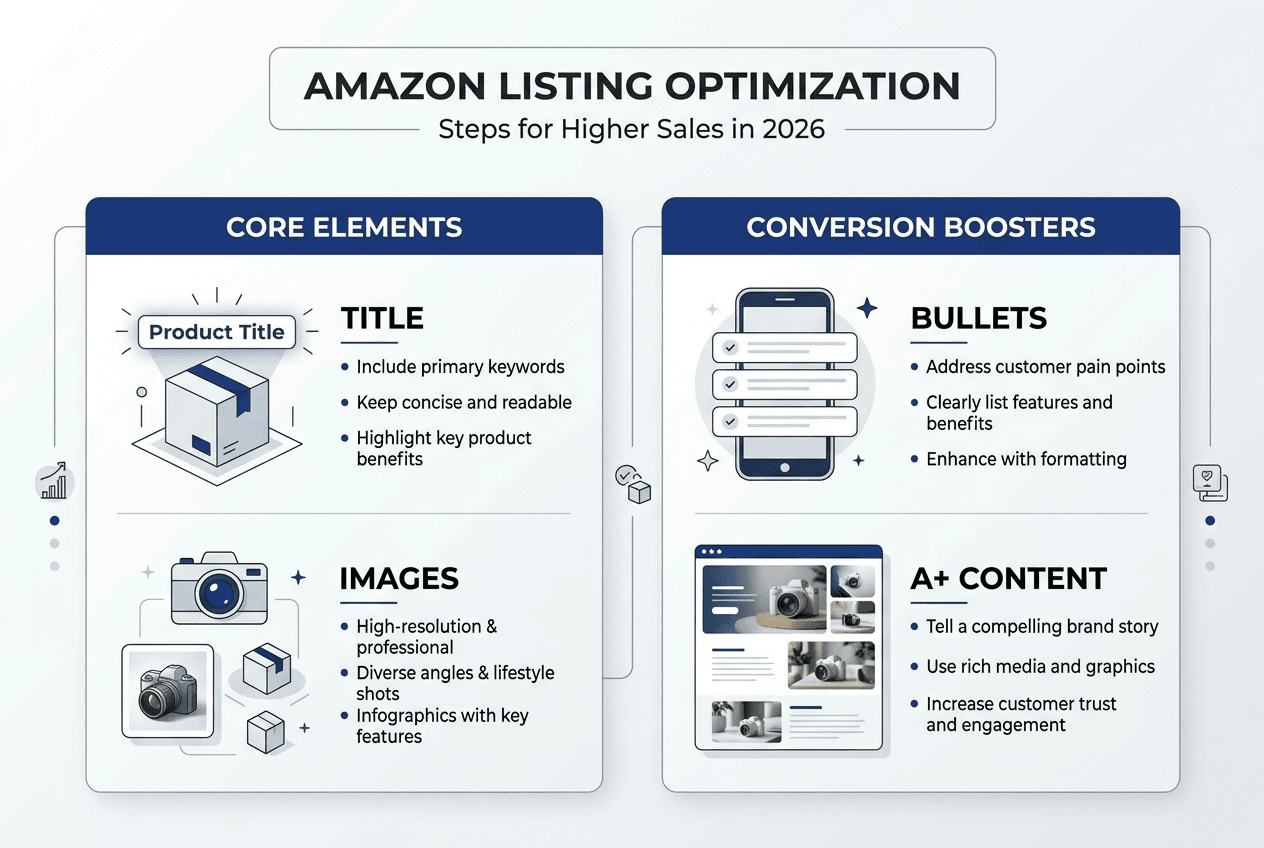
Implement these optimizations systematically using resources like our how to optimize keywords on amazon guide, listing optimization checklist amazon sellers framework, and seo optimization checklist amazon listings tool. Track which changes you make and when, so you can measure their impact accurately in the verification phase.
Common mistakes to avoid and how to test optimization results
Even experienced sellers make critical errors that undermine optimization efforts. Avoiding these pitfalls while implementing rigorous testing separates sustainable growth from temporary ranking fluctuations. Understanding what not to do is as valuable as knowing best practices.
Keyword stuffing remains one of the most damaging mistakes. Cramming excessive keywords into titles or bullets makes content unreadable and actually hurts rankings. A10 is less about ad spend and more about overall customer experience, meaning poor user experience from keyword stuffing directly damages visibility. Amazon’s algorithm detects unnatural keyword density and may suppress listings that prioritize search engines over human readers.
Common optimization errors to avoid:
- Using misleading titles or images that do not accurately represent the product
- Neglecting mobile optimization despite mobile traffic dominance
- Copying competitor content instead of creating unique value propositions
- Ignoring customer questions and reviews when optimizing content
- Making multiple changes simultaneously without tracking individual impact
- Focusing solely on keywords while ignoring conversion optimization
Poor image quality particularly damages mobile conversion rates. Shoppers on small screens rely heavily on visual information to evaluate products quickly. Images that look acceptable on desktop often appear unclear or confusing on mobile devices. Test your entire listing on a smartphone before publishing to catch these issues.
Verifying optimization effectiveness requires systematic measurement. Implement A/B testing for major changes like titles, main images, or bullet point structures. Amazon’s built-in experiments feature allows you to test variations while the platform controls for external factors. Run tests for at least two weeks to gather statistically significant data across different traffic patterns.
Monitor these key metrics to assess optimization impact:
- Organic search ranking for target keywords
- Click-through rate from search results to your listing
- Conversion rate from listing views to purchases
- Total sales velocity and revenue trends
- Customer engagement signals like time on page
Pro Tip: Create a comparison table tracking performance before and after optimization to quantify improvements objectively. Document baseline metrics for two weeks before making changes, then measure the same metrics for two weeks after. This controlled approach isolates the impact of your optimization efforts from seasonal fluctuations or external market changes.
| Metric | Before Optimization | After Optimization | Change |
|---|---|---|---|
| Conversion Rate | 8.2% | 11.7% | +42.7% |
| Avg. Daily Sales | 23 units | 34 units | +47.8% |
| Search Rank (main keyword) | Position 18 | Position 9 | +50% |
| Click-Through Rate | 0.31% | 0.48% | +54.8% |
Use analytics to identify which specific changes drove results. If you optimized images and saw conversion rate improvements but no ranking changes, images were your constraint. If rankings improved but conversion stayed flat, your visibility increased but listing content needs work. This diagnostic approach, detailed in our amazon selling tips maximize listing performance guide, helps you prioritize future optimization efforts.
Continuous monitoring through tools like those covered in our amazon analytics sales growth resource ensures you catch performance declines quickly. Amazon’s algorithm and competitive landscape change constantly, requiring ongoing optimization rather than one-time fixes. Set monthly review cycles to assess metrics and make incremental improvements based on data.
Optimize your Amazon listings with Searchoneers
Mastering Amazon listing optimization requires expertise, time, and continuous refinement. While this guide provides a solid foundation, partnering with specialists accelerates results and frees you to focus on product development and business growth.
Searchoneers specializes in data-driven Amazon listing enhancement that delivers measurable visibility and sales improvements. Our team combines deep algorithm knowledge with conversion optimization expertise to transform underperforming listings into sales engines.

We provide comprehensive support across every optimization dimension covered in this guide. From strategic keyword research and competitor analysis to A/B testing and performance monitoring, our proven frameworks remove guesswork from the optimization process. Access detailed resources through our Amazon listing enhancement guide sales, implement systematic improvements with our listing optimization workflow amazon sellers, and ensure nothing gets overlooked using our listing optimization checklist amazon sellers. Whether you need hands-on optimization services or strategic guidance, Searchoneers helps you achieve sustainable Amazon growth through listings that convert.
Frequently asked questions
How often should I update my Amazon listings to stay optimized?
Regular updates every 1 to 3 months keep your listings competitive as algorithms and market conditions evolve. Monitor your sales velocity, conversion rates, and search rankings weekly to identify when performance declines signal the need for optimization. If you notice competitors gaining ground or customer questions revealing gaps in your content, update immediately rather than waiting for your scheduled review cycle.
What role does Amazon’s AI assistant Rufus play in listing optimization?
Rufus processes hundreds of millions of daily shopping queries and influences billions in sales, making it a critical discovery channel. Customers interacting with Rufus are 60% more likely to complete a purchase, so optimizing for natural language queries and question-based searches directly impacts your visibility and conversion rates. Structure your content to answer common questions clearly and use conversational language that AI systems can parse and recommend accurately.
How can I measure the success of my Amazon listing optimization efforts?
Track multiple metrics including organic search rankings for target keywords, click-through rates from search results, conversion rates from views to purchases, and overall sales velocity. Use Amazon’s analytics tools and third-party software to monitor customer engagement signals like time spent on your listing page. Establish baseline measurements before making changes, then compare performance after optimization to quantify impact and identify which specific improvements drove results.
Should I prioritize keywords or conversion optimization first?
Optimize for both simultaneously since they work together in Amazon’s A10 algorithm. Strong keywords drive initial visibility by getting your listing in front of shoppers, while conversion optimization ensures those visitors actually purchase. A listing that ranks well but converts poorly will eventually lose ranking as Amazon’s algorithm detects low engagement. Balance keyword integration with clear, benefit-focused content that addresses customer needs and objections directly.
Can I optimize Amazon listings effectively without professional help?
Many sellers successfully optimize their own listings using systematic approaches and available resources. Success requires dedicating time to research, implementation, testing, and ongoing refinement. Professional services accelerate results by applying specialized expertise and proven frameworks, but motivated sellers can achieve significant improvements independently by following structured guides and committing to data-driven decision making rather than guesswork.

Comments
2 responses to “How to optimize Amazon listings for higher sales in 2026”
[…] How to optimize Amazon listings for higher sales in 2026 – Searchoneers […]
[…] collapsed means paying for both the consultant and the damage already done. Proactive investment in higher sales strategies pays dividends long before problems […]